A personal prop can save a production a small errand
A tennis racket is more than a detail in the background: it has to be available on the right day, in the right scene, and in enough condition to look believable on camera. If a performer already owns one, asking them to bring it may spare the production from finding, buying, or renting another. The same logic applies to familiar objects such as hats and skateboards.
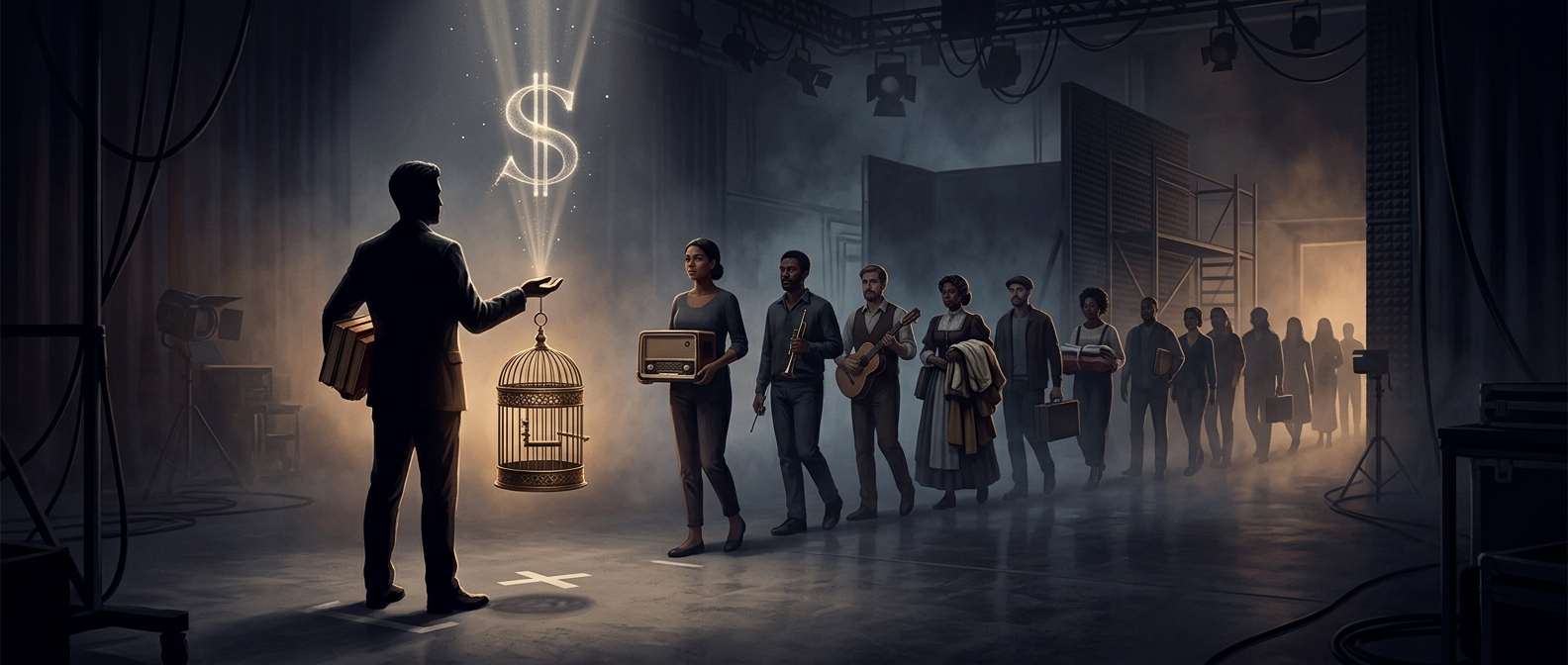
That exchange can be cheaper and simpler than treating every small item as a separate procurement task. The actor supplies something they already know how to handle; the production adds a modest payment for making it available. For an individual object, the savings may be minor. Across many background performers and repeated scenes, small avoided errands can make coordination easier.
The tradeoff is control
A production still has to decide whether the personal item fits the scene. Its color, style, and condition must work with the setting and the rest of the costumes and props. A distinctive logo or an unexpected design can stand out in a shot, so the item may need approval—or be rejected in favor of a supplied prop.
There is also a continuity problem: if the same scene is filmed more than once, the object needs to look and function the same way each time. A personal item can help solve a practical need, but it gives the production one more detail to track. The small bump is therefore not simply payment for bringing an object; it helps make a convenient, usable item available while the crew keeps control of what appears on screen.