A harvest is hard to guard
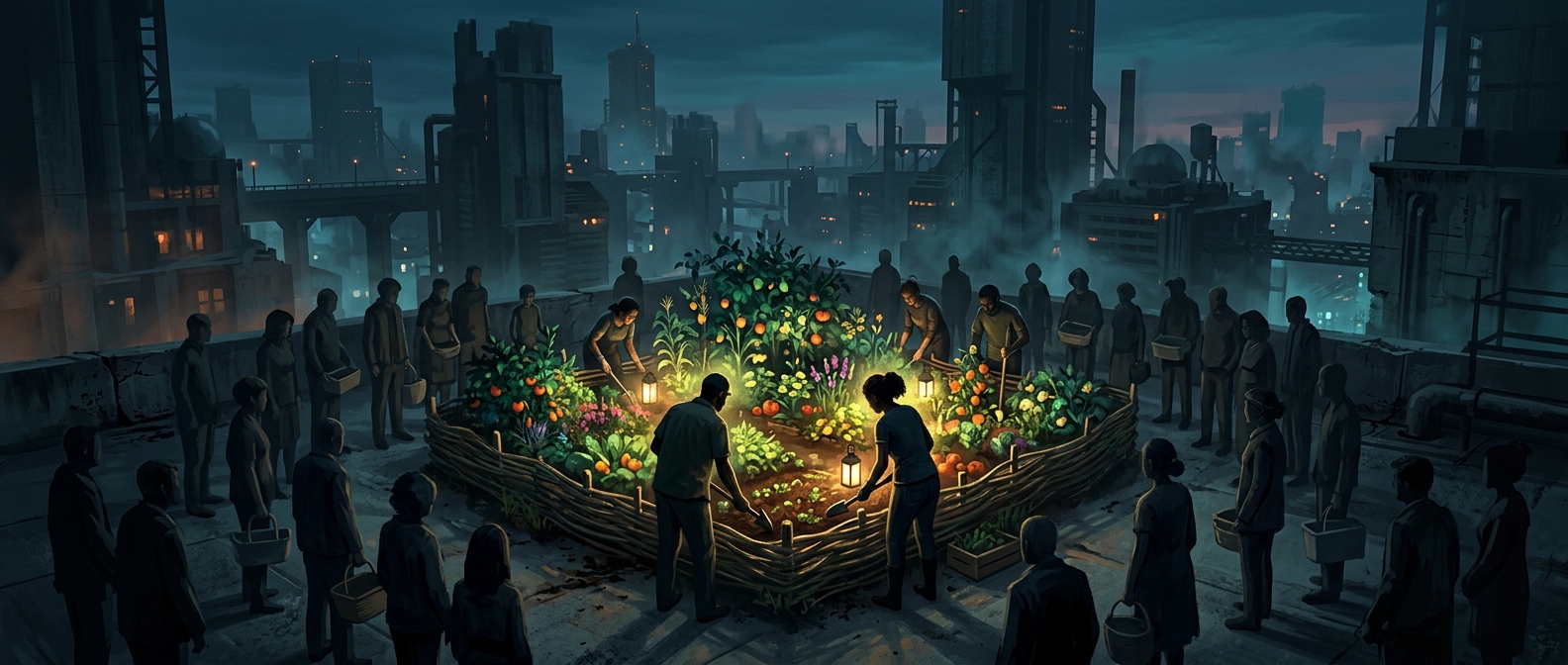
A community garden turns shared space into a small shared resource. Once tomatoes ripen or herbs are ready to cut, they are visible, portable, and easy to take. Preventing every unapproved picking would require someone to watch the beds, check who belongs, or lock up the produce—work that can cost more time and money than the harvest is worth.
That makes enforcement different from planting. A volunteer’s hours are easy to record; a handful of beans is not. The person who takes produce without helping gets the immediate benefit, while the loss is spread across everyone who might have picked it later. Economists call this a collective-action problem: each person has an incentive to take, but the group benefits when people help maintain the resource and use it considerately.
Shared does not have to mean unregulated
Gardens often manage this tension with practical rules rather than constant surveillance: harvest only from designated beds, take a modest share, or wait until produce is ripe. Clear expectations make it easier for members to coordinate and for newcomers to understand what is considered fair. Some gardens also set aside beds or harvest days for people who are not regular volunteers.
These arrangements work best when people can see the connection between care and access. If a few visitors repeatedly take the most valuable crops while others do the watering and weeding, volunteers may stop investing effort. The garden can then lose more than a few vegetables: it can lose the labor and trust that keep it productive.
The challenge is to make sharing real without making stewardship feel pointless. In practice, a sign or a friendly conversation may protect a harvest more cheaply than a fence—but only when the community agrees on what sharing means.