Searching for sounds an orchestra could not supply
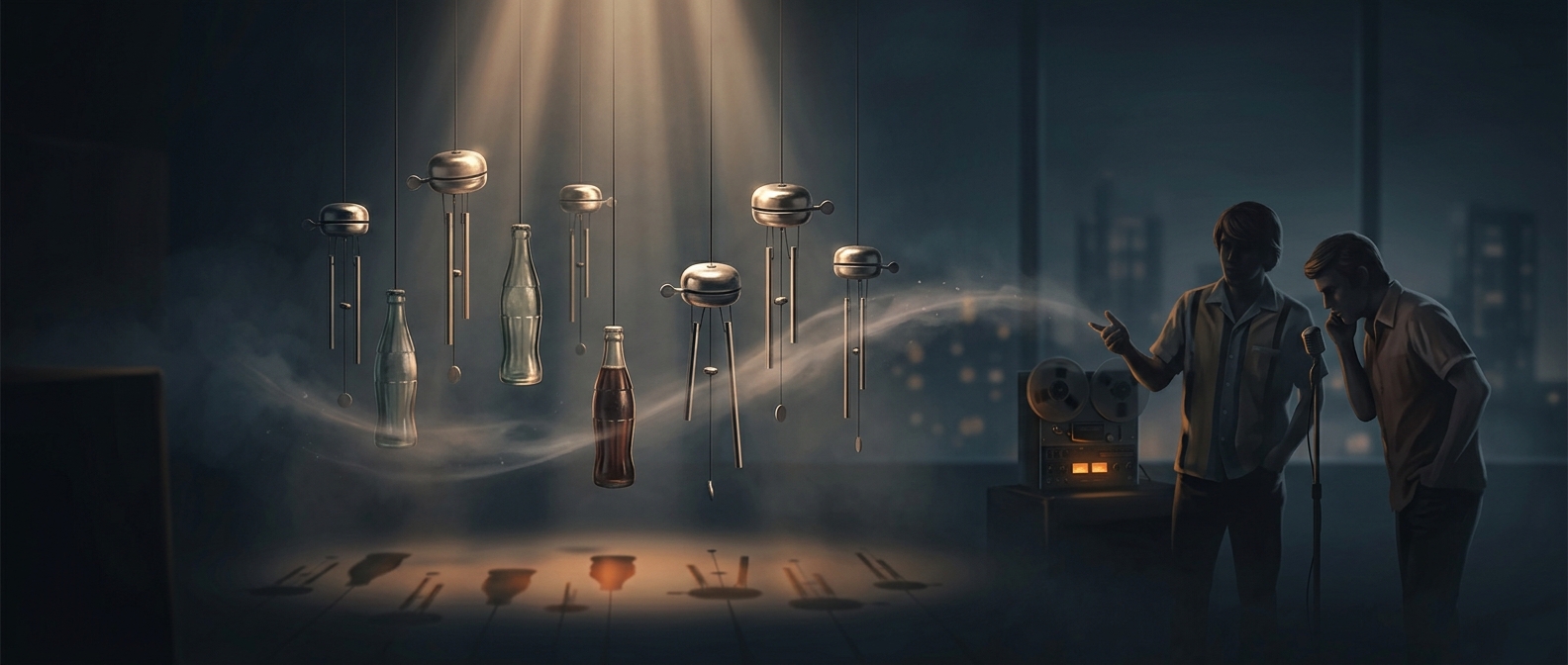
On Pet Sounds, Brian Wilson treated the recording studio as a place to shape unusual textures, not simply to document a band playing standard instruments. Empty soda cans and bicycle bells offered percussive sounds with distinct characters: a can can make a hollow, rattling impact, while a bell produces a bright ring that lingers after it is struck.
That difference matters in an arrangement. Percussion does more than keep time; its attacks and decays—the instant a sound begins and the way it fades—help determine a recording’s mood and sense of space. A familiar drumbeat can anchor a rhythm, while an unexpected clink or ring can make the same passage feel delicate, odd, or newly vivid.
The studio made small sounds useful
In a recording studio, an everyday object need not be loud enough to compete with a live band in a room. It can be recorded as a separate part and fitted into the arrangement, letting a brief, quiet sound become audible beside the voices and instruments. The object’s ordinary purpose is beside the point; what counts is the sound it makes when struck, shaken, or handled.
Wilson’s choices reflect the album’s broader attention to finely controlled musical detail. Instead of relying only on conventional percussion, he could search for a particular tone and use an object that produced it. The result is a reminder that an arrangement’s character can hinge on a sound listeners might never expect to hear in a pop record—and might not recognize as a soda can or a bicycle bell at all.