How Virgo Became a Harvest Sign
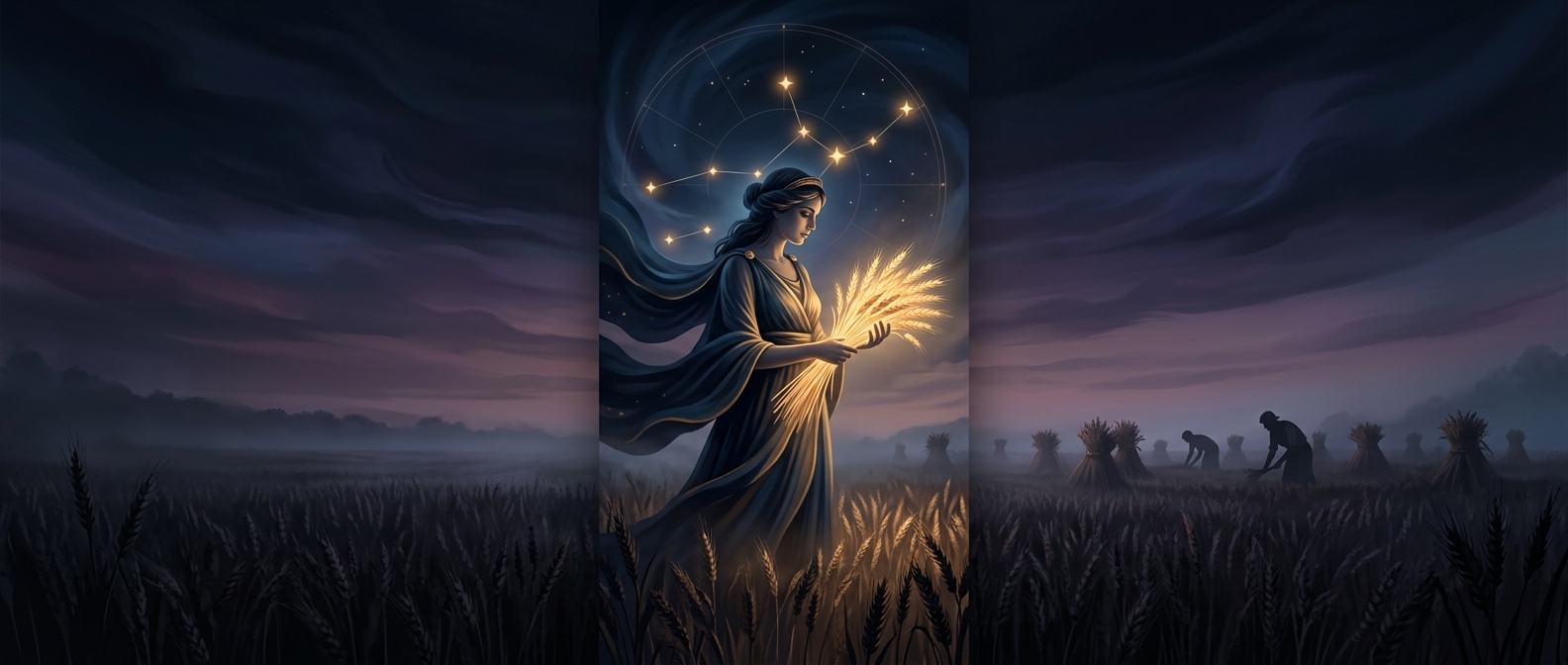
Virgo’s connection to Demeter grew from a practical seasonal clue: the constellation’s appearance in the sky came around the time farmers needed to bring in crops before winter. In an era without modern forecasts, the changing night sky offered a rough calendar. A familiar star pattern could signal that a season of work was approaching.
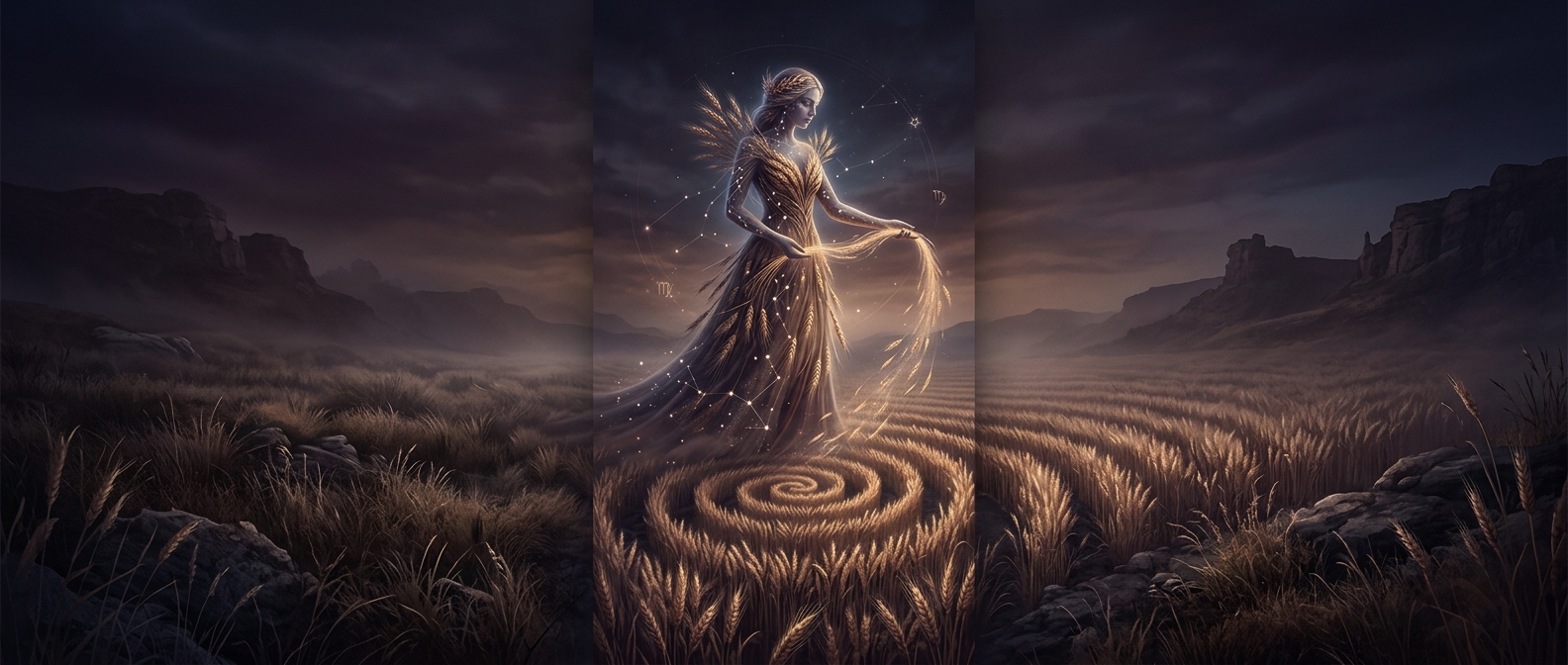
The association also had a visual anchor. Virgo’s brightest star, Spica, takes its name from the Latin word for a grain ear. In artistic and astronomical traditions, the maiden of Virgo was often shown carrying grain, linking the constellation to fields and harvest even more directly.
From Seasonal Timing to Myth
Demeter was the Greek goddess associated with grain and agriculture, so a constellation tied to harvest season could naturally become connected with her. The link joined two ways of making sense of the year: farmers watched the sky for seasonal cues, while myth gave those cues a divine figure and a memorable story.
That did not mean people cared only about autumn crops, or that Virgo marked an exact date everywhere. Its visibility depends on where and when it is observed. The useful idea was the broader one: a recurring pattern in the sky could help people recognize when the brief, urgent work of gathering food was near.