A crop that earns money only at the end
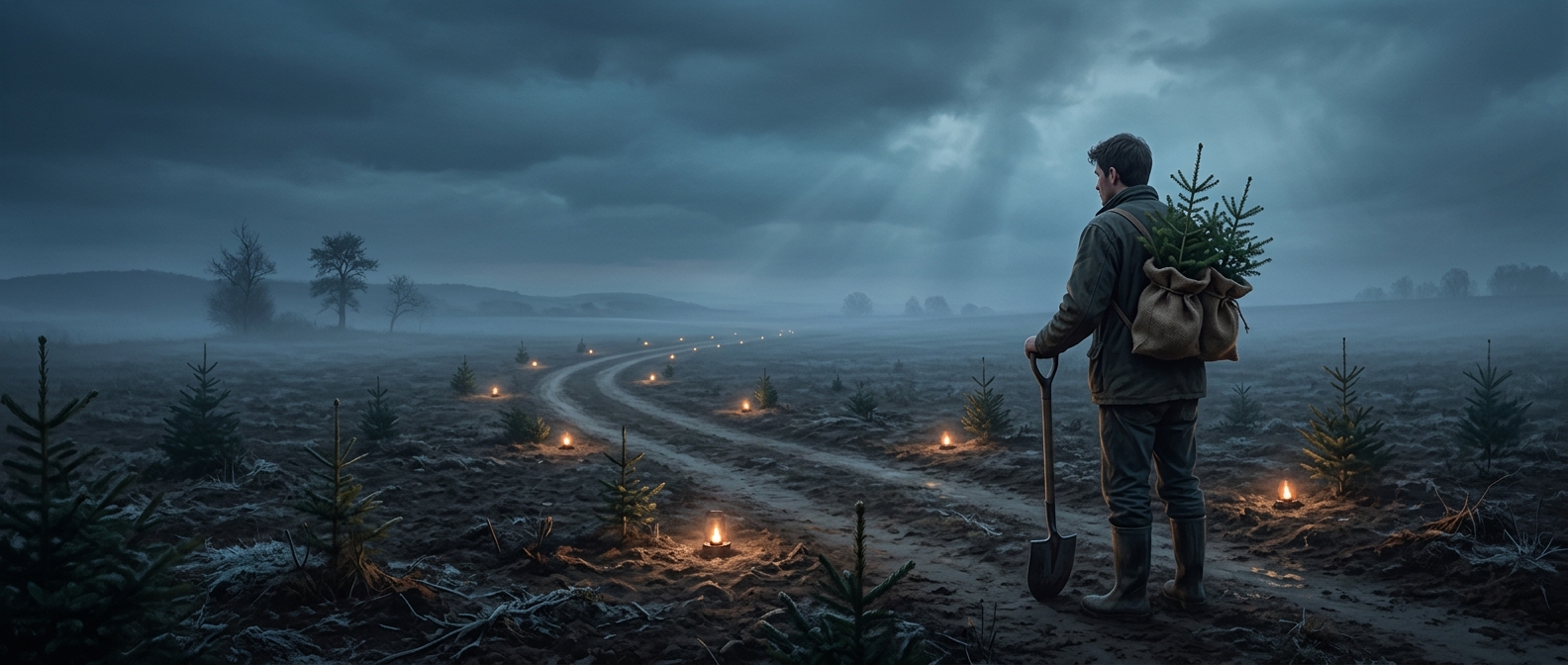
A Christmas tree farm runs on a long delay between spending and sales. After land is acquired and seedlings are planted, growers must keep the trees alive and shape them into the dense, even silhouettes shoppers expect. That means years of work—such as mowing between rows, pruning or shearing branches, and managing pests and disease—before most trees are ready to sell.
The trees are also a staggered crop: a farm may plant new seedlings each year so that different ages are growing at once. This can create a more regular harvest, but it does not remove the underlying risk. Money and labor go into each planting long before that planting brings in revenue.
Why a short selling season matters
Demand peaks in the weeks before Christmas. A tree that is ready but unsold after that window cannot simply be stored and sold the following year; it continues growing and may no longer fit what buyers want. The grower therefore has to recover years of accumulated costs from a brief period of sales, while also paying the farm’s ongoing expenses.
That timing leaves little room to make up for a poor season. If weather, supply, or disease reduces the number of marketable trees, the lost income can be difficult to replace quickly: the next crop still needs years to mature.
Disease can erase years of value
Needle rust is a fungal disease that can discolor or damage a tree’s needles. For a crop sold largely on appearance, a tree can be biologically alive yet no longer attractive enough to command a sale. If infection affects many trees, the problem is not just the cost of treatment or care—it is the loss of trees that represent years of land use and labor.
That is the unusual economic wager behind a Christmas tree: the grower commits resources for years, but the final test comes when a customer sees the tree during a narrow buying season.