Turning Astrology Into a Parlour Game
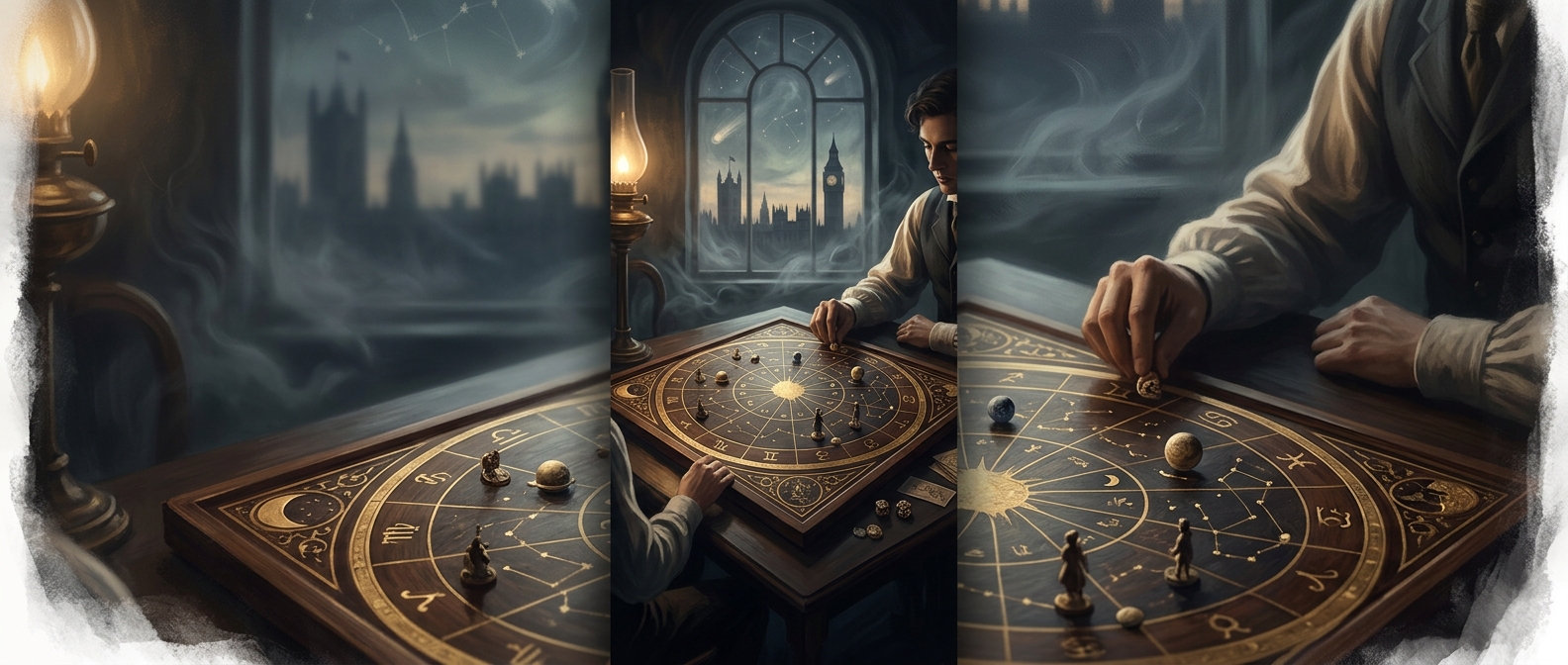
In mid-nineteenth-century London, game makers found a way to package astrology as a board-game pastime for upper-class players. The design challenge was to make a system of signs and celestial meanings playable: a board game needs a route, rules, and some way for players’ turns to produce progress or setbacks. The available description does not specify the rules of this particular game, but its complexity suggests that it aimed to do more than decorate an ordinary game with astrological imagery.
From Symbolic System to Social Entertainment
Astrology offered a ready-made vocabulary of signs, planets, and interpreted influences. A game could make that vocabulary part of a shared activity, giving players a structured way to encounter astrological ideas while competing or taking turns. That did not require players to treat the game as a serious prediction of their lives; it could also work as amusement built around a subject associated with hidden patterns and personal fate.
The commercial aspect matters: London makers were selling astrology in a form designed for leisure and a particular social audience. The result was not just astrology printed on a board, but an attempt to make an elaborate belief system playable around the parlour table.