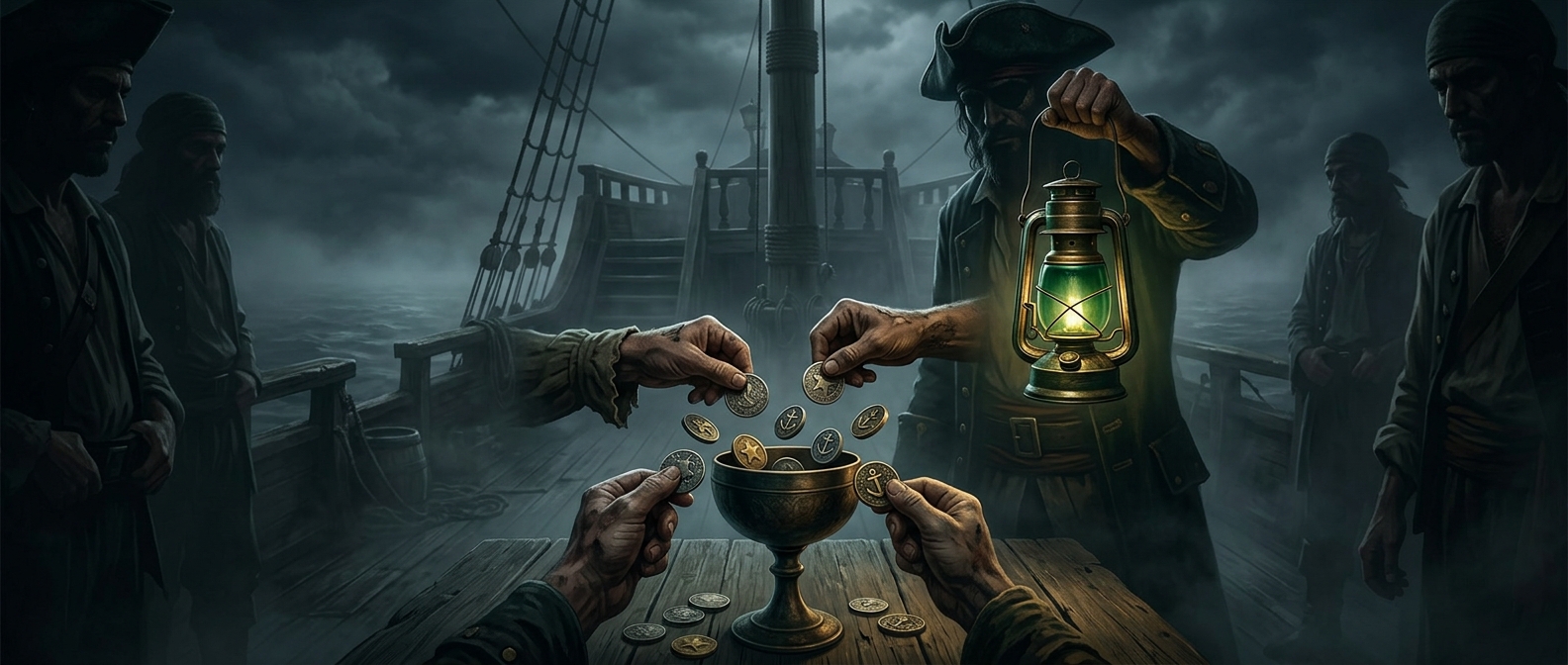
Why One Coin Can Be Enough to Save a Captain
A pirate vote is not necessarily a contest over who deserves the treasure. It is a choice between the captain’s proposed division and the outcome that follows if the proposal fails. That comparison can make a tiny payment politically powerful.
Suppose the captain needs a majority and can keep the rest of the loot. The captain does not have to win over the whole crew—only enough votes to pass the plan. A crew member offered one coin may vote yes if rejecting the plan would leave that pirate with nothing under the next proposal. The coin is valuable not because it is a generous share, but because it beats the alternative.
The Threat Behind the Bargain
The vote also carries a severe consequence: if the plan loses, the captain is removed. That makes the crew’s decision more than a simple judgment of fairness. Each voter weighs the current offer against the likely distribution after a defeat, including who would be in charge and what that person might offer.
The captain can use that threat structure to identify the cheapest votes. Some pirates may support the plan because they benefit from keeping the captain; others can be bought with a token payment if they expect to receive nothing otherwise. The captain’s own share can remain large while the proposal still passes.
A Majority Is a Matter of Leverage
This is why the decisive question is not “How much treasure would make the crew happy?” It is “Which voters can be won for less than they expect to get if they vote no?” The captain targets those whose support is pivotal and whose fallback is poor.
The coin works as a small, concrete incentive attached to a much larger choice. In this kind of vote, power comes from controlling the proposal and understanding each voter’s next-best option—not from dividing the treasure equally.