Why aircraft can be cleaned without a hose
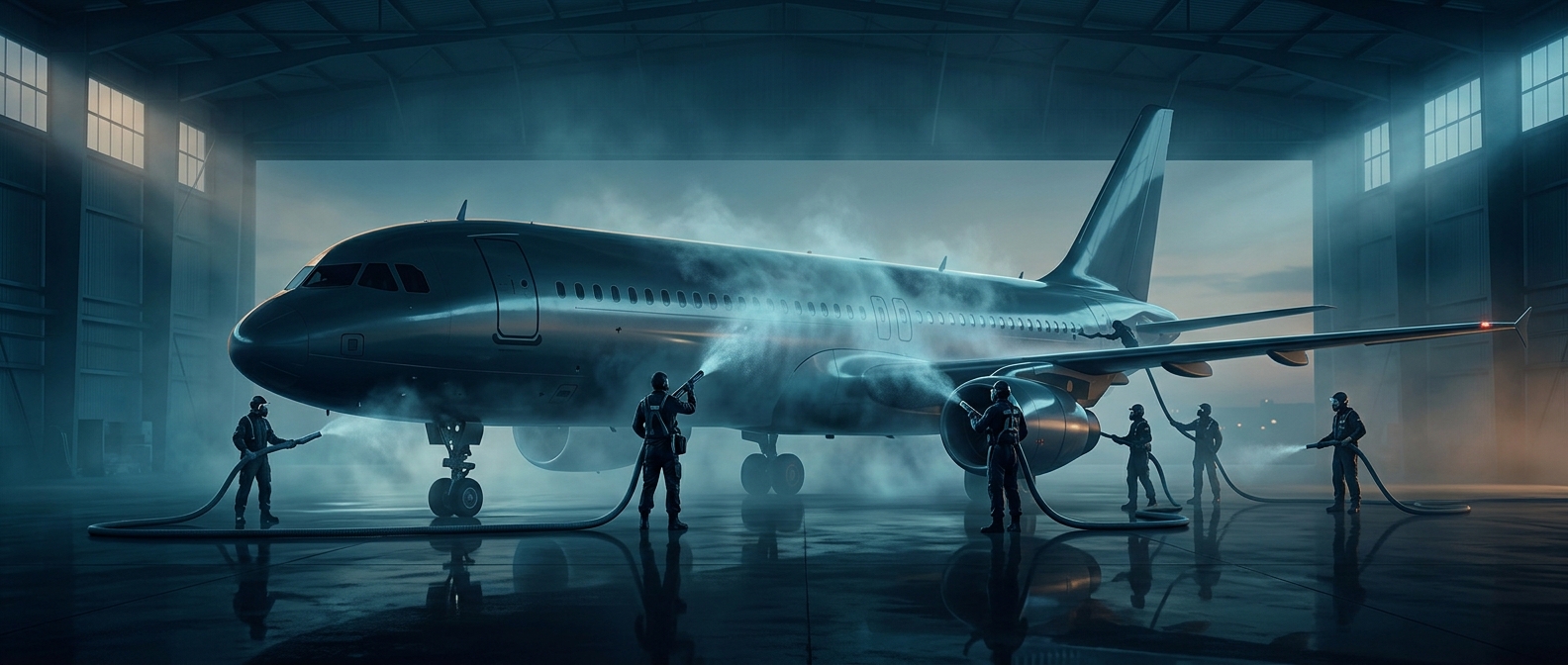
A waterless aircraft wash is less like rinsing a car and more like carefully lifting dirt from a delicate surface. Workers apply a specialized cleaner that loosens grime and helps hold it in suspension—a state in which particles are surrounded by the liquid instead of remaining stuck to the paint. Microfiber cloths then pick up the cleaner and dirt rather than pushing grit across the aircraft’s skin.
That distinction matters. A grain of sand dragged over paint can act like fine sandpaper, leaving scratches. Clean cloths, changed frequently, and controlled wiping help reduce that risk, especially across the broad wings and curved fuselage.
The tradeoff: less runoff, more hands-on work
A conventional wash can send large amounts of water, along with cleaning chemicals and oily residue, toward drains. A dry wash uses far less water and avoids a stream of wash runoff, which can simplify cleaning around an aircraft on the ground. The dirt does not disappear, though: it ends up in the used cloths and must be handled as waste.
The method also demands patience. Workers clean in sections, using the right product and technique for the surface, and pay attention to areas where grime accumulates. This is not a substitute for every kind of maintenance cleaning; the aircraft’s condition and the task determine whether a dry wash is appropriate.
The striking part is the scale: a process that depends on a cloth small enough to fit in one hand can leave an entire airliner clean—one carefully lifted patch of grime at a time.