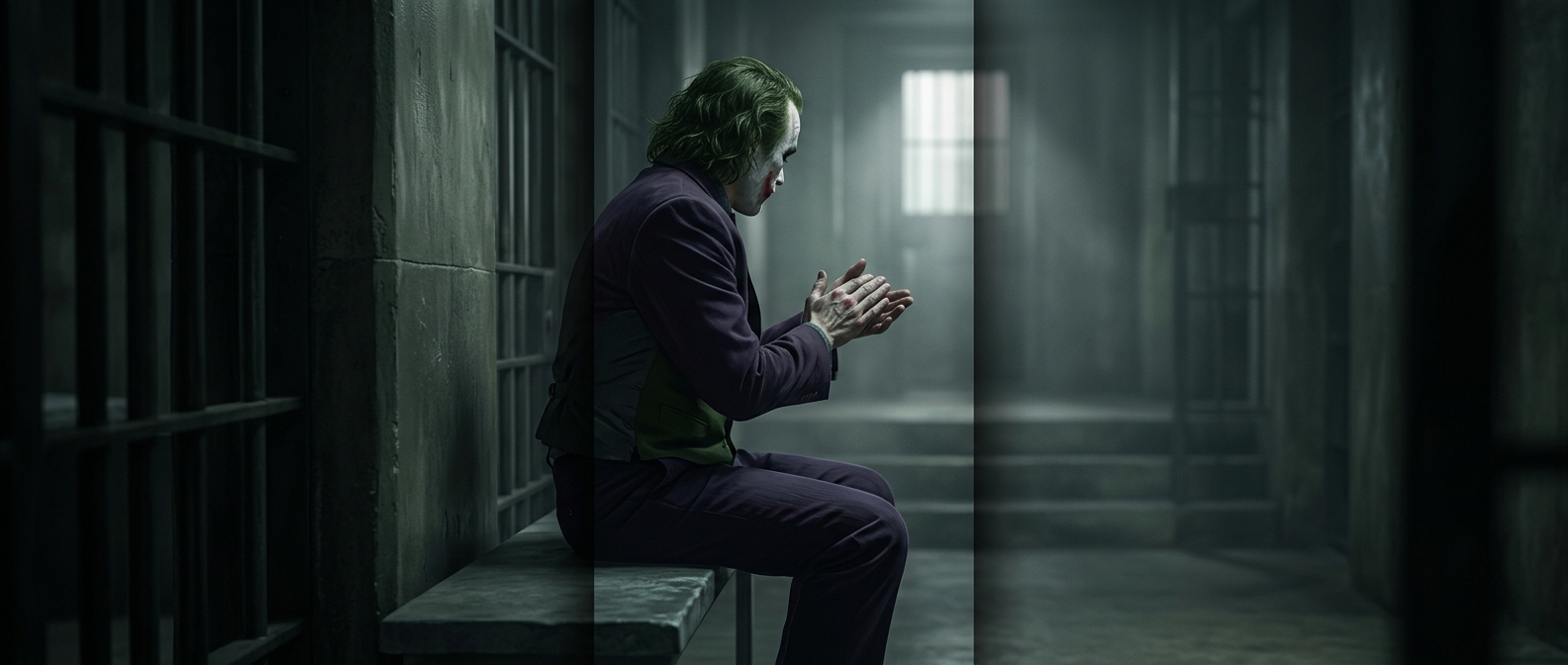
A silent room becomes part of the performance
The scene’s power comes from a small change in the room’s rhythm. During Commissioner Gordon’s promotion, the people around him are marking a public victory; the Joker, confined nearby, is supposed to sit quietly. Ledger’s slow clap turns that expected silence into a response. Because he keeps his eyes on the people celebrating, the gesture reads less like applause than a deliberate attempt to unsettle them.
A slow clap is usually a sarcastic signal: it imitates approval while making clear that the approval is false. Here, its unhurried pace also makes the Joker seem in control of the moment. He cannot join the ceremony, but he can interrupt its mood—and make everyone notice him.
Why the cameras kept rolling
The script supplied the quiet, but Ledger supplied the interruption. By continuing to film, director Christopher Nolan preserved the performance as it unfolded rather than stopping to reset the scene. That choice let the cast’s and room’s reactions remain connected to the unexpected gesture.
The moment works because it does not need a speech to explain the Joker’s hostility. One small, sustained action cuts across the ceremony’s confidence. A scene built around a promotion becomes, for a few beats, a contest over who controls the room.