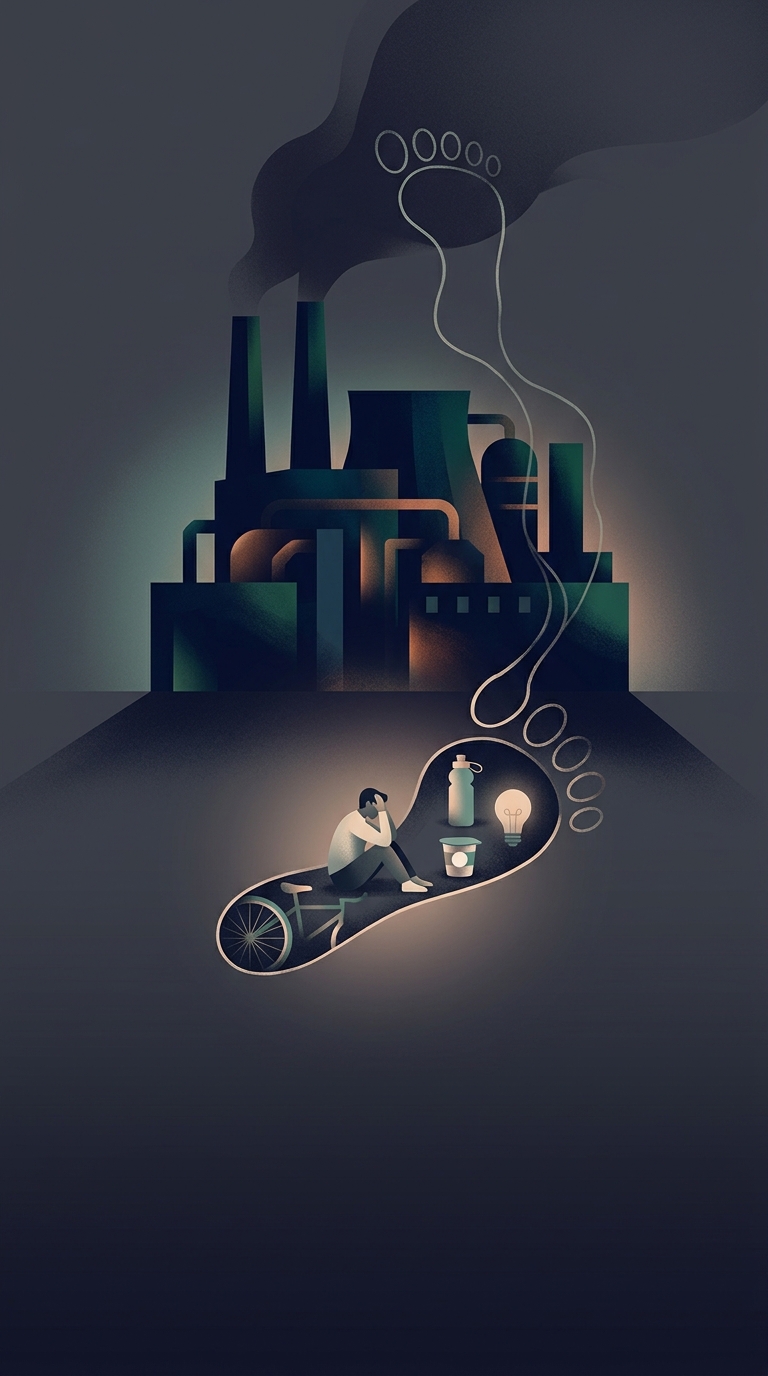
How a corporate emissions problem became a household calculation
A carbon-footprint calculator turns greenhouse-gas emissions into an estimate attached to an activity or person. Drive to work, heat a home, buy a meal: each can be assigned an emissions cost. That makes an otherwise invisible process—gases released across supply chains and energy systems—feel concrete and manageable.
The framing also changes where attention lands. Instead of beginning with decisions about how electricity is generated, what fuels are sold, or how products are made, it invites people to examine their own routines. The consumer becomes the most visible actor, even when the available choices depend on infrastructure and business decisions beyond an individual’s control.
Why the framing matters economically
Personal choices do affect demand. But they are only one link in a longer chain: companies extract or sell fuels, utilities generate power, manufacturers make goods, and governments set rules that shape those activities. When the story centers on household restraint, responsibility can appear to sit mainly with buyers, while the firms and systems that determine what choices are available recede from view.
That shift can benefit businesses by making climate action look like a matter of individual virtue rather than a question about production and investment. It can also leave consumers carrying the burden of choices—such as how to commute—that may be constrained by local transit, housing costs, or available services.
Personal action and systemic change are not substitutes
A footprint estimate can help someone compare choices, but it cannot by itself show who has the power to change the underlying system. Cutting unnecessary energy use or choosing lower-emission products may reduce demand; changing the infrastructure and production decisions that shape everyone’s options can affect emissions on a much larger scale.
The telling consequence of the campaign’s framing is that a planetary problem could be pictured as a private household bill—while the biggest sources of emissions remained decisions made across industries.