How the Four Elements Become a Seating Plan
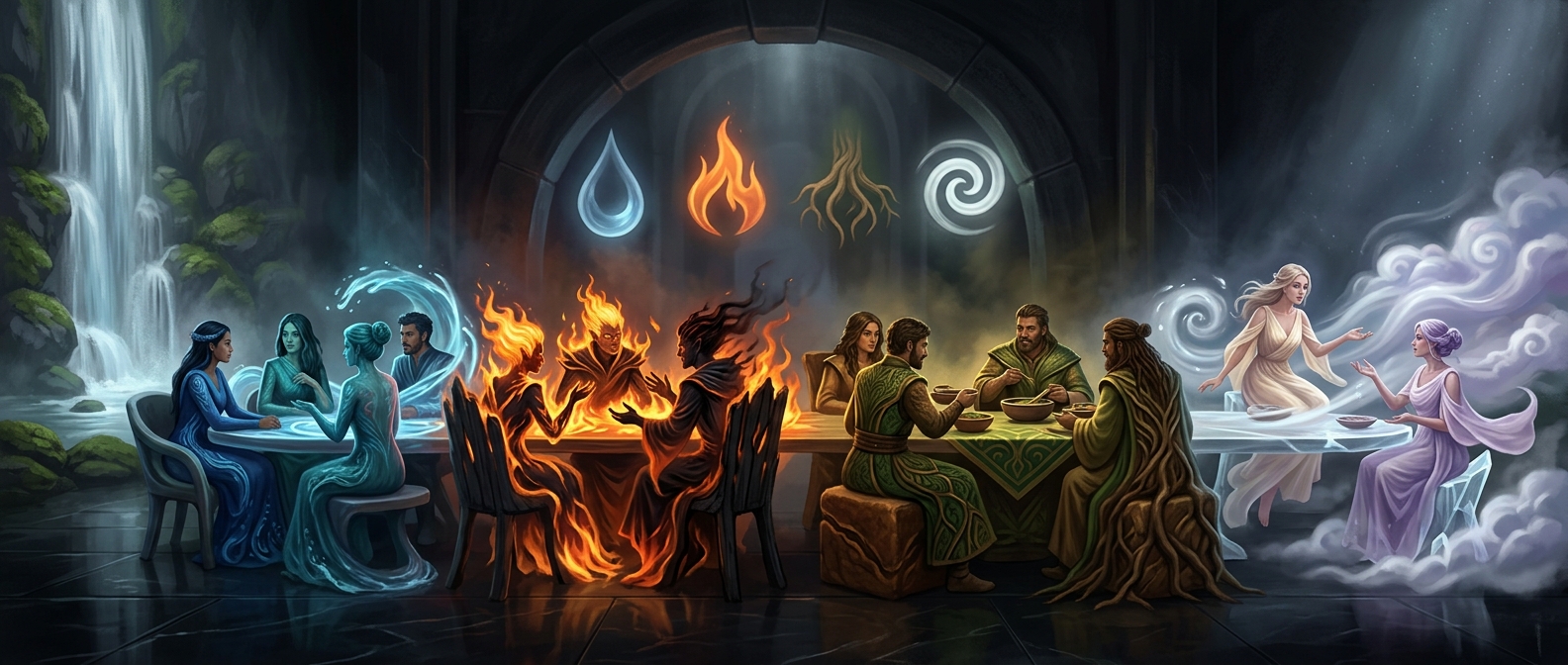
In Western astrology, the twelve zodiac signs are grouped into four symbolic elements: fire, earth, air, and water. The familiar grouping assigns three signs to each element. Astrological traditions often treat signs sharing an element as naturally compatible, while some pairings—especially fire and water—are read as creating friction.
A host who uses this framework turns an abstract chart into a practical arrangement: guests are sorted by sign, then placed near people whose elements are thought to complement theirs. The chart might favor fire with air, whose symbolism suggests energy and exchange, or earth with water, associated with steadiness and feeling. It is a piece of astrological interpretation, not a dependable way to predict how particular people will get along.
The Chart Is a Social Cue, Not a Verdict
The appeal is partly theatrical. A seating plan based on signs gives a host a playful rationale for mixing guests and can offer an easy opening question: “What’s your sign?” It also carries a quiet promise that the arrangement has been thought through, rather than leaving everyone to navigate an unfamiliar room alone.
In practice, a considerate host can treat elemental compatibility as a starting point, not a command. Existing friendships, accessibility needs, and the people who will keep a conversation flowing matter more than a symbolic match. The result is less a cosmic guarantee than a themed way to make the seating chart—and the conversation around it—feel intentional.