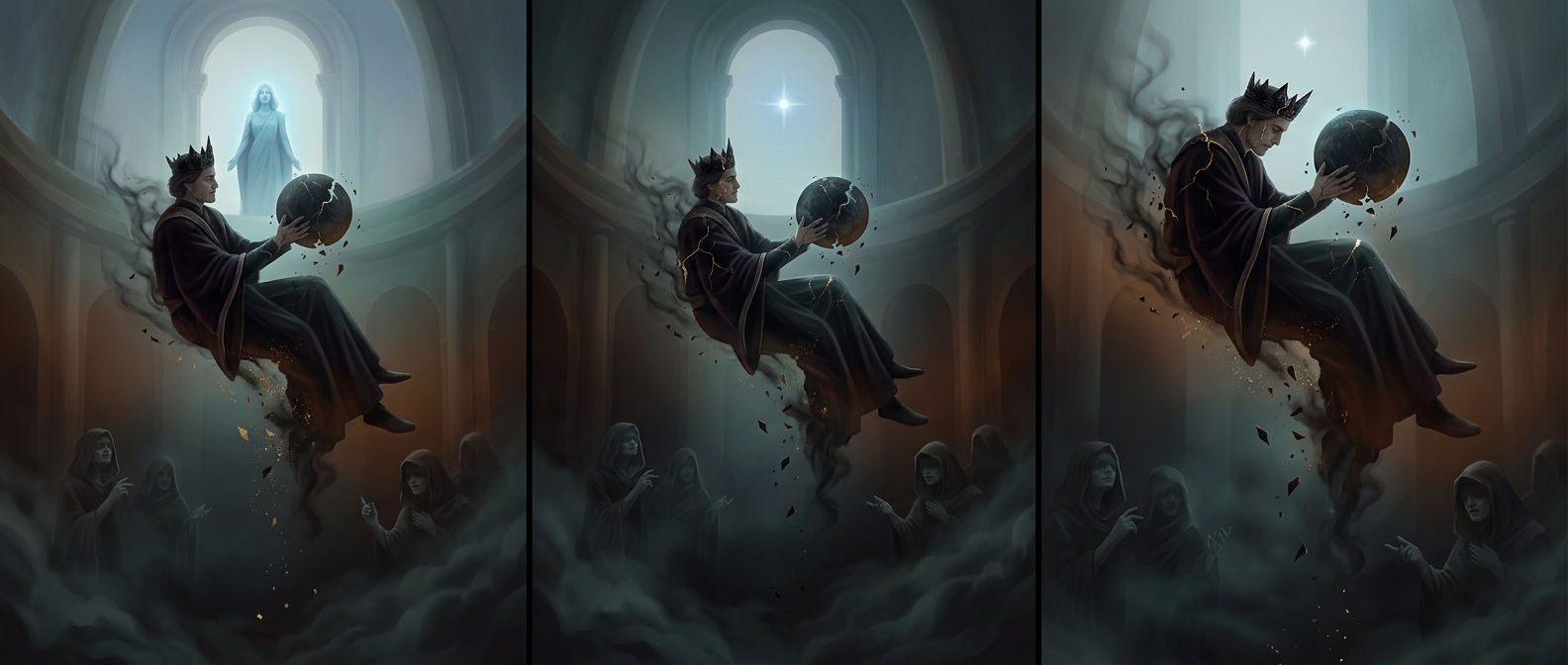
What “fall” means in astrology
In traditional astrology, a planet’s fall is a condition assigned to it in one particular zodiac sign. Each planet is also traditionally associated with a sign of exaltation, where its qualities are thought to operate especially well; its fall is the sign opposite that exaltation. For example, the Sun is exalted in Aries and therefore considered in fall in Libra.
This is a symbolic classification, not a change in the planet itself. The Sun does not become weaker in Libra as an astronomical object. The language describes how astrologers interpret a planet’s role within a chart.
A mismatch, not a sentence
The metaphor is about fit. A planet represents certain functions in astrological interpretation, while a sign supplies a style or set of priorities. In fall, those qualities are treated as less naturally aligned: the planet may have to work through unfamiliar conditions rather than express itself with ease. “Embarrassment” captures the tradition’s dramatic language, but fall does not mean a person is doomed to fail at ordinary tasks.
Astrologers also consider other features of a chart, so fall is one factor rather than a complete judgment. Its memorable implication is that, in this system, a placement can be read not as a loss of ability but as a need to find an indirect or effortful way to use it.