How maggots cleaned a wound
An open wound can contain a mixture of dead tissue, damaged tissue, and living flesh. Dead tissue—often called necrotic tissue—can shelter microbes and slow healing. Removing it is called debridement, and maggots offered surgeons a way to do that in wounds that were difficult to clean by hand.
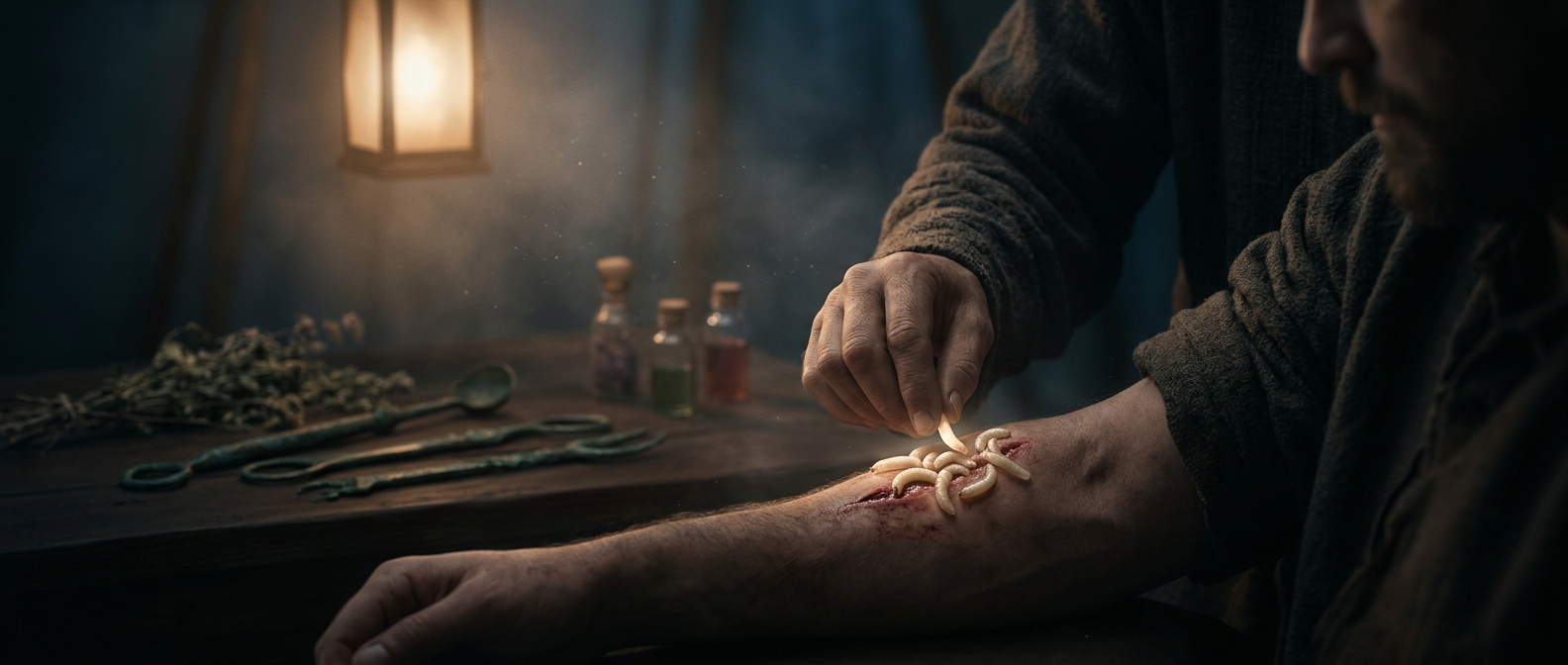
The larvae fed mainly on dead and decaying material. As they moved through a wound, they also released digestive substances that softened this material, making it easier to consume. Their feeding was selective, but not magical: the method worked because dead tissue was generally easier for them to break down than healthy tissue.
A living cleaning tool
This made maggots especially useful when a wound had deep pockets or irregular surfaces. A surgeon’s instrument could reach only so far without cutting, while larvae could move into small spaces and remove some of the material lodged there. Clearing dead tissue could reduce a source of infection and give healthy tissue a better chance to recover.
The approach also carried an important constraint: the larvae had to be controlled and kept from spreading beyond the wound. Modern medical maggot therapy uses specially prepared larvae for that reason. The striking idea is not that maggots repaired the wound themselves, but that their feeding could perform a precise part of wound care—removing material a surgeon needed gone while leaving much of the living tissue behind.