A prepaid balance hides the price of the next cup
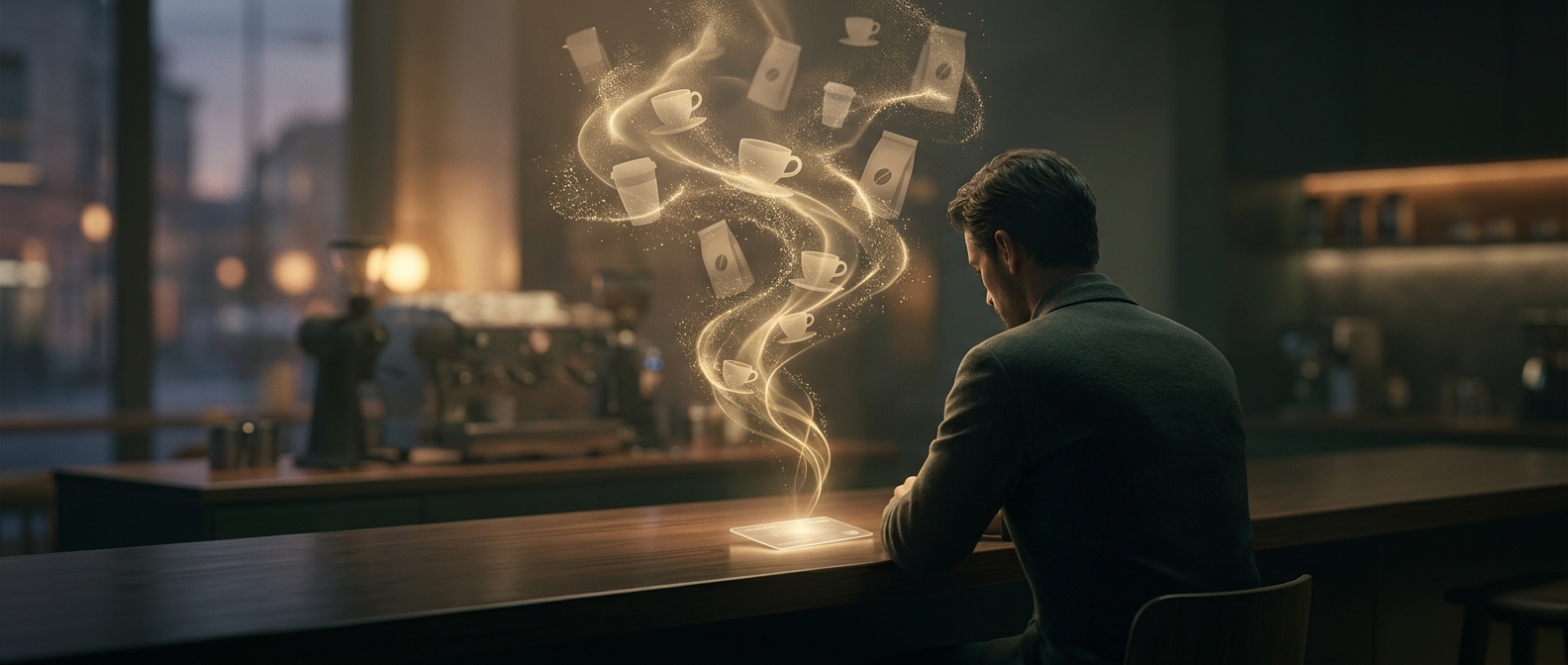
Paying with a café card changes when the cost becomes noticeable. With cash or a bank card, each coffee triggers a fresh payment: the customer sees money leave, and that moment can make the purchase feel costly. With a prepaid balance, the payment happened earlier. At the counter, the card works more like a token than a reminder of money.
That separation matters because people do not always weigh spending as one running total. They often respond to the immediate cost of a choice—what they must give up right now—rather than mentally subtracting every purchase from a larger budget. When a tap does not visibly involve money, the small decision can feel easier.
The cost is delayed, not erased
A coffee still uses part of the balance. That amount could have paid for a later drink, so the purchase has a real tradeoff even if no new payment occurs. But that opportunity cost is less vivid than watching a card charge appear or counting out cash. The effect is strongest when top-ups are infrequent and the remaining balance is easy to forget.
This is a form of payment decoupling: the act of paying is separated in time from the act of consuming. It can make spending feel smoother, but it also makes the running total harder to track. Checking the balance—or treating each top-up as a coffee budget—puts the cost back into view without changing how the card works.