Why the Stars Wait for Darkness
The stars do not appear when the Sun goes down; they were shining all along. What changes is the brightness of the sky around them. During the day, sunlight enters Earth’s atmosphere and scatters off air molecules, filling the sky with light. That diffuse glow is so much brighter than most starlight that it washes the stars from view.
Twilight Is the Handoff
After sunset, the ground may already be dark while the upper atmosphere is still lit by the Sun. As Earth turns and the Sun sinks farther below the horizon, less sunlight reaches the air above us, and the sky’s glow gradually fades. Stars become easier to see as that competing light weakens—not because they have switched on, but because their faint light can finally stand out.
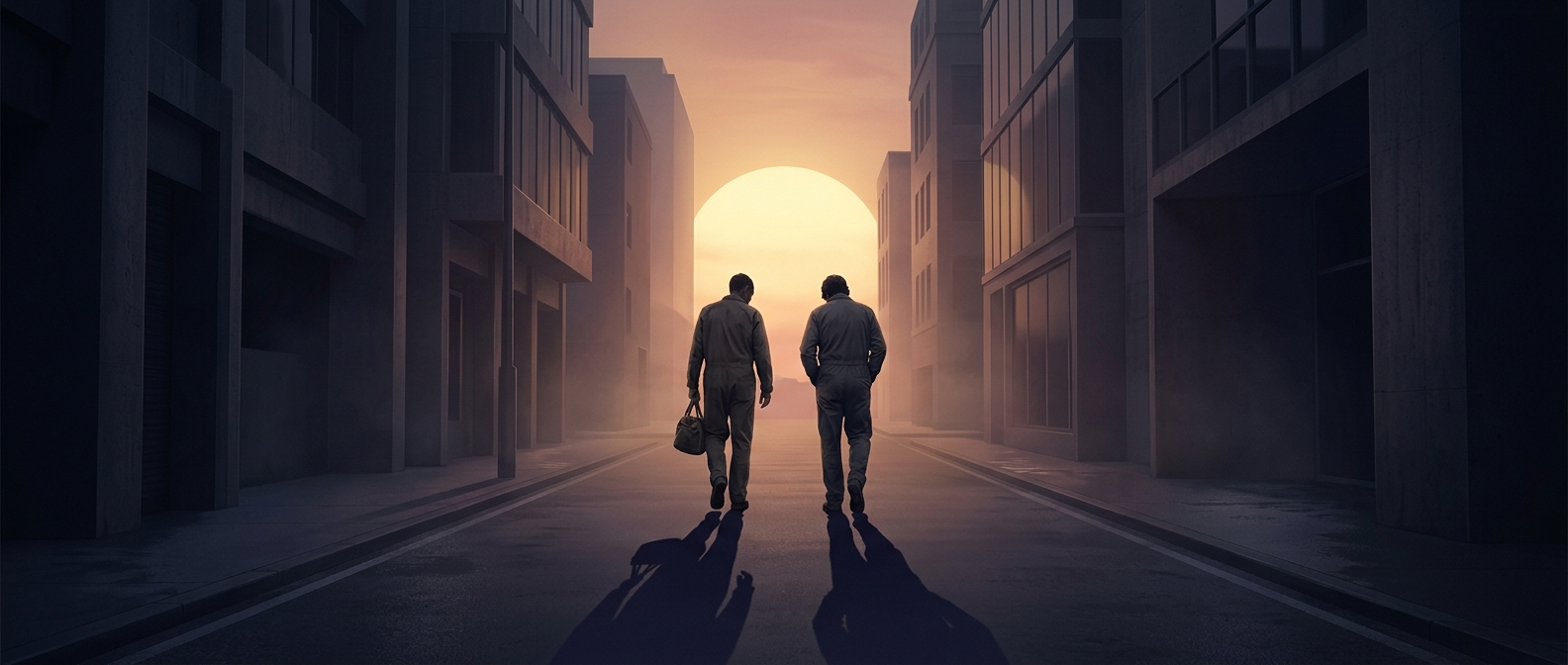
The image of a night shift taking over captures a real change in the scene, even though the stars never clock out. On a clear day, they are still overhead; the Sunlit atmosphere simply outshines them.