Why a Water Balloon Can Hit Hard
A water balloon looks soft because its latex skin gives way and the water sloshes inside. But softness does not make a fast-moving object harmless. When the balloon strikes, its momentum has to stop; the quicker that happens, the harder the impact can be. A partly filled balloon can also keep a compact shape long enough to deliver a sharp blow before it bursts.
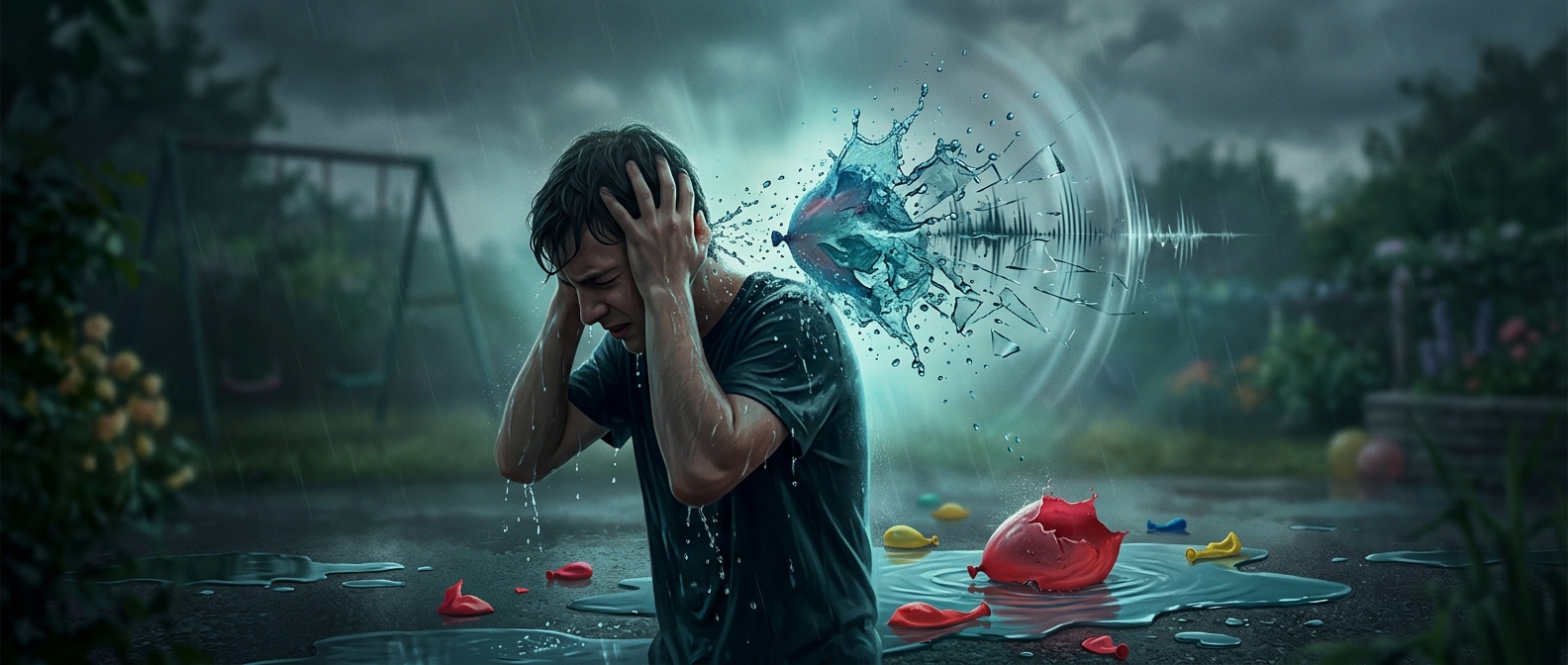
The balloon’s water may spread some of the force across the contact area, but it cannot guarantee a gentle landing. If the impact is strong or lands on a vulnerable spot, it can bruise tissue or injure the eye. A strike to the head can also damage the eardrum, the thin membrane that vibrates to carry sound into the middle ear. That membrane can rupture when sudden pressure or direct trauma pushes it beyond what it can withstand.
The Risk Is in the Throw, Not Just the Balloon
A balloon that breaks on impact has still transferred its force to the person it hit. Speed, distance, how much water is inside, and where it lands all affect the result, so there is no simple rule that makes a particular throw safe. The ear is especially exposed: a hit near it can produce a sudden pressure wave as well as a direct blow.
That is why water-balloon games should keep throws away from faces and heads. A splash can be part of the fun; a burst balloon does not mean the impact was harmless.