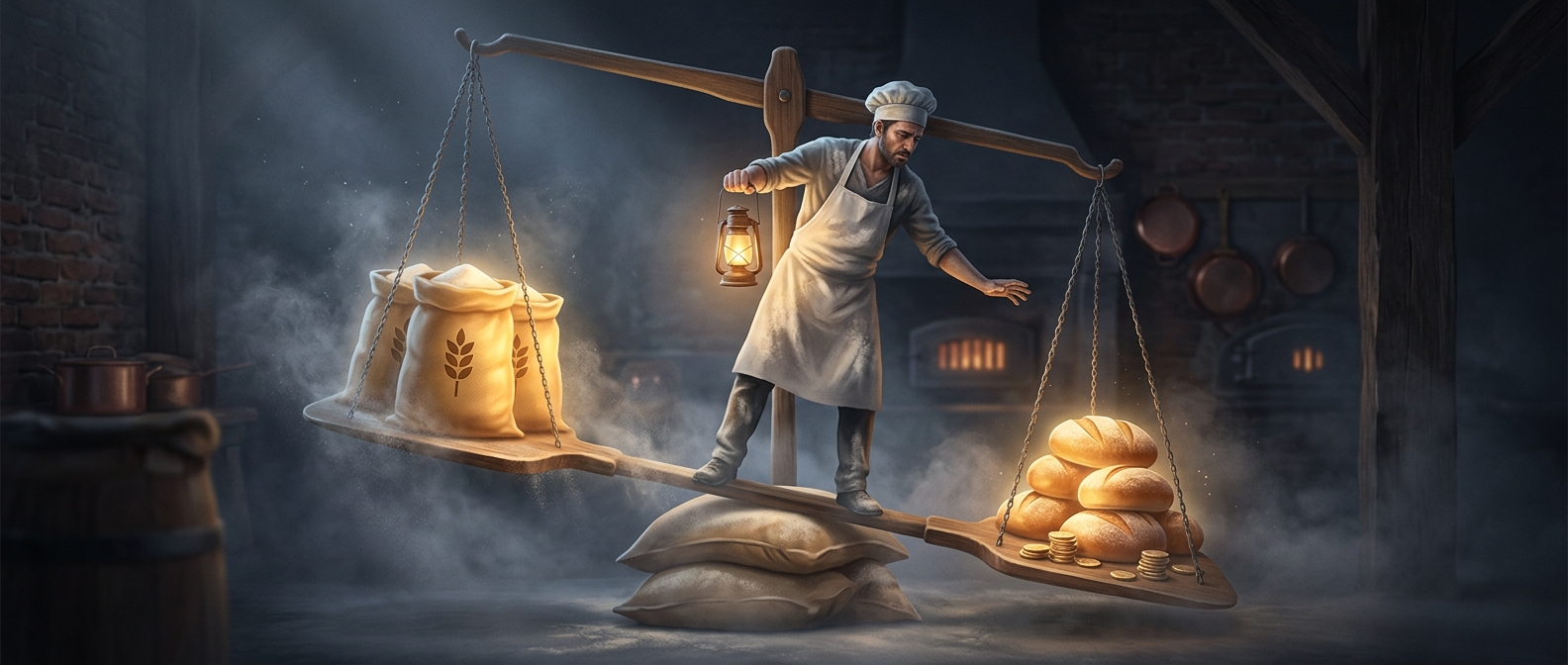
How a wheat shock reaches the bakery
A bakery does not buy wheat directly for every loaf, but wheat is the main raw material behind flour. When drought damages crops, less grain may be available, putting upward pressure on wheat prices. Flour mills then face higher costs for the grain they process, and those costs can feed into the price bakeries pay for flour.
The effect can arrive before a bakery has a chance to change its menu prices. A loaf already listed at a familiar price still brings in the same revenue, while each batch now uses a more expensive ingredient. The difference between sales revenue and the costs of making the product—the margin—shrinks.
Why the squeeze can persist
Flour is a variable cost: the total bill generally rises with the amount used. A bakery that keeps producing the same number of loaves cannot save money on flour by holding output steady. Its other costs, such as rent, may not change with each batch, but the ingredient bill can move with crop and commodity conditions.
The baker has choices, none cost-free: absorb the higher cost and accept less profit per loaf, raise prices and risk losing customers, or adjust recipes or portions. Even a small change in flour costs can matter when many products rely on it. A poor harvest therefore can show up not only in grain markets, but in the bakery’s daily calculation of whether each tray is still worth making.