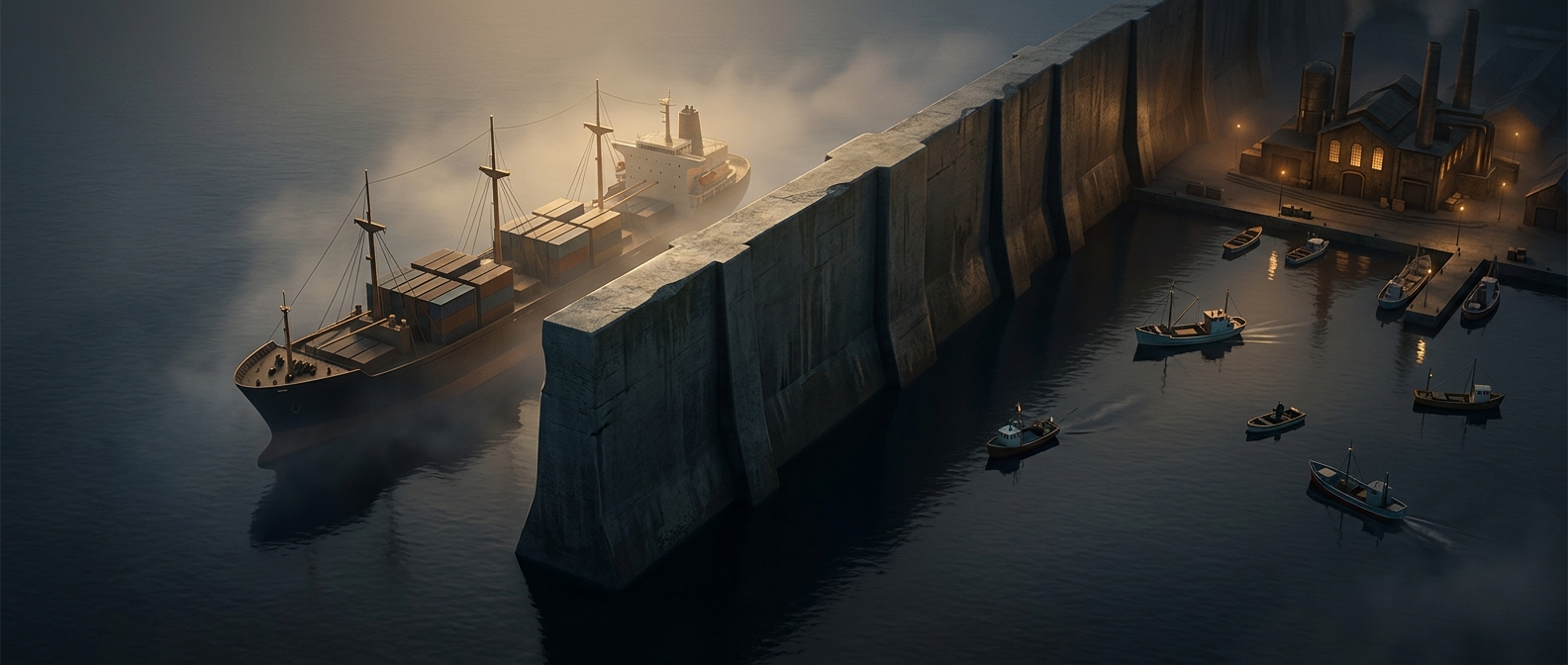
How an embargo closes the channels of trade
An embargo is more than a government telling its own companies not to sell to a particular country. To make the restriction effective, authorities may also limit purchases from that country, payments to its businesses, and the shipping or insurance services needed to move goods. Banks and transport firms become part of the enforcement chain: a legal sale is difficult to complete if no permitted route exists to pay for or deliver it.
The exact reach depends on the embargo. A broad ban can sharply restrict ordinary commerce, while narrower measures target particular goods, institutions, or transactions. Governments may allow exceptions for specified purposes, so “cut off” does not always mean every exchange is prohibited.
The pressure—and its cost
The intended pressure comes from lost access. Exporters lose customers, importers lose suppliers, and businesses in the targeted country may struggle to obtain goods, money, or services from abroad. The government imposing the embargo hopes those losses will make the other government change course, or make its choices more costly to maintain.
But the economic pain is not confined to the intended target. Companies in the imposing country can lose sales or face higher costs if they depended on the restricted market. Businesses may also have to check who owns a trading partner, where goods are going, and which financial institutions will handle payment.
Why enforcement shapes the result
Trade can be redirected through other countries or intermediaries, though doing so may add expense and risk. That makes enforcement important: restrictions have more force when firms and financial institutions cannot easily find a lawful workaround. An embargo therefore turns diplomacy into a practical question of access—who can still sell, buy, pay, ship, and insure across the border.