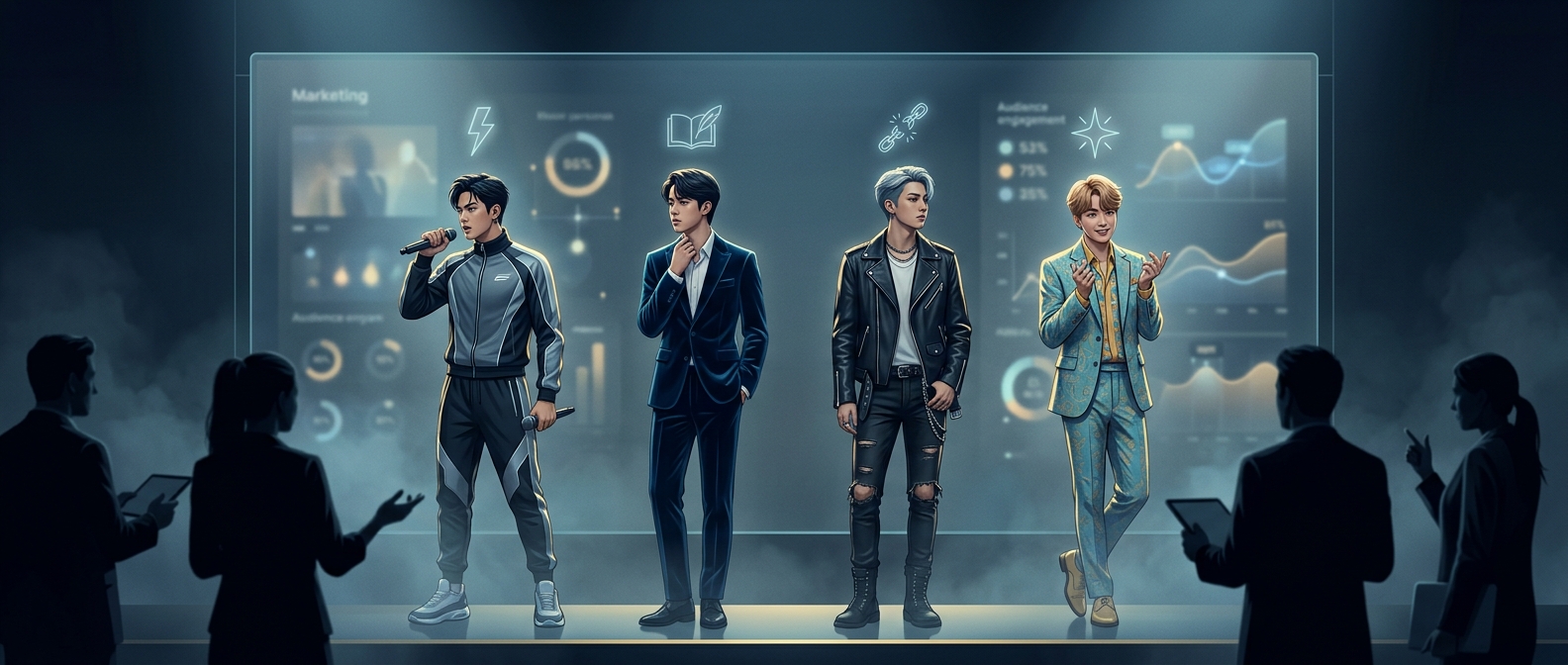
Why a Band Needs More Than One Persona
A group of performers can be musically similar, but fans often connect with members for different reasons. A “bad boy” image gives one member a recognizable place in the lineup: he may come across as rebellious or hard to impress, while another member is presented as warm, funny, or romantic. The contrast makes the group easier to describe—and gives different fans different people to gravitate toward.
How the Image Gets Built
The persona is reinforced through repeated, coordinated choices. Styling can signal attitude before a member says anything; interview prompts and prepared answers can keep that impression consistent in public. Over time, the same cues teach audiences how to read the member, much as a character’s wardrobe and dialogue establish a role in a television show.
That does not mean every moment is scripted, or that a performer’s private personality matches the public image. It means the version audiences encounter is partly shaped by decisions about what to emphasize. A member who is quiet in one setting might be encouraged to deliver sharper jokes or more defiant answers in another because those moments fit the group’s chosen identity.
A Useful Role—and a Constraint
Distinct personas help a band stand out in a crowded market, but they can also box performers in. Once fans recognize someone as the rebellious one, softer or more ordinary behavior may seem out of character—even when it is simply another side of the person. The role works best as a clear public shorthand, not as proof that the member’s whole personality can be summed up by it.