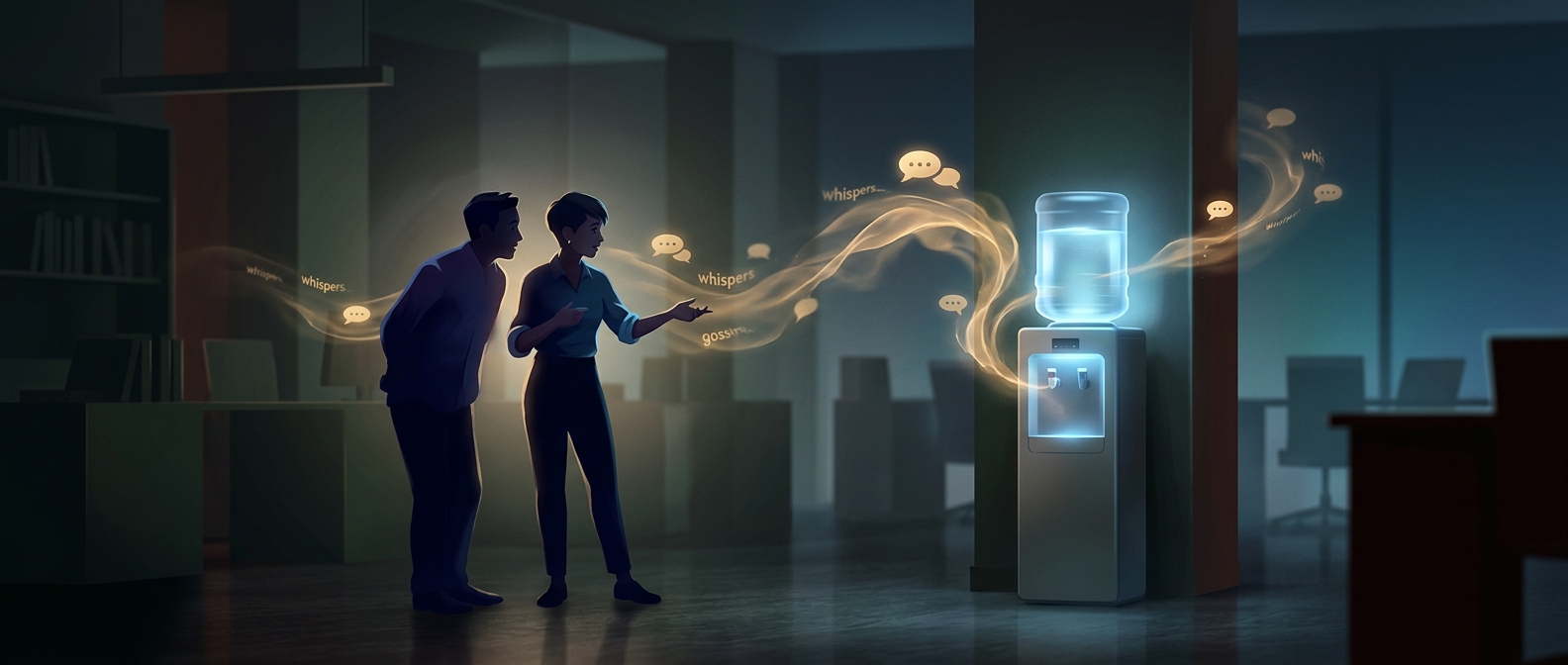
How a drink break became an information stop
A water cooler gives an office something a desk-side bottle does not: a shared destination. Employees arrive one at a time, often between tasks, and wait briefly while filling a cup. Those small pauses create repeated chances to exchange news without scheduling a meeting or choosing to seek anyone out.
The disposable cup helped make the arrangement workable. A paper cup could be used by one person and thrown away, avoiding the need to wash and return a shared drinking vessel. That made a communal dispenser easier to use in a workplace where many people passed through, while keeping the cooler a common fixture rather than a private supply.
The value—and cost—of an informal stop
Because encounters happened in passing, conversation could be casual: a question about a project, a change in someone’s plans, or news that had not yet reached a formal announcement. The cooler became a small piece of office infrastructure for informal information-sharing. It could help people connect across desks, but it could also spread rumor or leave out workers who did not visit the same shared spaces.
There was a tradeoff built into the convenience. Individual cups reduced the need to share a drinking vessel, but they created disposable waste. And the social effect did not come from the cup alone: it depended on people repeatedly having a reason to gather at the same place. The office’s quick trip for water could therefore do two jobs at once—quench thirst and keep workplace news moving.