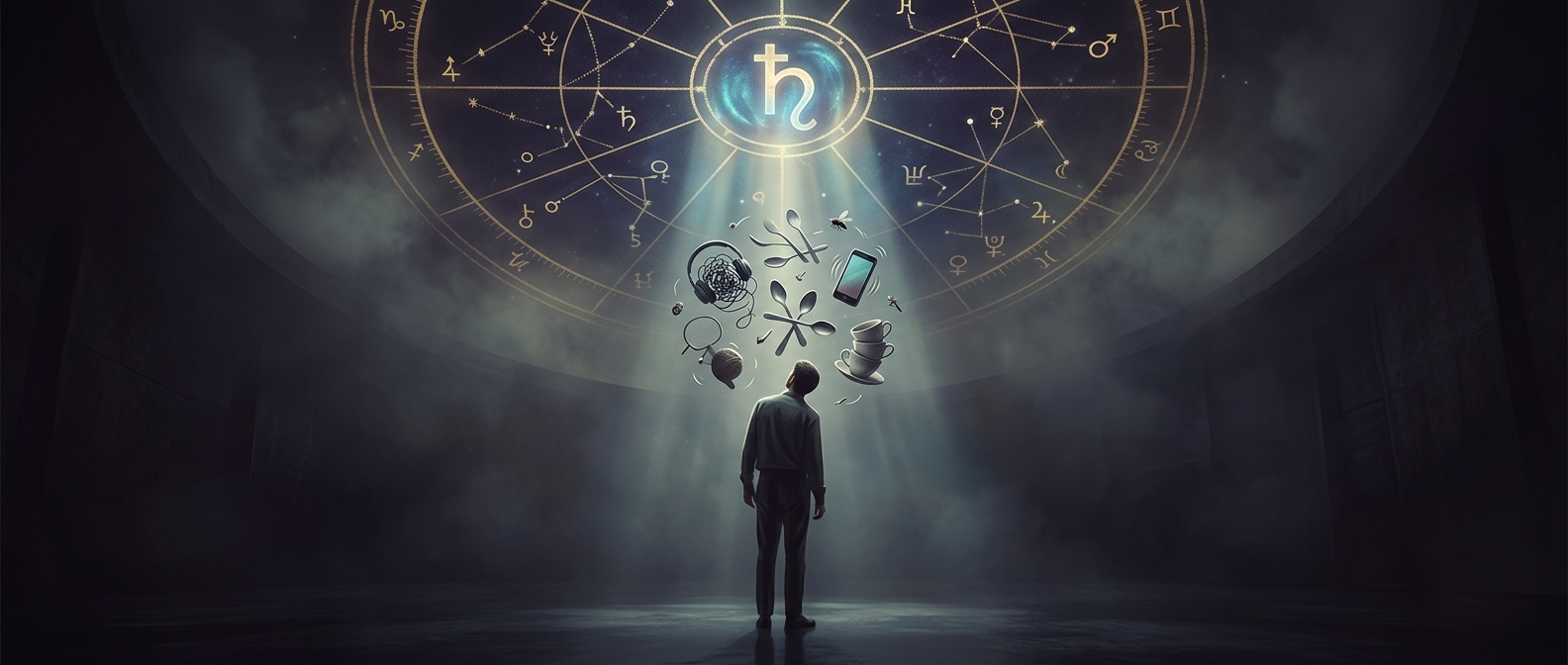
How a Birth Chart Gets So Specific
In astrology, a natal chart is a map of where the Sun, Moon, and planets appeared in the sky at the time and place of a person’s birth. Its descriptions of personality do not usually come from one placement alone. Astrologers combine several pieces: a planet is associated with a kind of drive, its zodiac sign with a style of expression, and its house with an area of life where that style may show up.
That layered reading is what lets an interpretation move from a broad trait to an everyday irritation. A chart might suggest not simply “stubbornness,” but a tendency to keep correcting a plan after everyone else has agreed to it—or to offer help in a way that feels like taking over.
Why the Quirks Can Feel Personal
Astrologers also consider aspects, the angular relationships between planets in the chart. In this symbolic system, a tense relationship can be read as competing impulses: wanting approval while resisting advice, for example. The resulting habit is often described as an awkward compromise between those impulses, rather than as a trait with just one cause.
Interpretations can differ because astrologers weigh placements differently and translate symbols into modern, recognizable behavior. The chart supplies a vocabulary and a set of connections; the reader supplies the concrete examples. That is why an annoying quirk may be presented as a particular pattern—such as turning a small disagreement into a lengthy debate—rather than as a generic label. Within astrology, the memorable detail comes from the combination, not from any single planet acting alone.