Why the underground-civilization idea persists
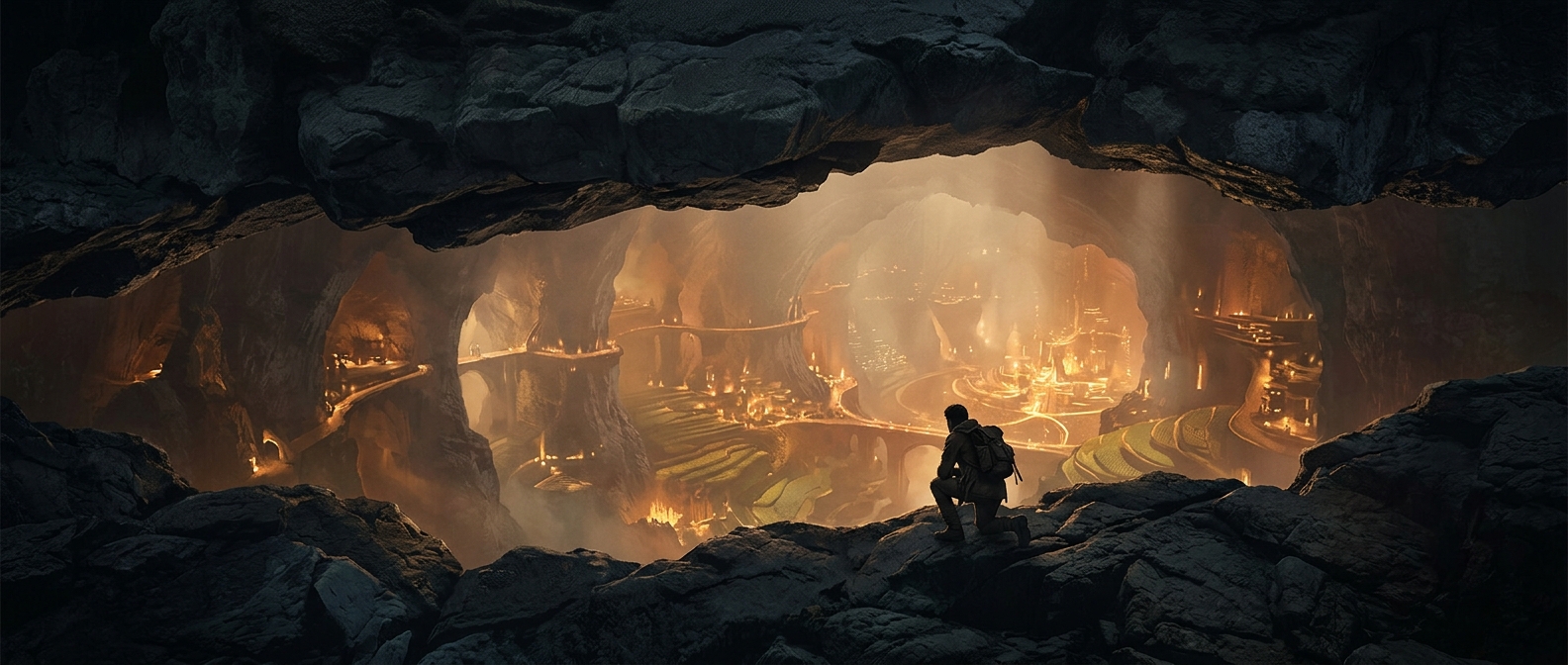
The thought of a hidden people beneath our feet combines two powerful images: a world we cannot see and beings advanced enough to keep it secret. In stories and mystical traditions, the underground realm can represent sanctuary, lost wisdom, or an alternative to a troubled surface world. The claim is meaningful as a belief, but it is not established evidence about a real civilization.
What a vast cavern can—and cannot—hide
Caves can be immense, and some parts of Earth remain difficult to explore. But a livable underground society would need more than empty space. It would require reliable food, water, breathable air, waste removal, and a way to manage heat. A hidden population would also leave traces: altered habitats, resource use, or signs of movement between its refuge and the surface.
The deeper the proposed refuge, the harder those problems become. Rock presses in, temperature generally rises with depth, and natural light disappears. An advanced society might solve some of these constraints in principle, but possibility is not proof that it has done so.
The role of deliberate secrecy
The idea that such beings avoid humans helps explain why no direct contact is offered as evidence: absence becomes part of the story. That makes the claim difficult to test unless it predicts something observable, such as a location or physical trace that independent investigators could check.
For now, underground civilizations belong to the realm of speculation and cultural imagination. Their enduring appeal may lie less in what they reveal about Earth than in what they express about us: the hope that somewhere beyond ordinary reach, a wiser and more private world is waiting.