Why the Ladder’s Shape Became the Warning
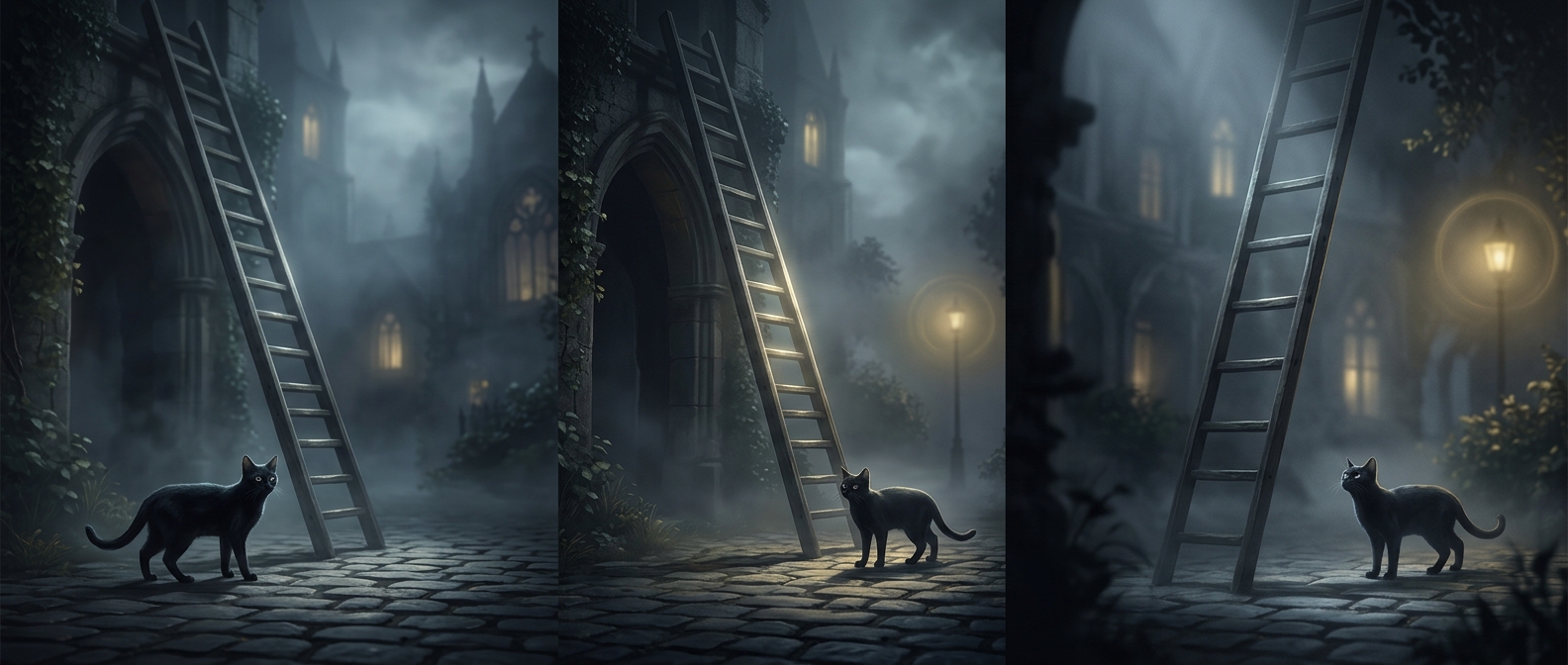
A ladder leaned against a wall leaves a triangular space between its sides, the ground, and the wall. In some folk beliefs, that shape was treated as sacred, so walking through it seemed like more than taking a shortcut: it meant crossing or disturbing a protected boundary. The idea belongs to superstition, not to a demonstrated power of triangles.
Why the Cat Takes the Blame
Black cats already carry a long-standing association with bad luck in parts of European folklore. Put one inside the ladder story and it becomes an especially visible culprit: if misfortune follows, the animal’s passage offers an easy explanation for an event that might otherwise feel random.
The two symbols reinforce each other. The ladder supplies the forbidden threshold; the cat supplies a recognizable omen. That combination makes the warning memorable, even though beliefs about cats and ladders vary and no single origin for the superstition is firmly established.
The practical habit of walking around a ladder can survive without anyone consciously believing in a sacred triangle. A small detour keeps the old rule intact—and, unlike the omen, also avoids disturbing someone working above.