Why Evaporated Whiskey Can Still Be Taxable
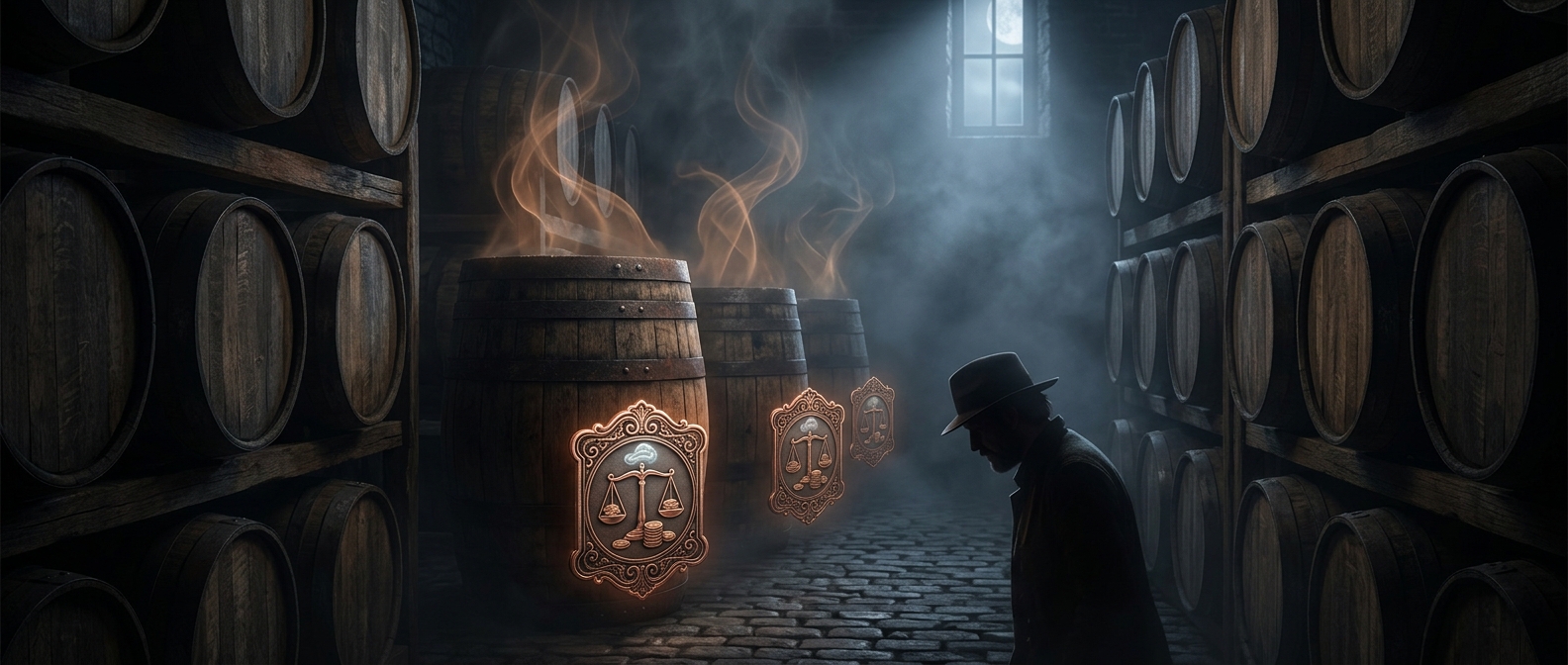
Whiskey does not leave a barrel all at once. During aging, small amounts of alcohol and water seep through the wood and evaporate into the air. The loss—known as the “angel’s share”—can shrink the amount a distillery eventually bottles, but it does not necessarily shrink the amount on which taxes are assessed.
The Tax Follows the Stored Spirit
In systems that tax distilled spirits while they are held in a bonded warehouse, the distiller generally has to account for the whiskey as it enters storage and ages. A bonded warehouse is a secured facility where alcohol can be kept under customs or tax authority oversight before the applicable duties are paid. The barrels are still part of the regulated inventory even as their contents change.
That creates a mismatch: the tax calculation may be based on the spirit placed into storage, while evaporation steadily reduces what can later be sold. The lost whiskey cannot be bottled to recover the cost, yet its disappearance does not automatically erase the tax obligation. The precise treatment depends on the jurisdiction and its rules for losses in storage.
A Cost of Making Older Whiskey
Distillers can influence evaporation by choosing barrel location and storage conditions, but reducing the loss is not the only goal. Temperature and humidity also affect how the whiskey matures, so a warehouse that preserves more volume may not produce the same aging conditions. The business must weigh a smaller eventual yield against the character it wants in the finished spirit.
The result is a cost built into aging: the longer whiskey spends in wood, the more product may vanish before sale, while taxes and other carrying costs can continue to accrue. A barrel’s missing volume is not just a production loss—it can be a taxable one, too.