From a game idea to a Robux purchase
A Roblox creator can earn money in two connected ways: by making something players want to buy, or by building an experience that gives them a reason to return. An avatar accessory might be sold through Roblox’s marketplace. Inside a game, a creator might offer a permanent perk, a one-time item, or access to an extra activity. Many experiences are free to enter; purchases are optional additions rather than a ticket at the door.
That makes design part of the business model. A useful tool, distinctive outfit, or well-timed extra challenge can feel worth buying because it fits the experience. If the offer is confusing or the game gives players little reason to stay, the creator has less chance to make a sale.
Why the creator’s sale is not the whole payment
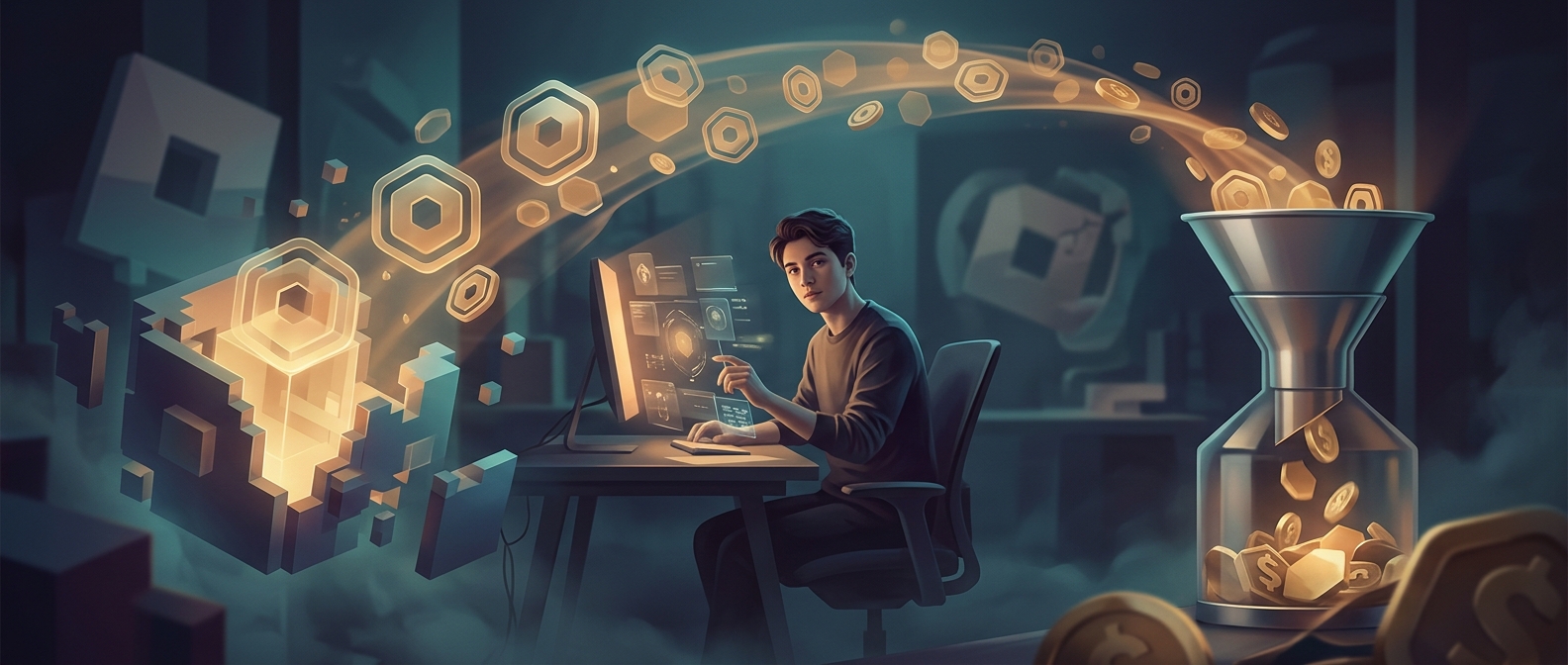
Players generally pay in Robux, Roblox’s virtual currency. The platform processes the transaction and keeps a share, while the creator receives Robux under the terms for that item or experience. The amount a creator earns can therefore depend on what was sold and where the purchase happened; it is not simply the listed price paid out in full.
Robux earnings are not automatically cash. Creators who meet Roblox’s eligibility and program requirements can use its Developer Exchange, commonly called DevEx, to exchange eligible earnings for real money. That distinction matters: a popular item may generate a visible stream of in-game currency, but only qualifying earnings can become a cash payout.
For a small creator, the model links craft to reach. Making an item or minigame is only the first step; it also has to attract players, fit naturally into an experience, and earn enough eligible Robux to be worth exchanging.