When a Floating Hotel Loses Its Mooring in More Ways Than One
A barge hotel may look like a building, but it still behaves like a vessel. Its hull must remain watertight, its mooring lines must hold it in place, and its machinery and utilities need regular attention. Wind, waves, salt water, and repeated movement can strain the structure and speed corrosion—especially when repairs are delayed.
That makes upkeep inseparable from the hotel business. Guests need safe access, reliable power and water, and protection from rough conditions. A remote harbor can make that harder: workers, parts, fuel, and specialist repairs may all cost more to bring in. If the business is seasonal or already struggling, a major repair can become difficult to finance.
Why Failure Can Leave a Vessel Behind
When an operator goes bankrupt, the hotel does not simply vanish like a closed building. The barge remains afloat, tied up, and in need of care. A buyer must weigh its earning potential against the cost of towing it, repairing it, and meeting whatever local requirements apply. In a distant harbor, even moving it to a better location can be expensive.
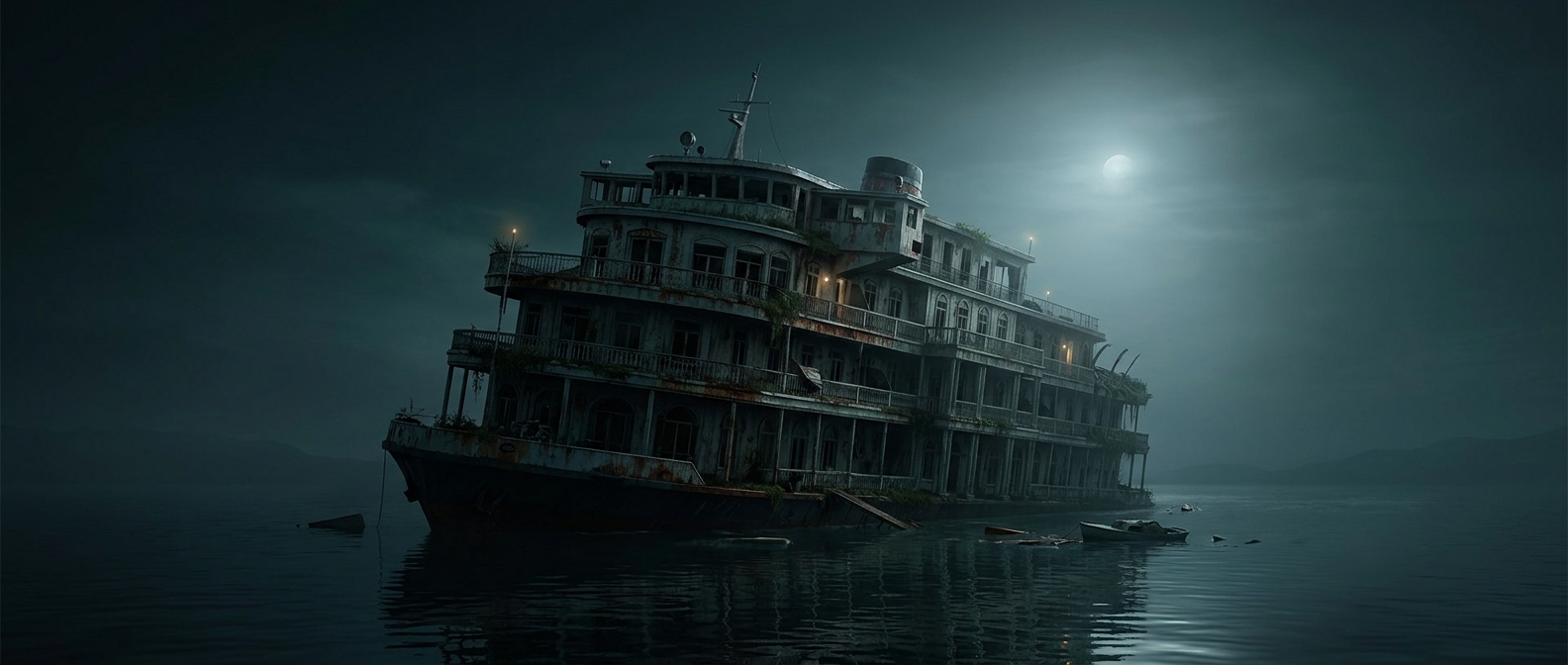
If ownership is unclear or no buyer emerges, routine maintenance may stop. Small leaks can worsen; exposed rooms and fittings deteriorate; and a weakened vessel can eventually take on water. “Rot” often describes the decay of the hotel’s wooden or interior parts, while the metal hull is more likely to corrode.
The result is a slow transition from business asset to costly salvage problem. A floating hotel can be abandoned not because it has stopped needing attention, but because the cost of keeping it safe keeps accumulating after the income has stopped.