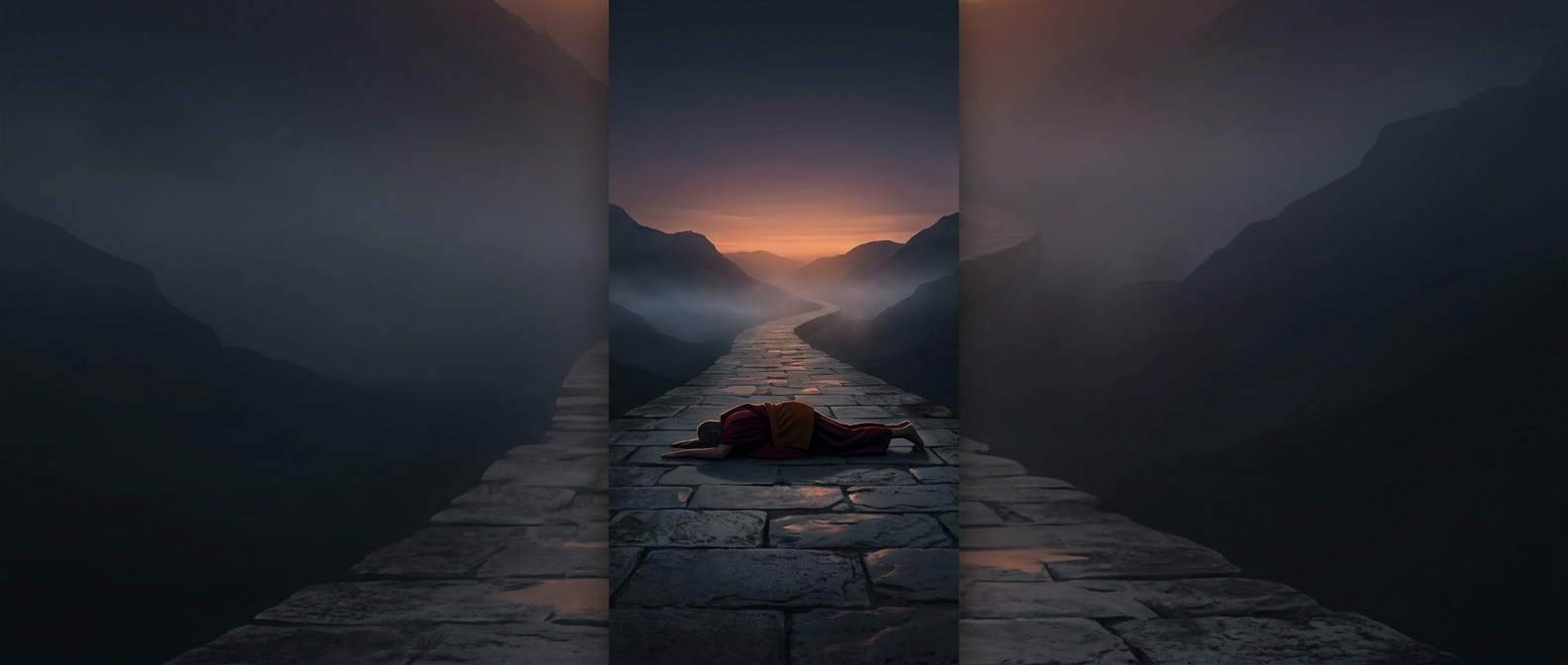
A pilgrimage measured in body lengths
A pilgrim making this journey turns walking into a repeated act of prostration: lowering the body to the ground, stretching forward, then rising and beginning again. A prostration is a gesture of reverence in which a person bows or lies down; in a full-body version, the ground becomes part of the route rather than merely something beneath the traveler’s feet.
Because each cycle advances only about one body length, even a short stretch of road demands many repetitions. The movement is slow by design, and the traveler’s progress is counted less by pace than by the steady completion of each gesture.
Effort becomes part of the practice
The method changes what it means to cover distance. Instead of separating travel from worship, it makes each advance an embodied expression of devotion. Repeatedly lowering and lifting the body also requires stamina, patience, and attention—qualities the practice can cultivate alongside the journey itself.
The physical cost is immediate: the traveler must keep working against the ground, while the route may expose clothing and skin to dirt, roughness, or weather. That effort is not incidental to the method. The pilgrimage is made through repeated acts of bodily humility, not simply by arriving at a destination.