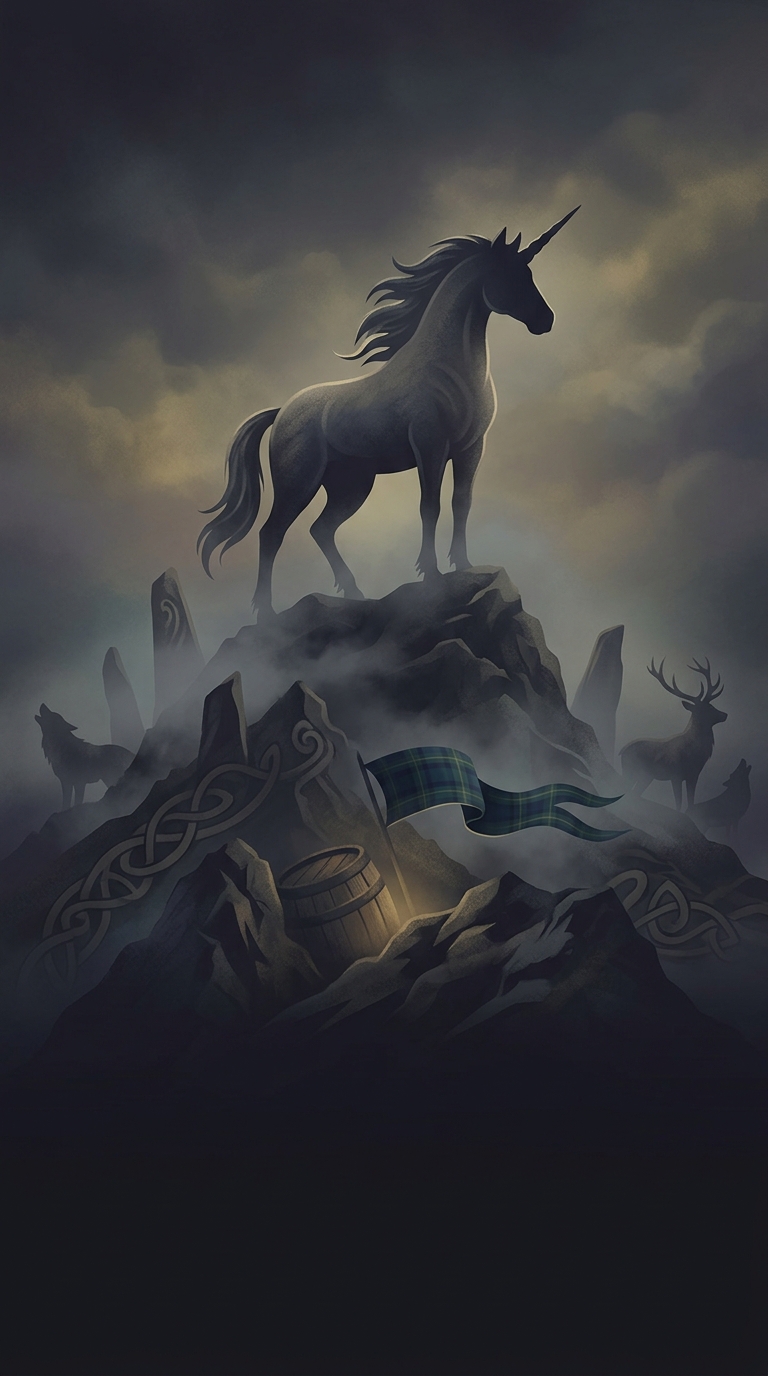
A mythical creature with a place in Scotland’s royal arms
Scotland’s unicorn is not a claim about local wildlife; it is a heraldic emblem—a creature used on a coat of arms to represent a ruler or country. The unicorn became associated with Scottish royalty in the late Middle Ages, appearing in royal imagery before Scotland and England were joined under one crown. Its place in the national imagination comes from that long heraldic tradition, rather than from a choice between real animals such as stags or bears.
Why the unicorn is shown in chains
In Scottish royal arms, the unicorn is traditionally pictured with a chain. Medieval European stories portrayed unicorns as immensely strong and difficult to tame, so the chain signaled that the creature’s power had been restrained. It also made the unicorn a fitting counterpart to the lion, the other powerful animal in the arms: together, they framed the royal shield as symbols of authority and strength.
After the crowns of Scotland and England were united in 1603, the arms of the shared monarchy displayed both a Scottish unicorn and an English lion. The pairing kept Scotland’s emblem visible within a larger political design. That is why the unicorn remains recognizable today: it is not just an unusual national symbol, but a surviving piece of Scotland’s royal heraldry.