How an accidental spelling became a story seed
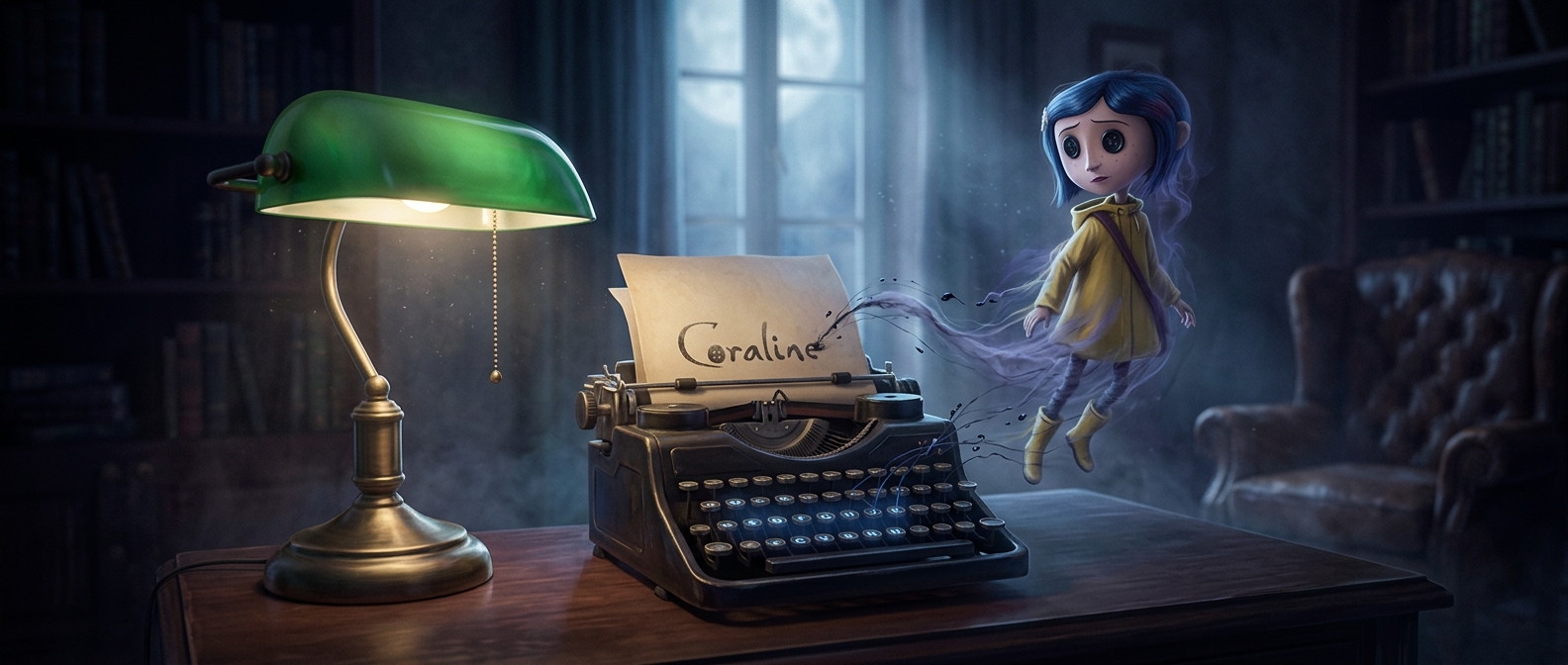
“Coraline” began as a one-letter departure from a familiar name. That small change did more than produce an unusual title: it gave Neil Gaiman a word that sounded almost ordinary, but not quite. In dark fantasy, that near-familiarity can be useful. A reader recognizes the shape of a name while noticing that something about it feels slightly off—the same tension that makes the uncanny work.
A name can set the tone
Once Gaiman liked the sound of the typo, he treated it as creative material rather than correcting it. The name could belong to a character and give the novella a distinct identity, while its resemblance to “Caroline” kept it easy to say and remember. The mistake became a design choice: an accidental word supplied a compact tonal cue for the story that grew around it.
That is one way a writing error can change a work’s direction. A stray spelling may be discarded, or it may reveal a possibility the writer would not have deliberately searched for. Here, the slightly strange name survived the page and became the title readers know.