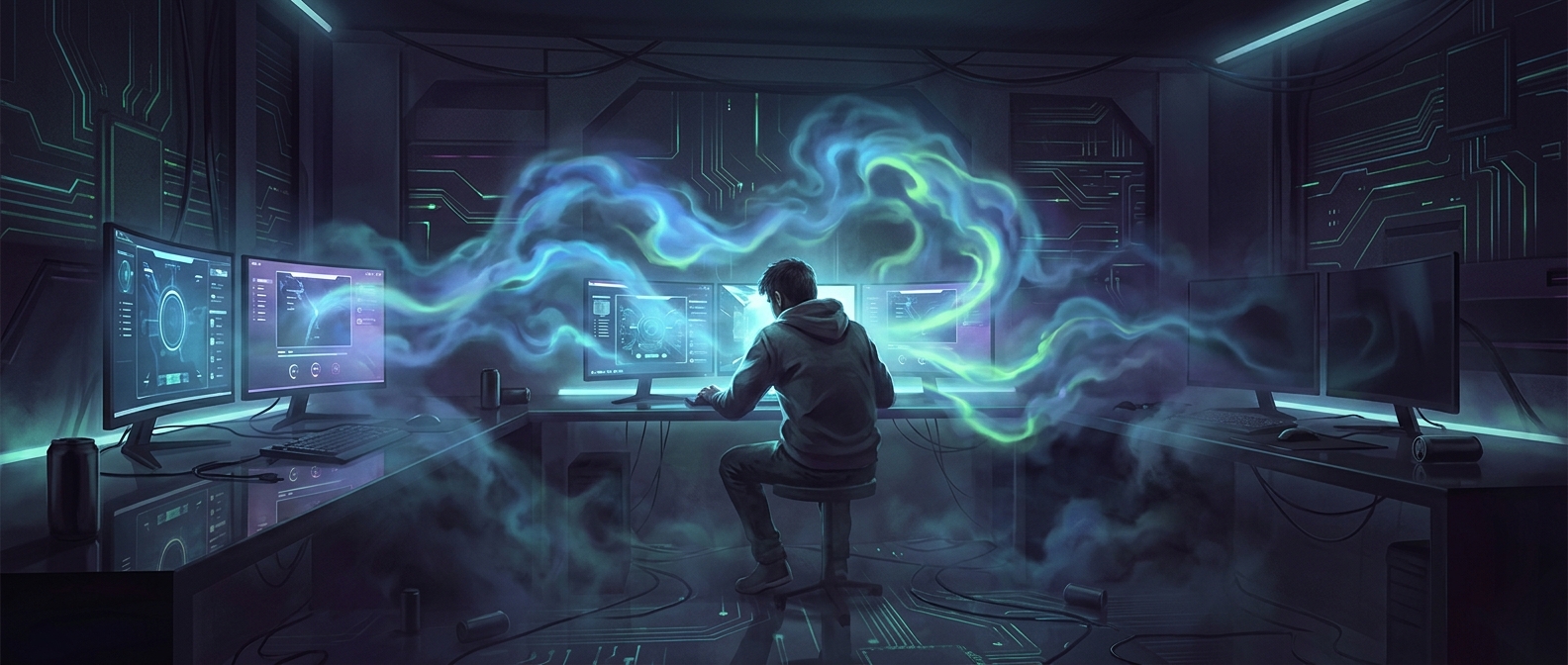
Why Team Houses Can Turn Into Workspaces
A gaming team house is part home, part workplace. Players may spend long stretches practicing in the same rooms where they eat and relax, while computers, monitors, headsets, and other equipment stay set up between sessions. The room’s layout is built around playing, not necessarily around easy cleanup.
That creates a steady stream of small messes: takeout containers from meals eaten between practice blocks, beverage cans left beside a desk, and cables running between devices. Each item is easy to ignore when the next match or scrim—a scheduled practice game against another team—is about to begin.
Shared Space, Blurred Responsibility
In a shared house, no one person may feel responsible for the whole room. A player can keep their own station organized while the common area gradually fills with everyone’s leftovers and gear. And cables are not just visual clutter: they connect equipment that players rely on, so moving or unplugging them can disrupt a setup.
The result is a practical tradeoff. Keeping a station ready for the next session can take priority over restoring the room to a comfortable living space. The mess is less a sign that gaming equipment is inherently chaotic than a consequence of turning shared domestic space into an always-ready workplace.