Why Golf Club Grooves Matter at Impact
A golf ball does not always meet a clean metal face. On a shot from wet turf or thick grass, water and plant material can get trapped between the ball and the club. That layer acts like a lubricant, reducing the friction needed to make the ball spin.
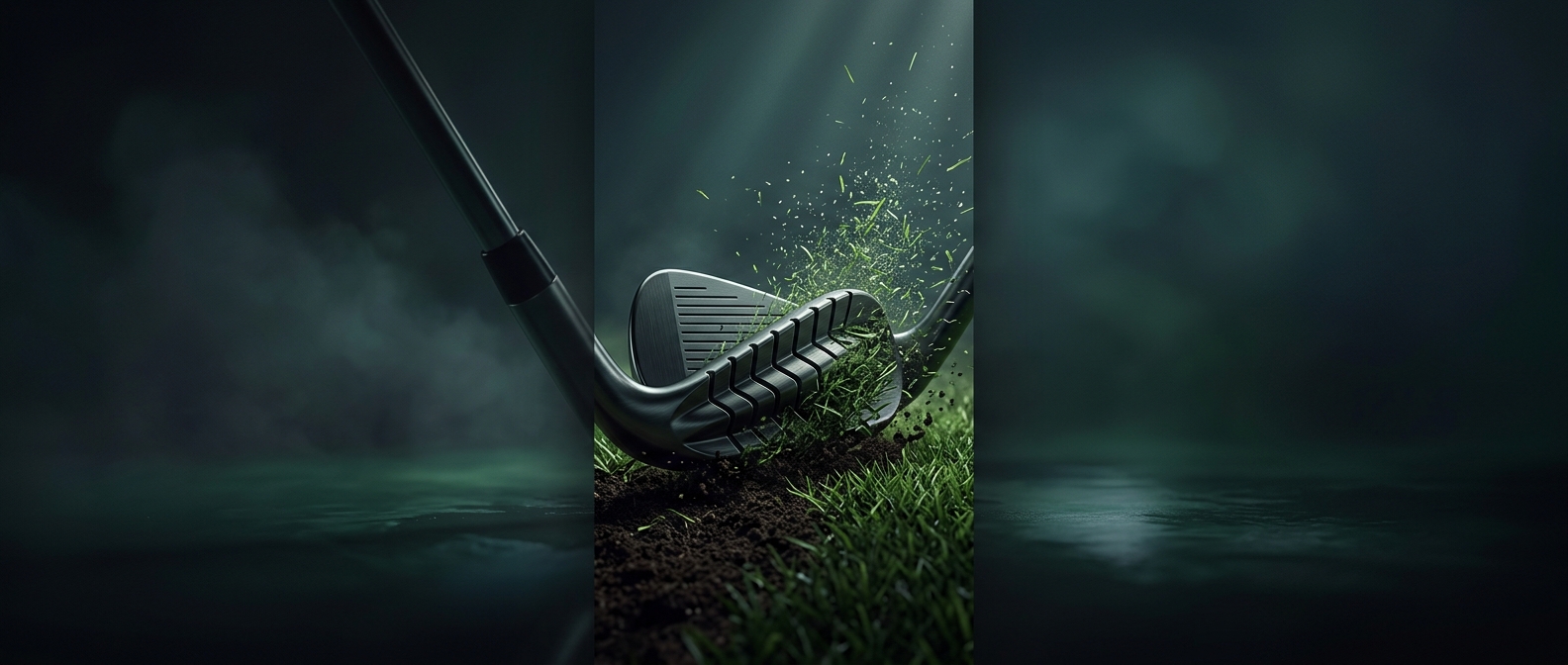
The grooves cut across an iron or wedge face give some of that material somewhere to go. As the ball compresses against the face, grass can be pinched and sheared while water and debris are pushed into the channels. This helps the ball make firmer contact with the face instead of sliding across a slick layer.
Contact Helps Create Spin
Backspin comes from friction during impact: the angled clubface grips the ball as it is struck, setting it rotating backward. Grooves do not create spin by themselves; they help preserve the contact that lets the clubface transfer it. The club’s loft, the quality of the strike, and the ball also matter.
The difference is especially useful when a shot comes through grass or moisture, where debris is more likely to interfere. On a clean, dry strike, the ball can contact the face directly, so the grooves have less material to clear. Their practical job is less like a saw cutting the ball and more like drainage channels keeping the striking surface from being separated from it.