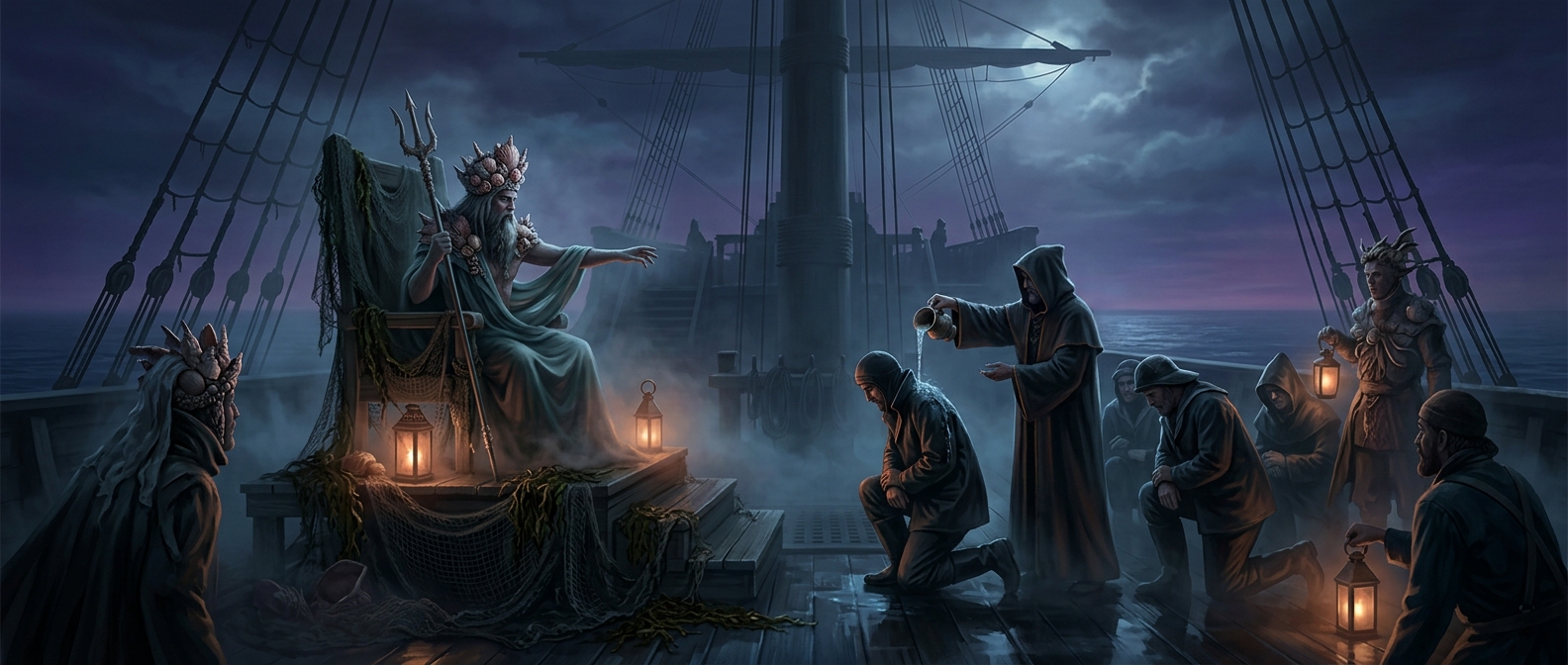
The messy ritual behind crossing the equator
A ship’s equator-crossing ceremony turns a line on the globe into a social threshold. Sailors who have crossed before play the court of Neptune, the Roman sea god, while newcomers—often called “pollywogs”—are put through a mock trial or initiation. The details vary from ship to ship; the aim is not to teach navigation, but to mark a first crossing in a way the whole crew can share.
Why use kitchen slop?
The mess is part of the theater. Being covered in unpleasant leftovers makes the newcomer the comic center of attention and gives the ceremony a physical ordeal to remember. It also flips the ship’s usual social roles for a while: experienced crew members become performers and judges, while the uninitiated endure the joke. When newcomers later take part as veterans, they join the group that carries the tradition forward.
Food waste is not essential to every version, and the ritual has no single official script. Some ceremonies use other messy or theatrical challenges; others are toned down or skipped. The slop is a prop in an initiation, not a practical requirement of crossing the equator. Its purpose is to make an invisible geographic milestone feel like a shared event—with a story the crew can retell long after the cleanup.