A button turns an escort into a relationship
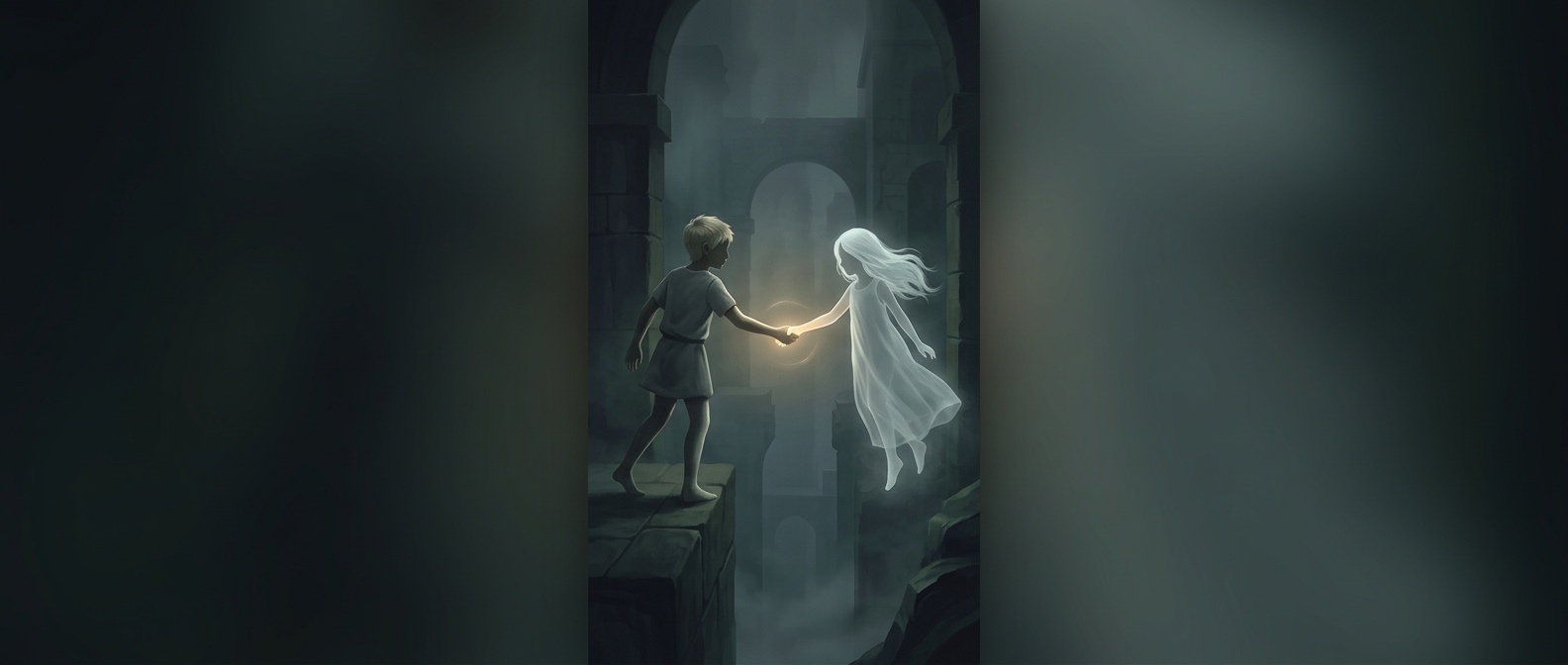
In Ico, Yorda does not simply trail behind like a marker on a map. The player holds a button to take her hand and guide her through the castle. Letting go gives Ico freedom to move on his own, but Yorda may lag behind or become separated. Staying together is therefore an action the player must keep choosing, not a condition the game quietly handles in the background.
That small control decision changes how travel feels. A doorway, a narrow ledge, or a stretch of stairs is no longer just terrain to cross: Ico has to bring someone else along. The player’s attention divides between finding a route and making sure Yorda can follow it.
The danger gives the gesture weight
The handhold matters most when the castle’s shadow creatures appear. They can seize Yorda and try to drag her away, so a fight is also a race to keep her within reach. Ico may have to stop guiding her, defend her, then take her hand again and continue.
Because the game asks for this care through repeated movement rather than lengthy explanations, the bond emerges from play. The journey’s vulnerable companion is not merely something to protect in a cutscene; keeping her close is part of the player’s work, one step at a time.