When More Firepower Made a Warship Less Seaworthy
The Vasa was built to project Swedish power at sea, but its design had to balance two competing demands: carry enough guns to threaten an enemy and remain stable in rough water. Cannons were heavy, and mounting them high on the ship raised its center of gravity—the point around which the vessel’s weight effectively balances. The higher that point, the more easily a ship can tip.
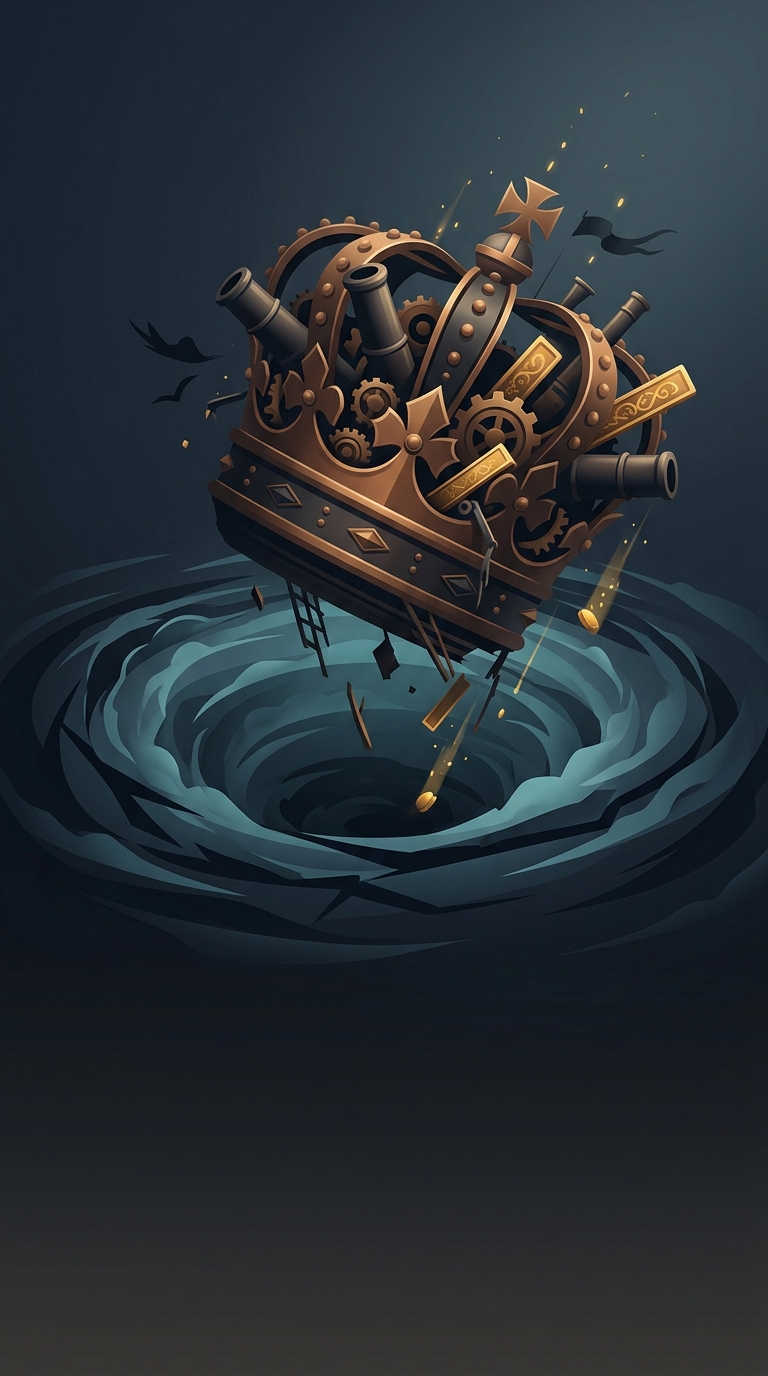
The Vasa’s great weight of armament was not matched by enough stability low in the hull. Ballast—heavy material placed in a ship’s bottom to help keep it upright—could not compensate. When a gust pushed the ship over during its first voyage in Stockholm harbor in 1628, water poured through open gunports before the crew could recover. The ship sank within minutes.
The Cost of an Unbalanced Order
The disaster was more than a failed launch. A royal warship consumed timber, iron, bronze, skilled labor, and years of work; losing one meant losing a major investment as well as a weapon. The pressure to make a ship visibly formidable could therefore carry a practical cost: every added cannon increased firepower, but also demanded a hull and ballast arrangement capable of supporting it.
The Vasa shows what happens when those demands do not stay in balance. Its guns were meant to make Swedish authority unmistakable. Instead, the ship’s short first voyage made a different point: a warship’s weapons mattered only if its structure could keep them afloat.