Why Venice put a price on towering shoes
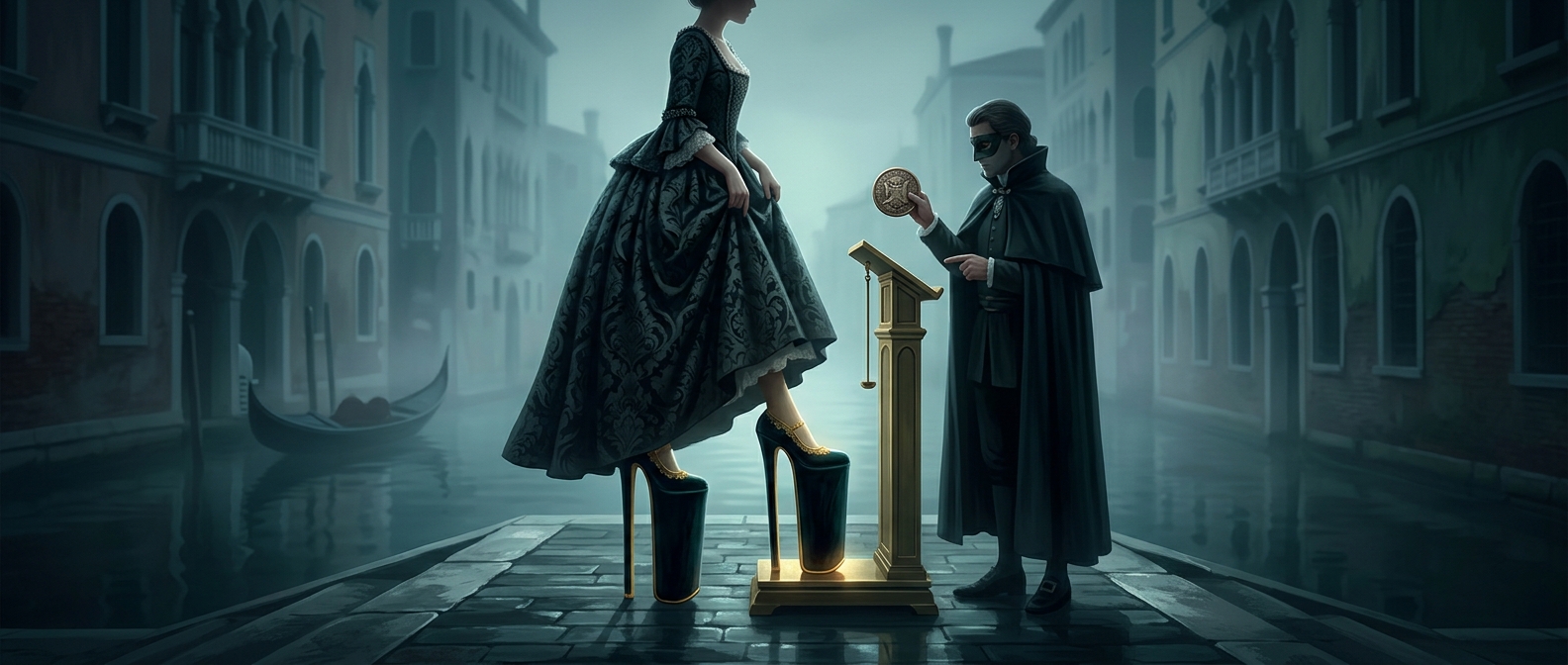
In 15th-century Venice, chopines were platform overshoes that could lift a wearer dramatically above the street. Some reached extraordinary heights—around 20 inches—and required help to walk in. They were conspicuous accessories, but they also served a practical purpose in a city where streets could be wet and muddy: the extra height kept fine clothes and shoes farther from the ground.
That combination made chopines more than footwear. Their height and expense signaled status, while their usefulness gave wearers a reason to keep using them. A tax could raise the cost without removing either attraction.
Why a luxury tax could miss its target
A tax on costly goods is meant to make them less appealing by making them more expensive. But its effect depends on how buyers respond. If people can afford the added charge—and value the good for its status or practical benefits—they may simply pay it.
That appears to be what happened with wealthy chopine wearers. The tax treated the shoes as a luxury to be discouraged, but for those women, the shoes offered both display and protection from filthy streets. Paying the charge was a way to keep the benefits without changing the habit.
The tradeoff behind the policy
The episode illustrates a basic limit of taxing luxury consumption: a price increase does not necessarily change behavior when the buyers are wealthy and the product carries social meaning. The tax could make wearing chopines more costly, but it did not erase the reasons to wear them. In Venice, even a charge intended to curb the fashion could become just another cost of standing above the crowd—and above the mud.