Why blue belongs to a peace ritual
In candle magic, color works as a symbolic cue: the practitioner chooses a shade that represents the quality they hope to invite. Blue is commonly associated with calm, so lighting a blue candle gives the ritual a visible focus. The meaning comes from the practice and the person’s intention, not from a demonstrated power in the wax or flame; associations can also differ between practitioners.
That symbolism can shape what the ritual feels like. A person might pause, name the kind of peace they want—less anger in a conversation, for example—and watch the candle burn while holding that intention in mind. The repeated, deliberate act can make an abstract wish feel more specific and keep attention on it.
What the melting candle can—and cannot—do
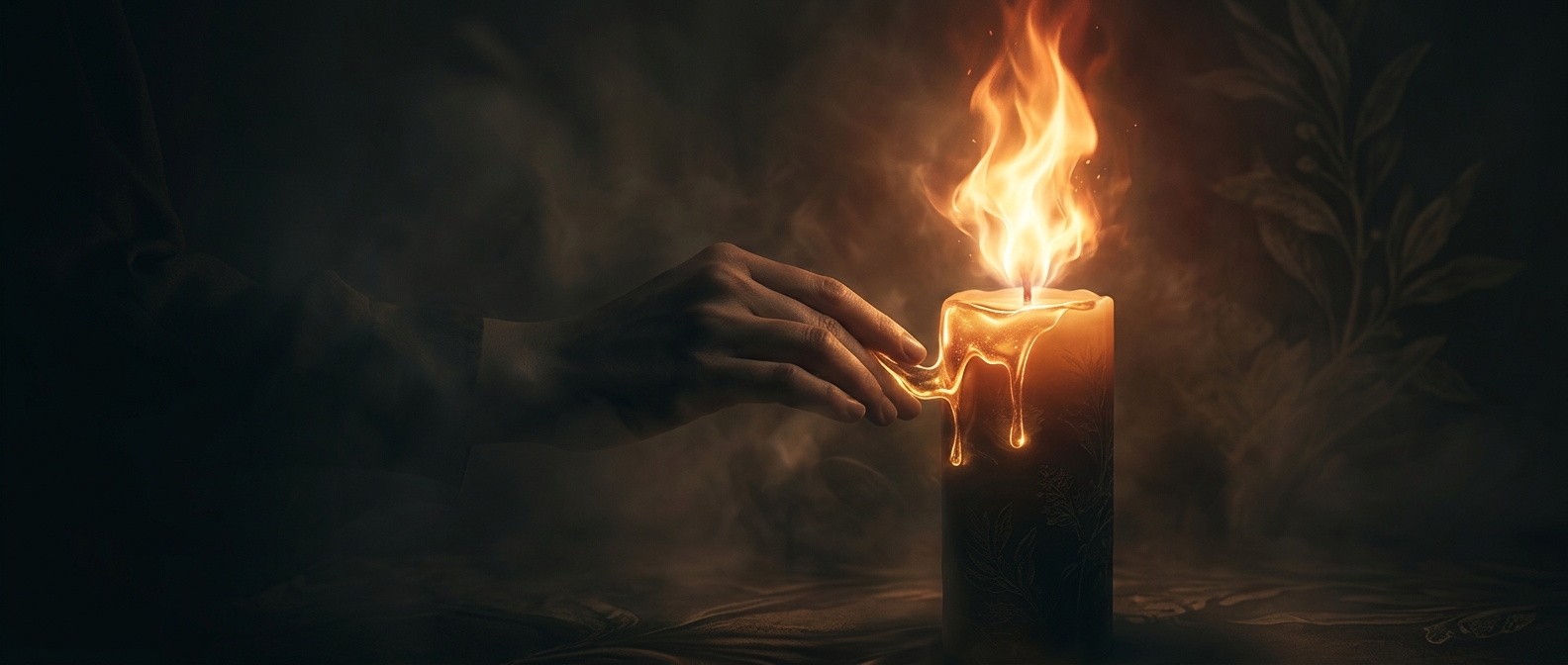
As the candle melts, its changing shape gives the ritual a natural passage of time: the intention is held through a small, bounded act rather than left as a passing thought. For someone who practices candle magic, that can be meaningful in itself. It may encourage reflection or a calmer approach, but it does not control another person or settle a dispute by itself.
The distinction matters when the wish concerns a conflict. A blue candle can serve as a personal symbol of peace; resolving the conflict still depends on what people do beyond the ritual—such as listening, setting boundaries, or seeking help.