A market crash is not a single moment of ruin
A falling share price can destroy wealth on paper quickly, but the damage did not work like a trapdoor beneath every investor. Some buyers had purchased stocks with borrowed money, using the shares as collateral. When prices dropped, lenders could demand more cash or require the shares to be sold—a margin call. Those forced sales could push prices lower, adding pressure on other borrowers. Investors who owned shares outright faced losses too, but not necessarily an immediate demand to pay a lender.
Nor did the stock market’s collapse instantly explain the broader economic catastrophe that followed. A share price is the market’s estimate of a company’s value, not a measure of every job, paycheck, or business in the country. The crash intensified fear and financial strain; the Depression unfolded through a wider, prolonged breakdown in economic activity.
Why the window became the story
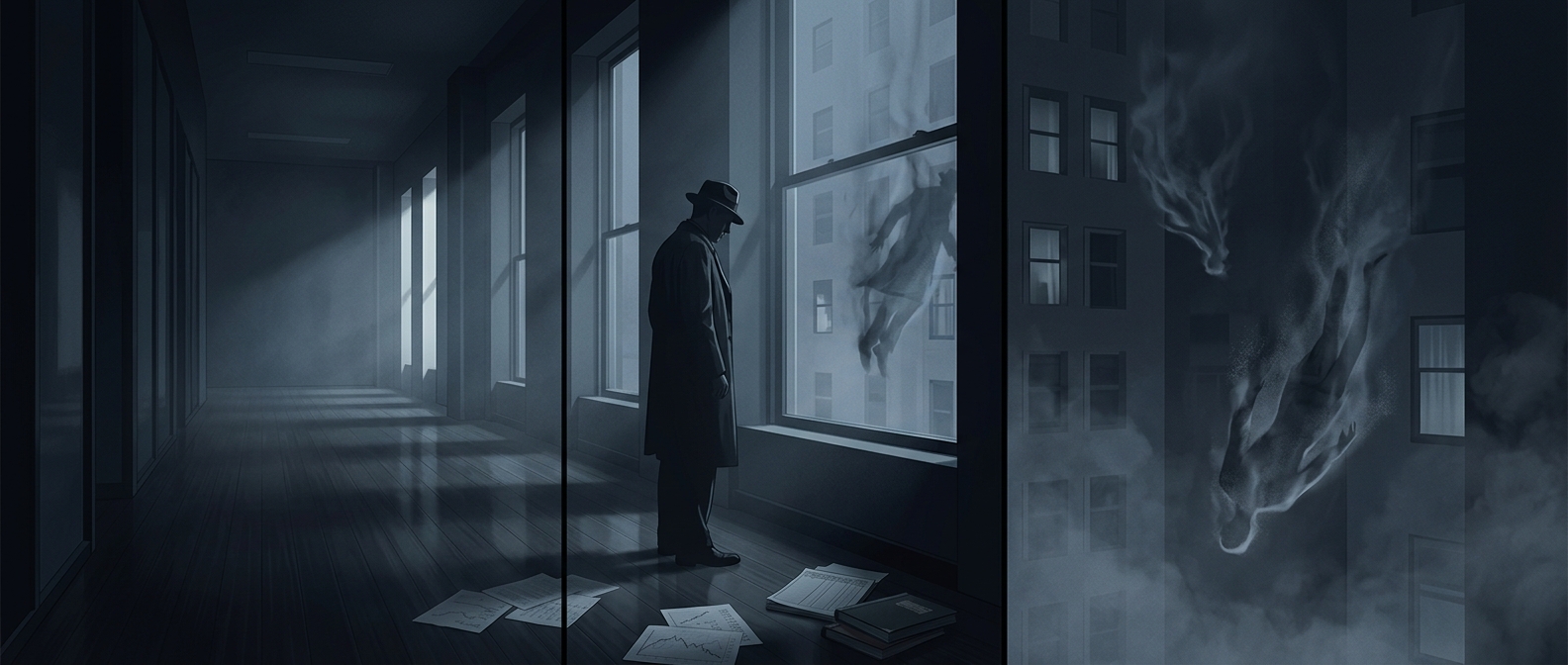
A person leaping from a Wall Street window turns an intricate crisis into one startling picture: the market falls, a fortune disappears, and a life ends. That image is easy to stage and remember. The actual consequences were less cinematic—debts, lost savings, shrinking business activity, and hardship spread across many people over time.
The story also attached the crisis to a recognizable character: the broker, supposedly undone in an instant. That shorthand can obscure who bore the costs and how they accumulated. The crash was not a row of private tragedies neatly synchronized with falling stock prices; it was a shock whose financial effects traveled through borrowing, lending, and the wider economy. The enduring movie image makes a complicated chain of events look like one fall.