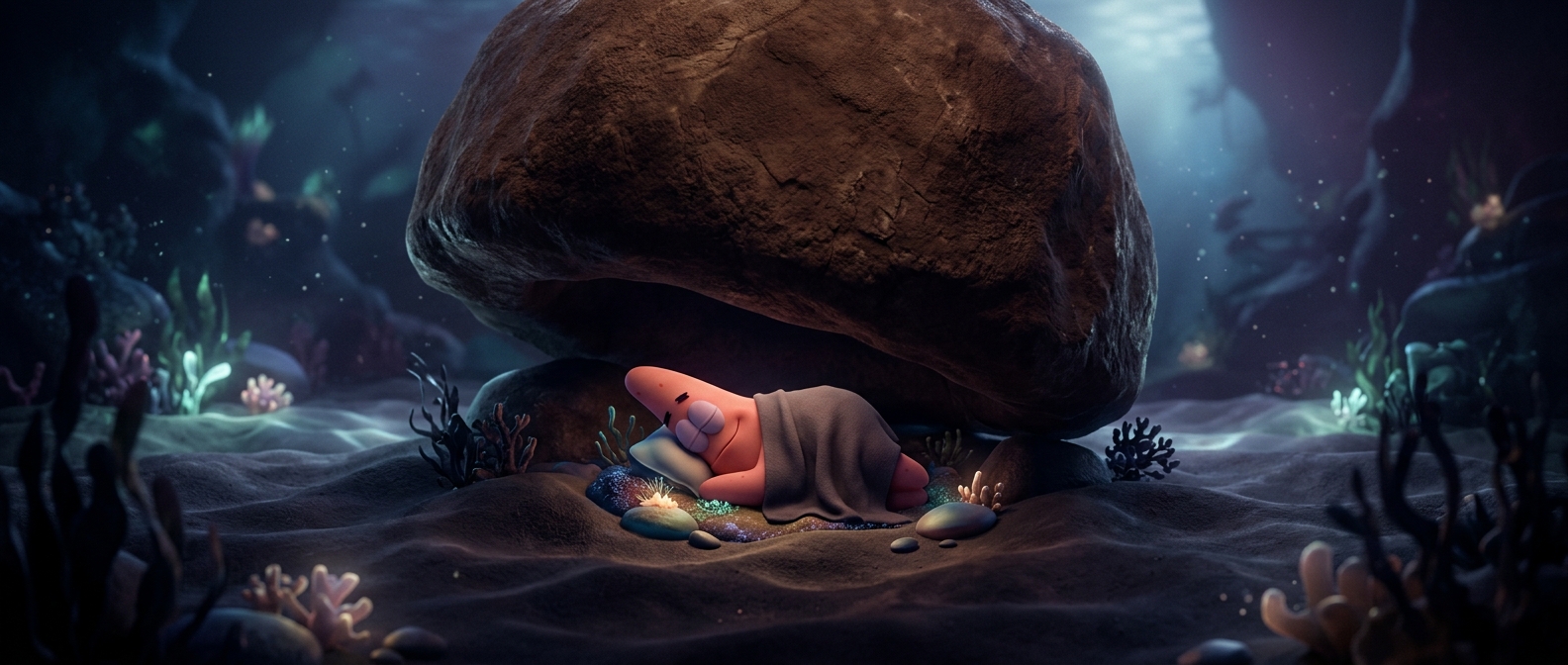
Patrick’s Rock Is Both Shelter and Punchline
Patrick Star’s home turns an ordinary seabed object into a recognizable house without hiding what it is: a large rock. The weather vane on top signals “home” at a glance, while the rock itself keeps the joke intact. Patrick has not built a conventional house beneath the sea; he has made a place to live out of something that looks as if it was simply sitting there.
That contrast lets the setting do character work. Patrick’s home feels improvised and cheerfully basic, matching his laid-back, often impractical approach to life. The packed-sand furniture extends the same idea indoors: even the furnishings seem formed from whatever the ocean floor provides, rather than from familiar household materials.
A Simple Design With Two Readings
The rock works in two ways at once. From outside, it is an absurdly minimal home; inside, it can function as a domestic space where Patrick sleeps and goes about daily life. Viewers do not need an explanation of how the structure was built. The weather vane and furniture supply just enough familiar detail to make the rock legible as a house, while its rough, natural form remains visible.
That visual mismatch is the lasting gag: Patrick’s home looks less like a building than a rock someone decided to call home—and, in his world, that is enough.