A message built into the road
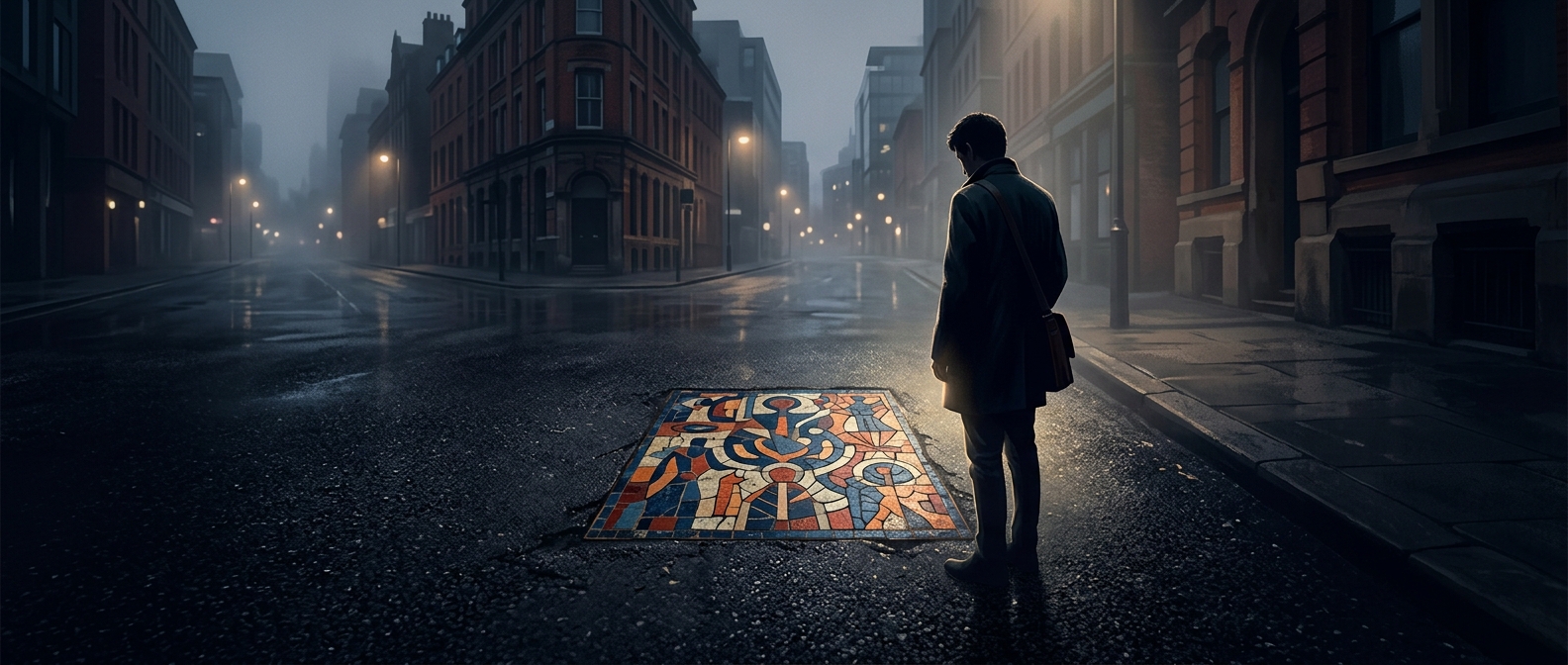
A Toynbee tile is a small, flat message set into pavement, often made from pieces of linoleum or similar material. The maker could place the lettering on a tile, fit it into a cut in the asphalt, and cover it with a protective layer. Traffic then helped wear the surface down until the words became visible. The method turned an ordinary street repair into a durable, anonymous public notice.
Why the message points to Jupiter
The tiles’ recurring text links the idea of bringing the dead back to life with Jupiter and the film 2001: A Space Odyssey. In the film, Jupiter is the destination of a journey involving mysterious transformation, but the tiles do not explain exactly what the writer believed or how the proposed revival would work. Their compressed, repeated wording is part of the puzzle: it reads less like an argument than a mission statement left for strangers to find.
A mystery made of many small clues
Tiles have appeared in cities far apart, including in the United States and South America. Their shared language and similar construction suggest a connection, but anonymity makes the maker difficult to identify. Each tile is also a clue about process: its lettering, materials, placement, and condition can reveal how it was assembled and how long it has been exposed to weather and traffic.
That combination gives the messages an unusual afterlife. Unlike graffiti on a wall, a tile is physically worked into the street; unlike a conventional memorial plaque, it offers no named author or clear explanation. The next person to notice one may be a driver, a pedestrian, or a road crew uncovering a message that has been underfoot for years.