How a salt mine became an underground destination
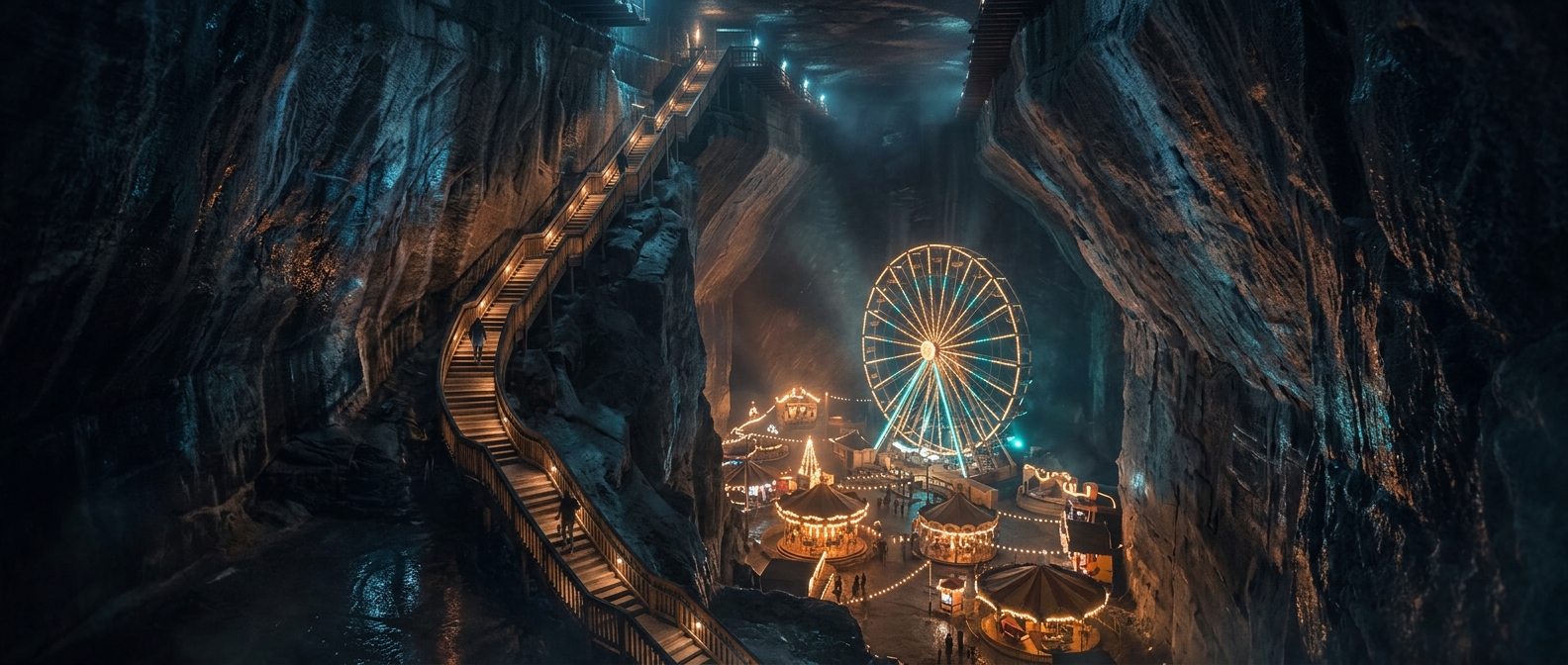
At Salina Turda in Transylvania, the attractions occupy spaces created for a very different purpose: extracting rock salt. Centuries of mining left vast chambers and deep shafts beneath the surface. Rather than fill them in, the site could reuse that unusual underground architecture as a place for visitors to explore.
The scale changes how the attractions feel. A Ferris wheel or a game of mini-golf would be ordinary above ground; inside a mine, each sits against enormous excavated walls, far from daylight. The boating lake makes use of water pooled in a cavern, turning part of the mine’s working landscape into a place to move through rather than merely look at.
The mine itself sets the experience
Visitors descend through the mine to reach its chambers, so the journey underground is part of the visit. The exposed salt and the engineered passageways remain visible reminders that the space was carved out by labor, not built as an amusement venue from scratch.
That contrast is the site’s distinctive appeal: a former industrial landscape becomes recreational without hiding its origins. The attractions draw people into the chambers, but the mine’s immense scale—and the evidence of how it was made—provides the setting no purpose-built park could easily reproduce.