The cesta turns a catch into a throw
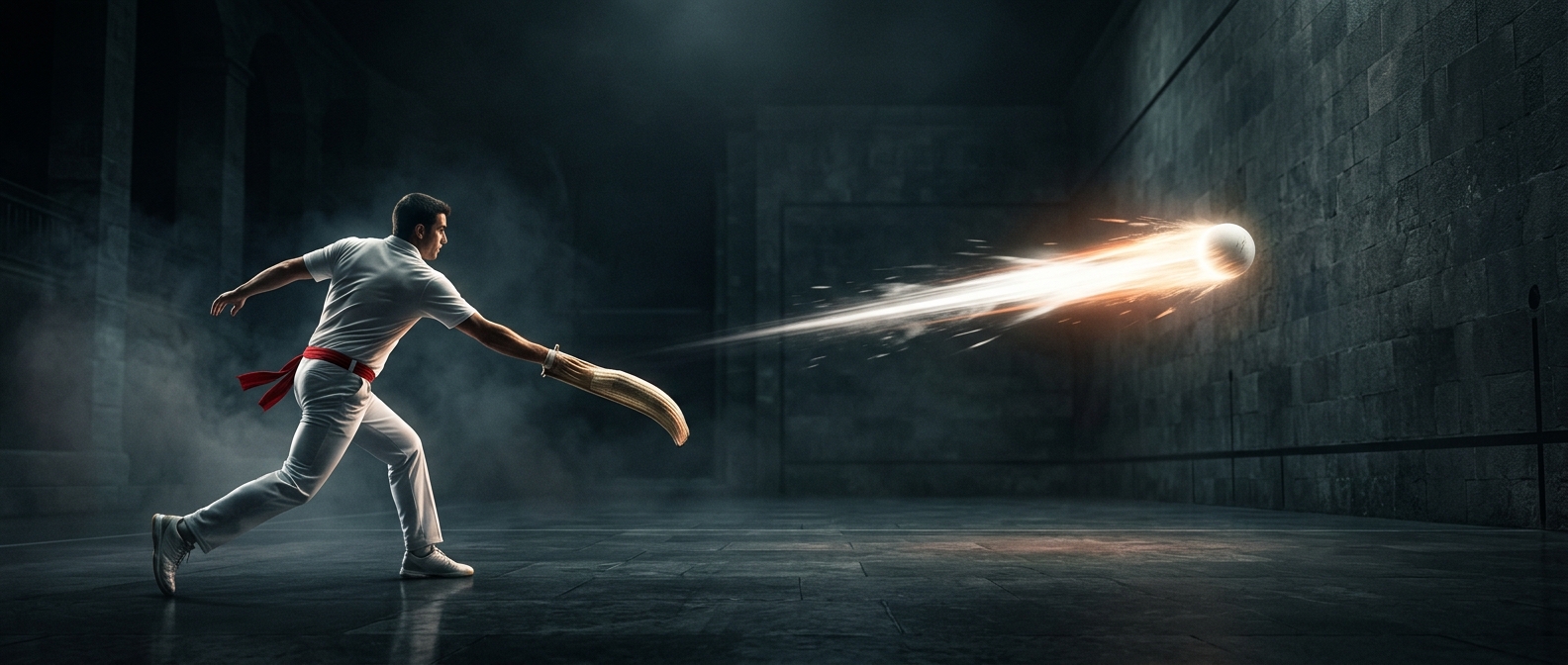
Jai alai’s curved wicker basket, called a cesta, is not just a scoop. Its long shape lets a player receive the ball and sweep it forward in one continuous motion. Instead of stopping the ball in a hand and then throwing, the player redirects it through a broad, fast arc—using the arm, shoulder, and torso to build speed.
That motion is central to the game’s rhythm. Players send the pelota against a front wall, and the opponent must catch it in the cesta and return it before it bounces twice. The ball is in play for only a moment at a time, but each return can arrive at a new angle and demand an immediate response.
Speed changes the cost of a mistake
A pelota is small and hard, so a fast shot carries more than spectacle: it leaves little time to move out of its path. Players have to judge its direction while also preparing to catch and return it. A misread can put someone in the line of a ball that is difficult to stop or evade.
The same risk extends beyond the court. Spectators watch a game built around powerful throws and unpredictable rebounds, which is why the boundaries between play and audience matter. The striking thing about jai alai is that its signature speed comes from a practical piece of equipment: the cesta makes a fluid catch-and-release possible, but also gives every missed judgment much higher stakes.