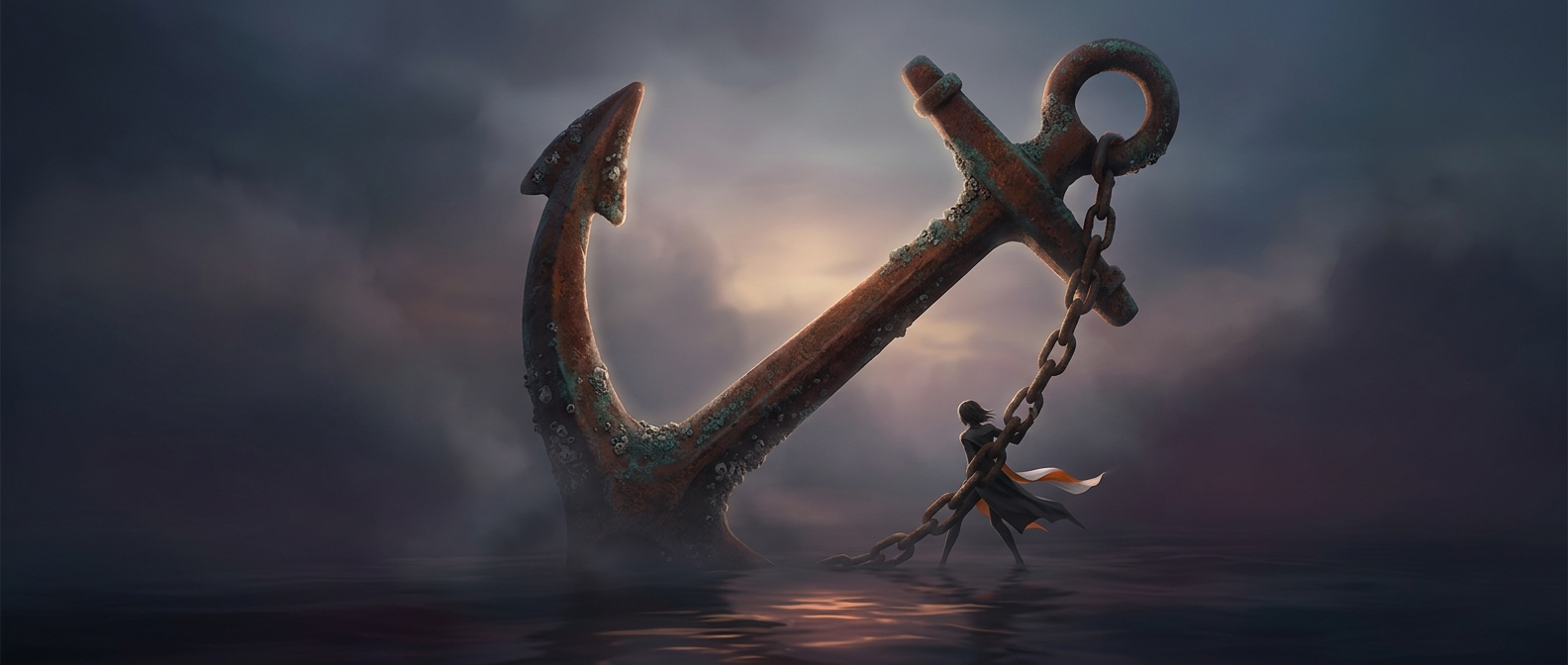
May’s Anchor Is a Visual Joke With a Gameplay Job
In Guilty Gear Strive, May’s enormous anchor makes an immediate contrast: a small character handles a piece of ship equipment that looks far too heavy for one person. The mismatch is part of her appeal, but the anchor is not just a prop. It gives her attacks a distinctive shape and makes their reach easy to read on screen.
What the Weapon Tells You in a Fight
A fighting game cannot rely on realistic weight alone. Players need to judge where an attack can hit and when they can respond. May’s sweeping anchor animations make the weapon’s path visible; the actual attack range and timing are controlled by the game, not by a simulation of steel swinging under gravity. That lets the weapon feel huge without making every strike automatically powerful or unavoidable.
This is a useful design tradeoff: the anchor supplies a clear visual identity, while the rules of the match preserve counterplay. An opponent can watch the motion, learn which attacks cover space, and look for an opening rather than treating the weapon’s size as a physics problem.
A Character Defined at a Glance
The oversized anchor also does storytelling before May says or does anything else. It signals her pirate-themed identity and gives her a silhouette unlike fighters whose weapons are swords, fists, or guns. The result is both a practical combat cue and a comic exaggeration: on screen, the anchor looks absurdly heavy, but in the game its job is to make May’s attacks legible.