Sudoku’s Digits Are Labels, Not Numbers
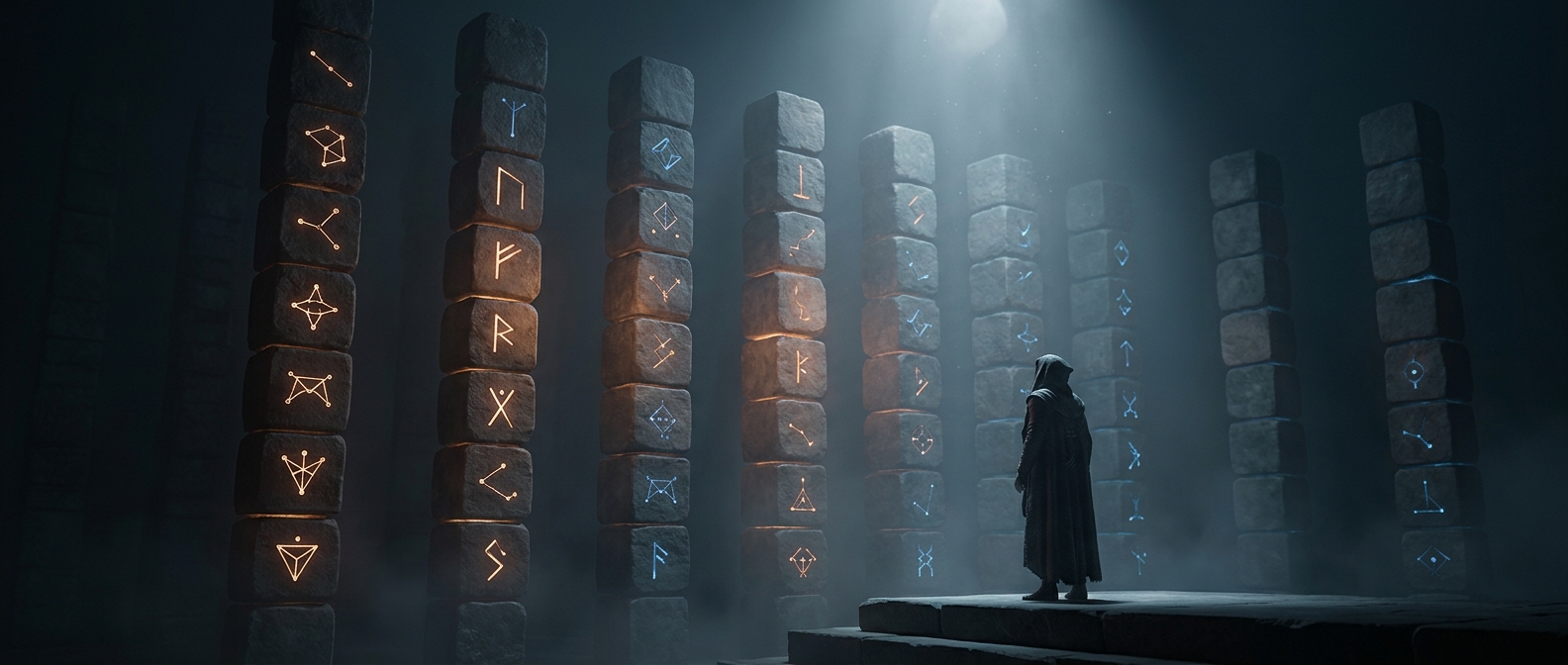
A Sudoku grid looks mathematical, but its digits do not need to be added, multiplied, or compared by size. They function as nine distinct labels. Replace them with nine different shapes, letters, or colors, and the puzzle’s logic stays the same—as long as each symbol remains distinguishable.
The rules create the challenge: each row, column, and 3-by-3 box must contain every symbol exactly once. A solver looks for places where a symbol can fit, then rules out possibilities that would repeat one elsewhere in its row, column, or box. This is a form of constraint solving: each placement narrows the options around it.
How Patterns Turn Into Deductions
Suppose a row is missing a symbol, but several empty cells remain. Checking the corresponding columns and boxes may show that all but one cell already conflict with that symbol. The remaining cell is forced. That new placement can, in turn, make another symbol’s position obvious.
The process can feel like visual pattern recognition because the grid makes repetitions and gaps easy to see. But the useful “pattern” is not a hidden picture or a numerical sequence; it is a set of relationships imposed by the rules. More difficult puzzles may require tracking several possible placements before a deduction becomes clear, yet the symbols still carry no arithmetic value.
That is why a Sudoku remains the same puzzle when its digits are changed: the information lies in which symbols can share a row, column, or box—not in what the symbols mean outside the grid.