The price of separating is more than a lawyer’s bill
A marriage often functions as one financial unit even when the relationship has become unhappy. The couple may share a home, debts, insurance, transportation, and everyday expenses. Divorce forces those arrangements to be reconsidered, sometimes before either person can afford to replace them. One household may have to become two, while rent, utilities, and other fixed costs do not neatly shrink by half.
That creates a practical barrier: the money needed to leave may be tied up in the life a person is trying to leave. Someone who cannot cover a deposit, qualify for a loan alone, or manage a period of disrupted income may see separation as financially risky even if remaining together is emotionally painful.
Why staying can look like the safer choice
People weigh not only the expected cost of divorce but also its uncertainty. They may not know how long decisions about property or parenting will take, what their future budget will look like, or whether they can keep the same standard of living. Staying preserves familiar routines and shared resources in the short term. That can make it feel like the least bad option when cash is tight or children’s arrangements are unsettled.
This is not simply a matter of adding up expenses. A person may also lack access to account information, control over shared money, or a reliable way to plan independently. Those circumstances can make the costs of leaving harder to estimate—and harder to manage—than the costs of staying.
A delay can carry its own costs
Remaining married may postpone immediate disruption, but it does not necessarily resolve the underlying financial problem. Shared debts and obligations continue, and a couple may keep making major decisions together despite having little trust. In some situations, waiting gives people time to save, find housing, or work out parenting plans. In others, it can deepen financial dependence and make a later separation more complicated.
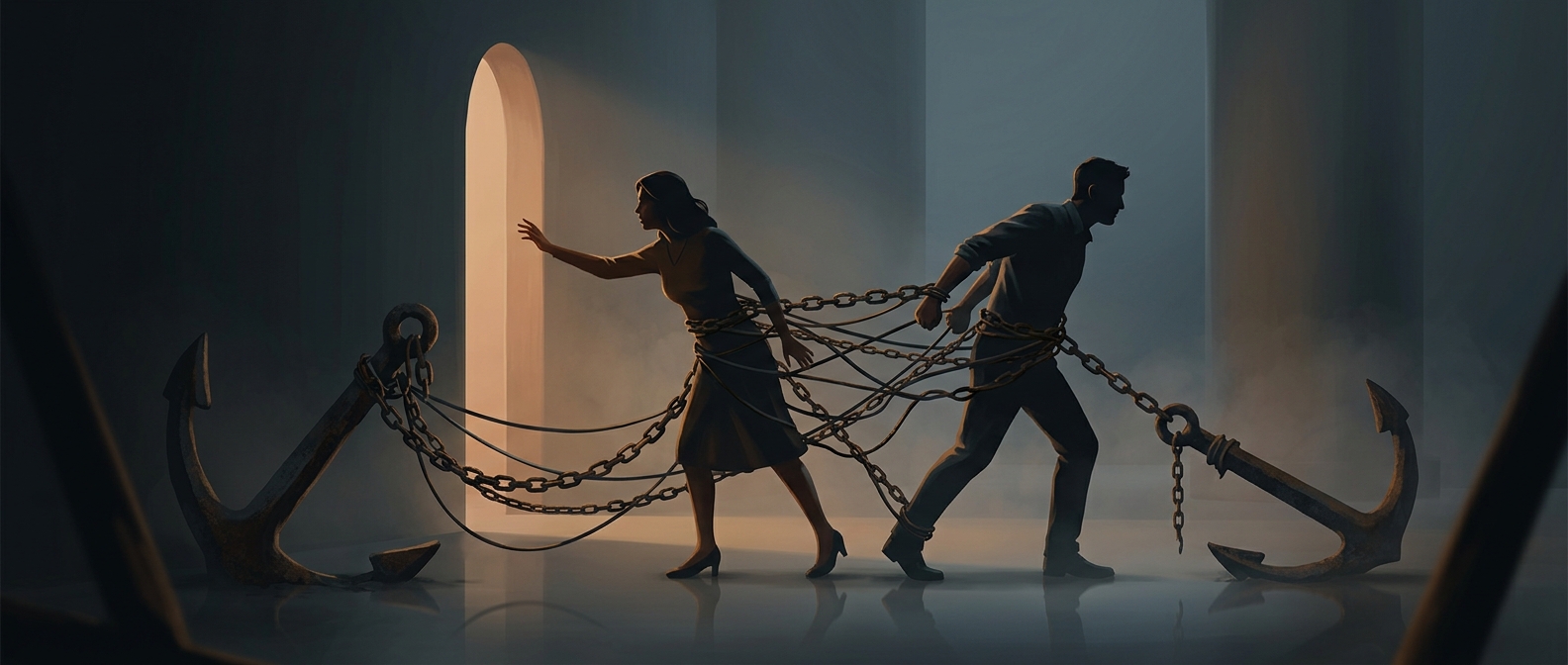
The economic bind is that leaving requires resources up front, while staying can preserve the very arrangement that limits a person’s ability to build them.