How Damaged Cash Becomes a Claim
A bill that has been burned, soaked, or torn apart is not automatically worthless. The Treasury Department’s Bureau of Engraving and Printing has specialists who examine mutilated currency and decide whether enough of its original value can be established to reimburse its owner. The key is evidence: officials must be able to tell that the remains came from a genuine U.S. note and determine how much of it survives.
Why the 51% Threshold Matters
If more than half of a note is identifiable as one bill, the owner can generally receive its full face value. That rule prevents a person from collecting twice by presenting separate pieces of the same note as separate claims. When less than half remains, a claim may still qualify if the missing portion has been destroyed—but that is harder to prove, because the fragments must be consistent with a single note rather than pieces assembled from several.
The threshold makes the decision practical as well as fair. A badly damaged bill may have lost most of its appearance, but if enough of its printed features and fragments can be matched, its value can still be accounted for.
Rebuilding the Evidence, Not the Paper
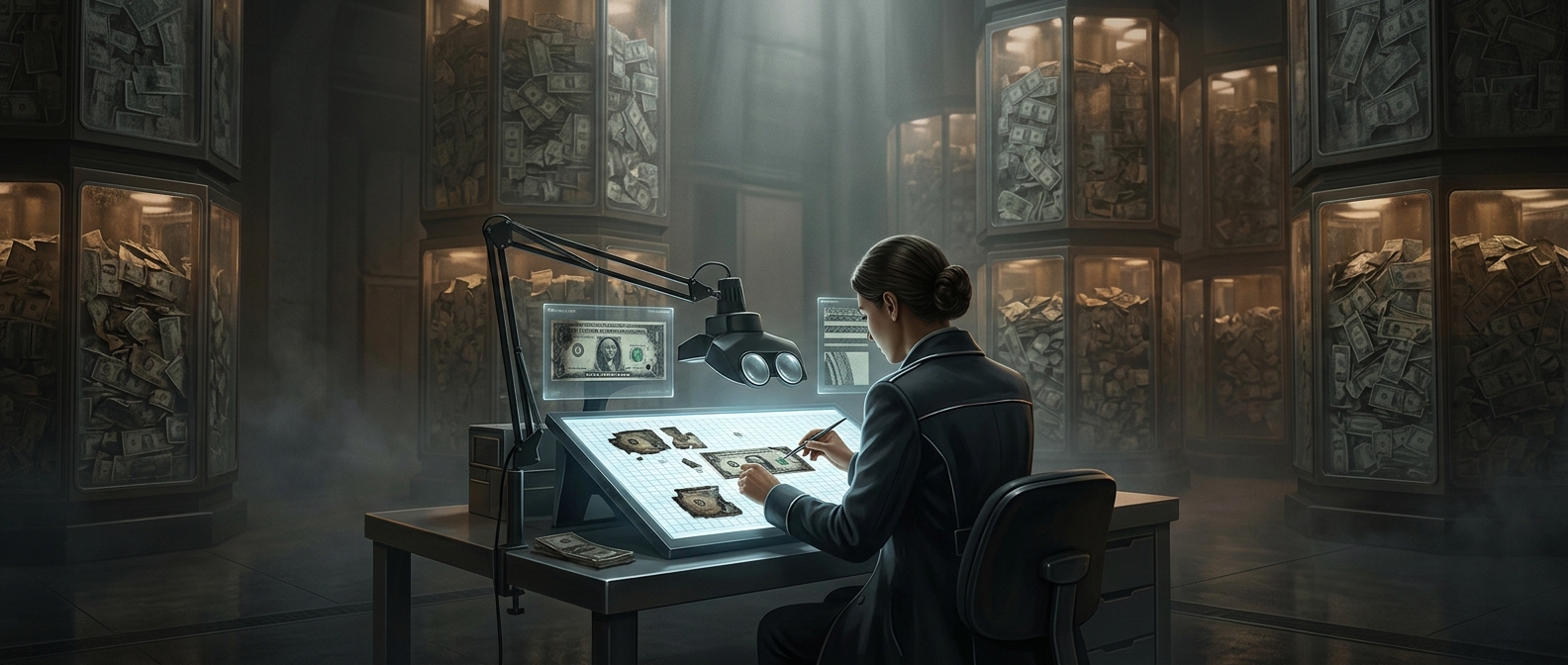
Examiners may use tweezers and microscopes to separate and inspect fragments. They are not simply repairing cash so it can circulate again; they are reconstructing enough of the note’s identity to assess a claim. Heat can leave paper brittle, water can make pieces stick together, and chemicals can obscure printing, so each case presents a different puzzle.
Approved claims are paid by check rather than by handing back newly printed bills. That turns a pile of damaged scraps into a documented financial claim—and gives people a reason to preserve even fragments that look nearly useless.