How a mold becomes Brie’s rind
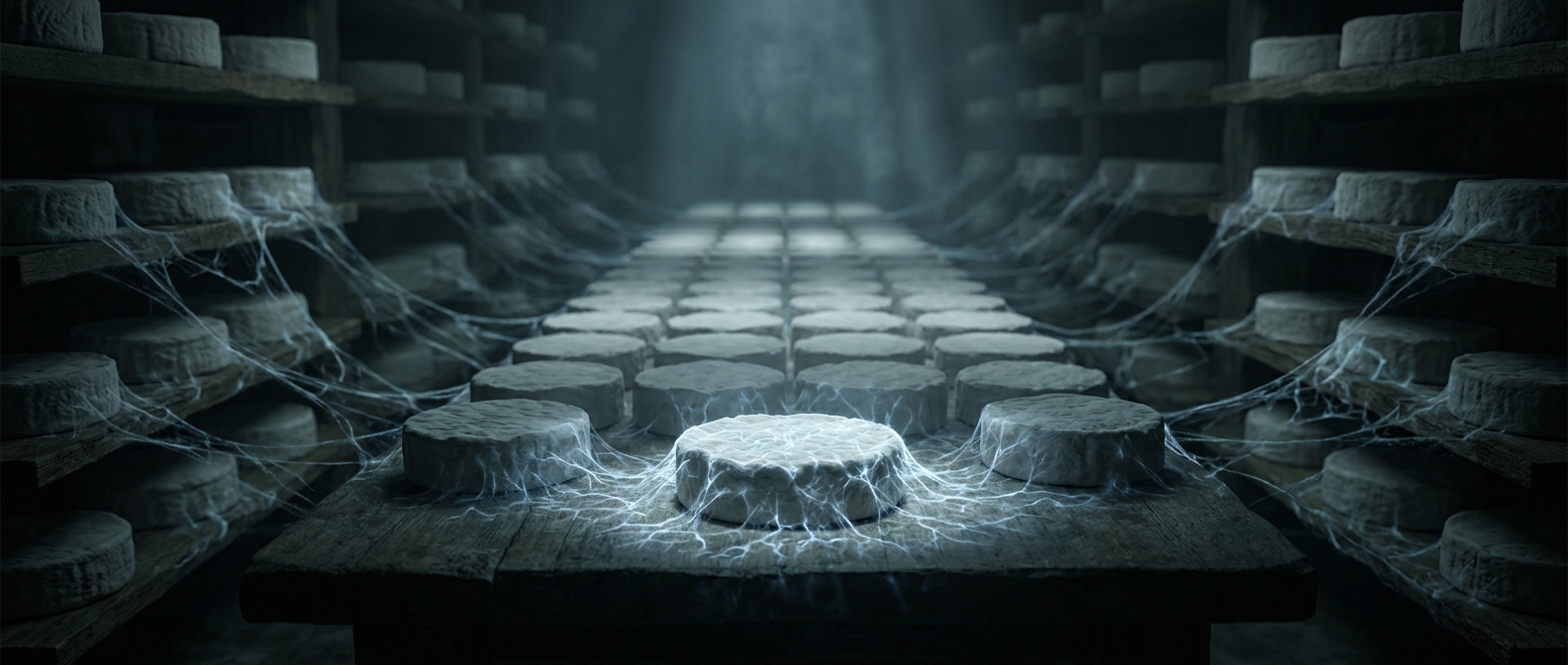
The white coat on Brie is a living culture of Penicillium mold. Cheesemakers introduce the mold to the cheese, where it grows across the surface. As it feeds, it releases enzymes that break down proteins and fats, helping turn the firm interior creamy and giving the cheese its characteristic aroma and taste.
Calling the strain “cloned” does not necessarily mean it was copied in a laboratory. Molds can be propagated from spores, producing more of a favored strain. Repeating that process preserves traits cheesemakers value, including a pale rind and dependable behavior as the cheese ripens.
Consistency has a tradeoff
For producers, a reliable mold culture makes the result easier to reproduce from batch to batch. A strain that reliably forms a white rind and ripens cheese in a familiar way is commercially useful: buyers know what to expect, and cheesemakers can plan around its performance.
But repeatedly favoring one strain also narrows the range of molds in use. The same selection that makes Brie predictable leaves its cultivated mold with little genetic variety. That matters because genetic variety is a source of differing traits; a narrow population has fewer alternatives if conditions change or the strain performs poorly.
The result is a tension between consistency and resilience. Brie’s familiar rind reflects decades of choosing the mold that worked well, while the limited diversity behind that choice means cheesemakers have fewer distinct versions of the culture to draw on.