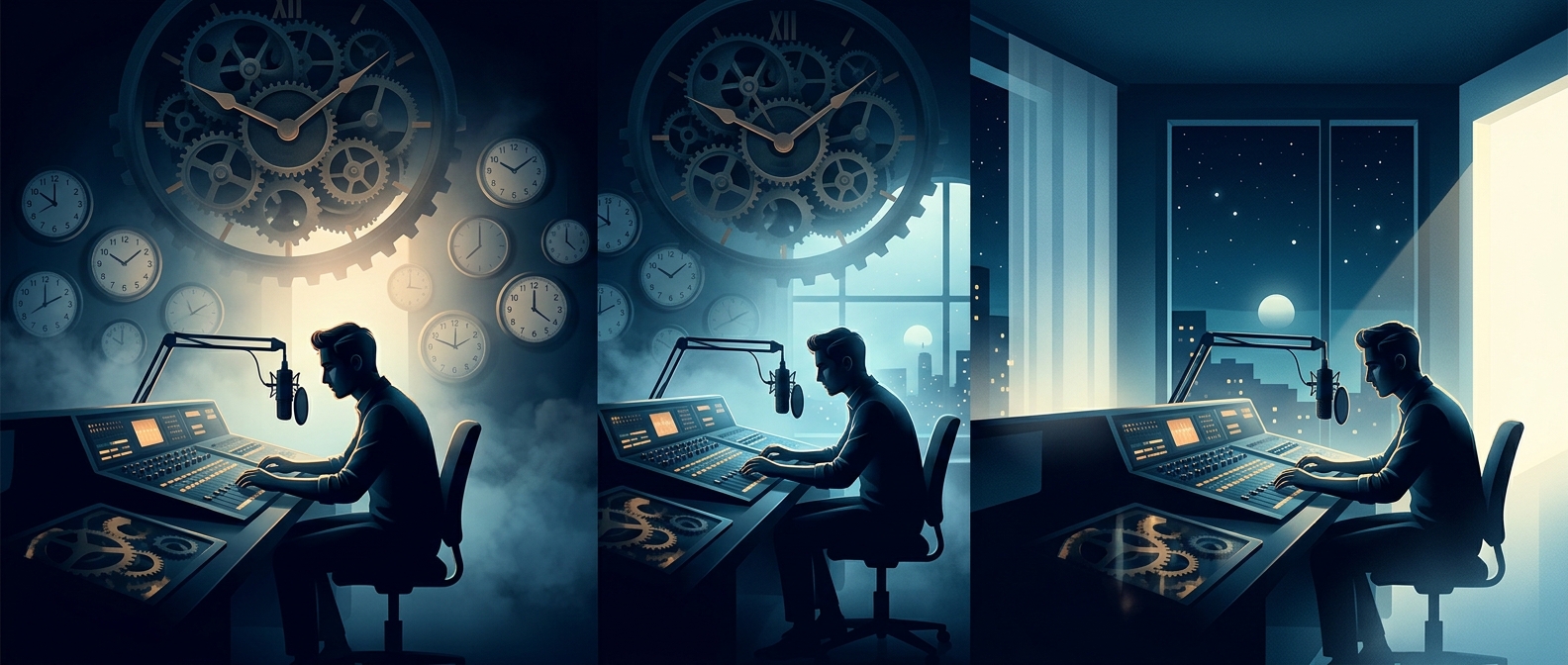
How a 3 p.m. recording can sound like midnight
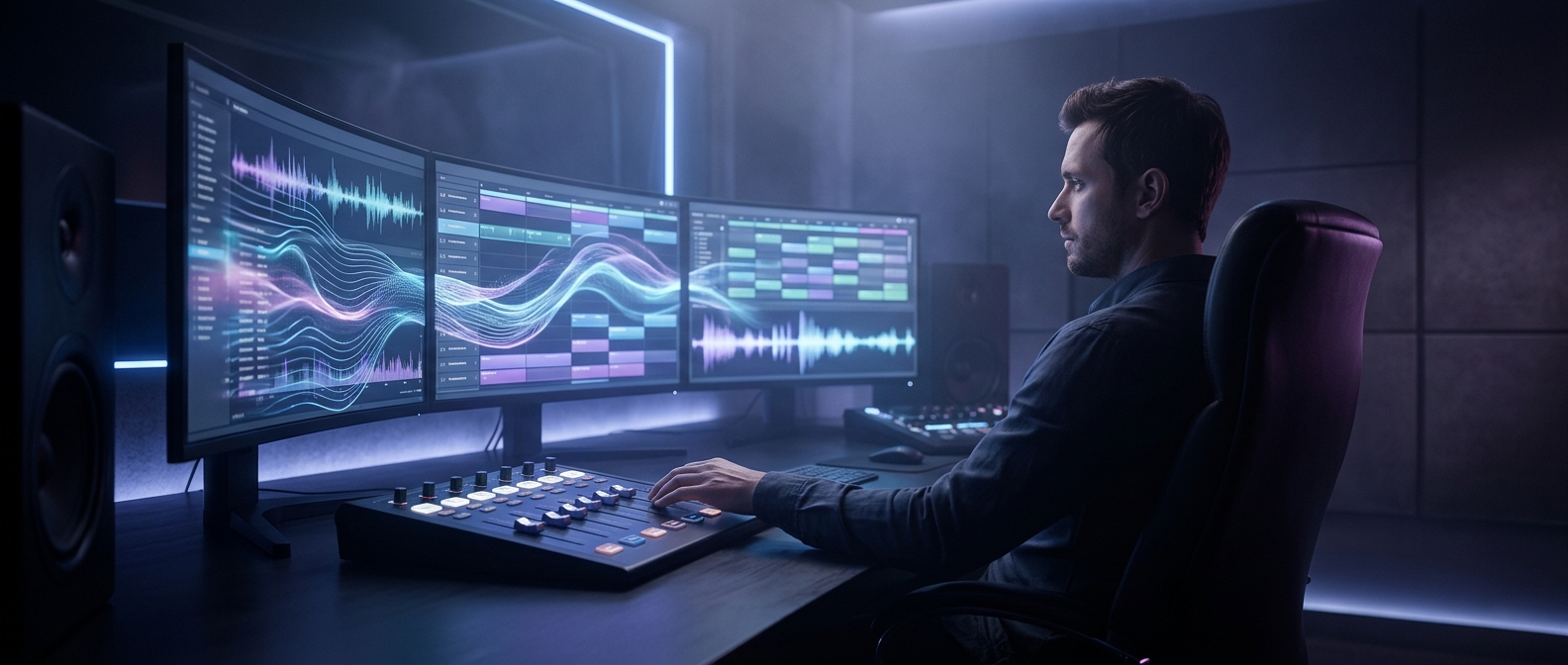
A radio host’s spoken links between songs—often called “breaks”—can be recorded ahead of time and fitted into the station’s schedule later. In a process known as voice tracking, the host records short segments while software plays the music log, letting them hear where each introduction or comment should land. The system then places those recordings between songs during the broadcast.
That means the host can deliver a carefully timed, low-key introduction in the afternoon, even if listeners hear it late at night. The recording doesn’t have to mimic a whole live shift; it only needs to sound as though the host is speaking naturally into the flow of the station.
The illusion depends on timing
A host recording in advance can hear the song that precedes a break, then leave the right amount of space before speaking. Some systems also let the host record against a preview of the next song, so the transition feels connected rather than pasted together. The station’s automation handles the sequence—playing the tracks and inserting the recorded links—while the host supplies the voice and pacing.
This approach gives stations flexibility: one host can record material for a later time slot without being in the studio at that hour. But the illusion has limits. A pre-recorded break can’t respond to a sudden event or a listener calling in at that moment. When a station wants immediate interaction or live updates, someone needs to be broadcasting live.
The result is a small piece of production craft: the words may be hours old, but their placement makes them feel like part of the same late-night moment as the song that follows.