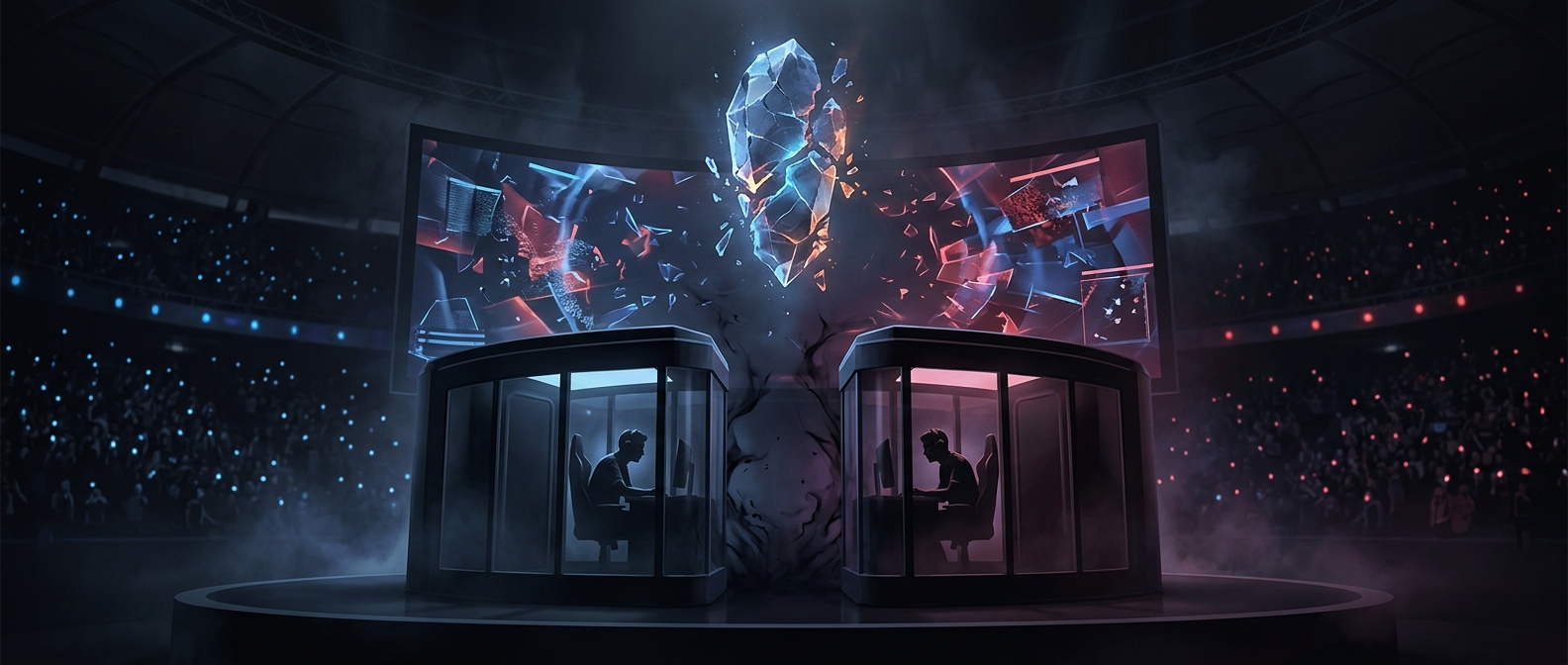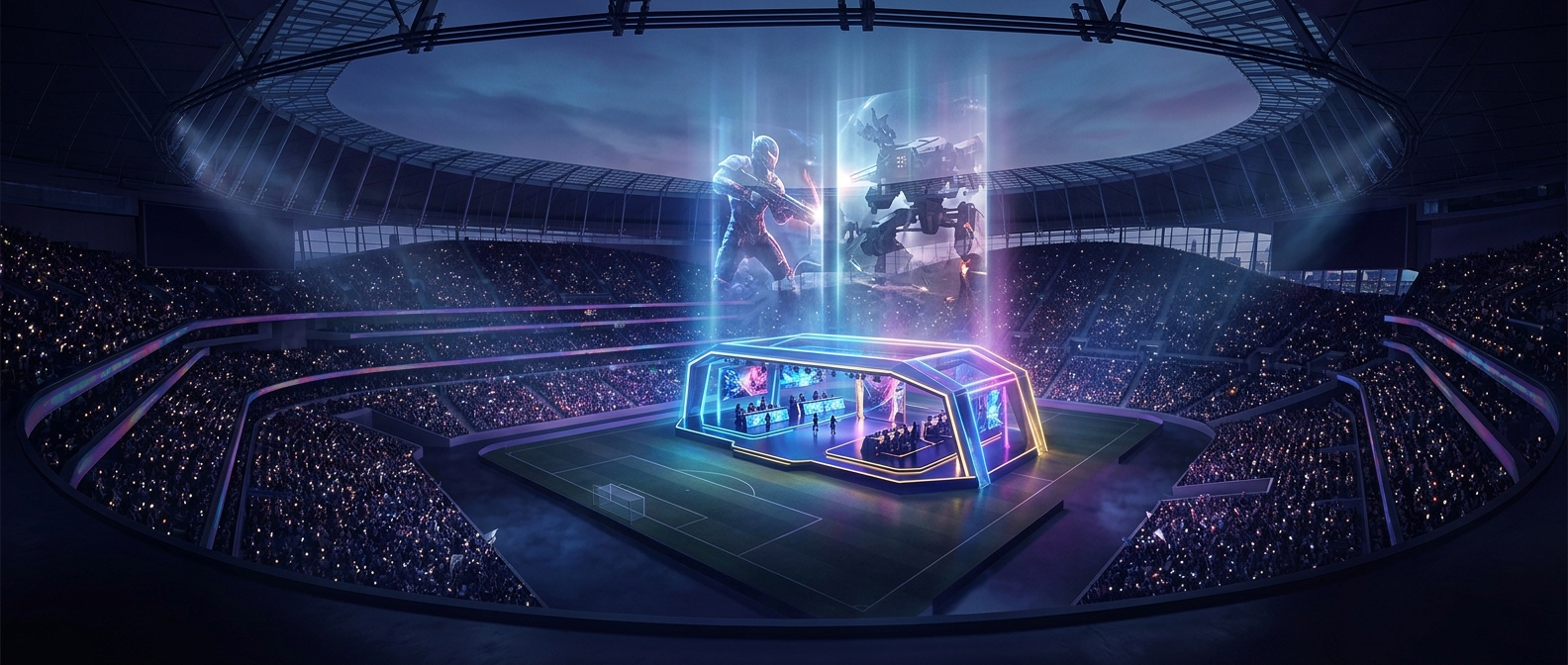
The match is small; the show around it is not
A computer match can be hard to follow from the back of a stadium. The players’ screens are tiny at that distance, and the action may shift in seconds. Organizers solve that visibility problem with giant displays that show the game, player cameras, and broadcast graphics—such as scores, team names, and match statistics. The crowd is watching a live production as much as it is watching people at computers.
That changes what the venue is for. The competitors need a controlled area with computers, network connections, and stage lighting; the thousands of spectators need sightlines, sound, and enough room to react together. The stage may occupy only a fraction of the floor, while screens and audio carry the contest across the rest of the building.
Why fans make the trip
At home, viewers can often see the game more clearly. In person, they get the shared experience: cheering when a team makes a dramatic play, recognizing players as they enter, and feeling the tension build between rounds. Supporters may arrive wearing team colors or gathering with other fans, making the audience itself part of the event’s spectacle.
That atmosphere also gives organizers a reason to sell seats, not just broadcast access. Ticket income can help cover the cost of renting and transforming a large venue, while sponsorships and merchandise may add other revenue. But a stadium is not automatically profitable: organizers have to attract enough people to justify the production and venue costs.
The unusual sight of competitors sitting still is therefore a little misleading. The players provide the contest; screens, sound, and a crowd turn it into a stadium event.