Why a Mine Haul Truck Is Built So Tall
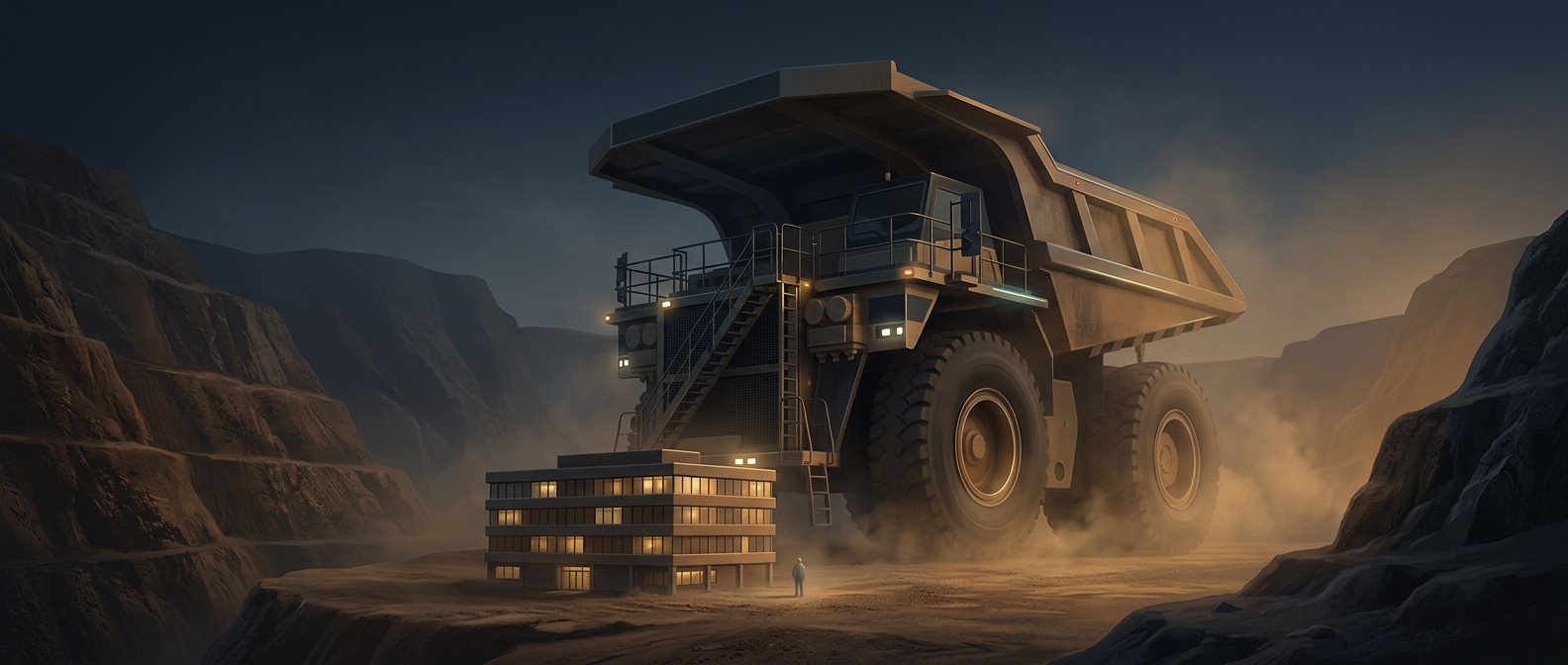
A haul truck is designed around one demanding job: moving heavy loads repeatedly across a rough, private worksite. Its shape follows the machinery needed to do that job, rather than the proportions of a road truck. The frame must support a loaded bed, while powerful drive components and suspension occupy the space below it. That leaves the cab perched high above the ground.
The height also helps the driver see the road ahead and position the truck around loading equipment. In a mine, getting into the cab means climbing a built-in ladder or stairway; easy access from the pavement is not the priority.
Tires That Make the Road More Manageable
Large-diameter tires help the truck roll over uneven ground instead of dropping sharply into every rut. That can reduce jolts to the vehicle and its load, while keeping the tires in contact with the surface for traction. Their size is not simply a matter of carrying weight: each tire is part of a system that must withstand repeated loading, heat, and rough terrain.
The road matters, too. Mine haul roads are shaped and maintained for these vehicles, because deep ruts and abrupt bumps increase strain on tires, suspension, and the truck’s frame. The vehicle and its route are designed as a pair.
Why the Cab Looks Like a Balcony
The cab is small beside the truck because it only needs room for the operator and controls; the bulk of the vehicle belongs to the structure and equipment doing the hauling. Its height makes the truck look almost architectural, but it also puts the driver above the worksite with a view over the front of the vehicle.
That design has a practical consequence: the truck is suited to controlled mine roads, not ordinary streets. Its towering stance is the visible result of fitting a heavy-duty work system around a load, a route, and the machinery needed to move both.