Why feet carry extra meaning in Thailand
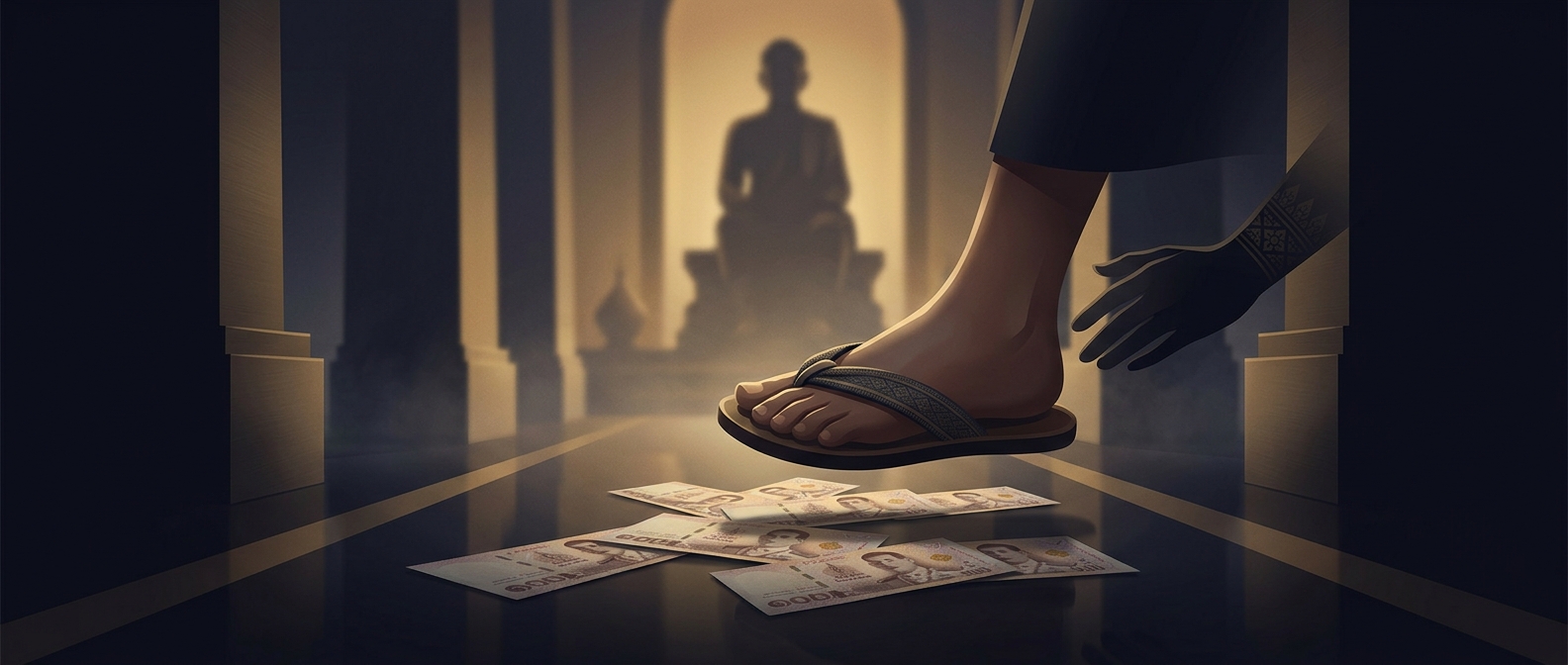
In Thai etiquette, the body is often understood through a contrast: the head is treated as its highest, most respected part, while the feet are its lowest and least clean. That makes the soles more than an unpleasant thing to look at. Directing them toward someone can seem to place that person beneath what is considered low, even when the gesture is accidental.
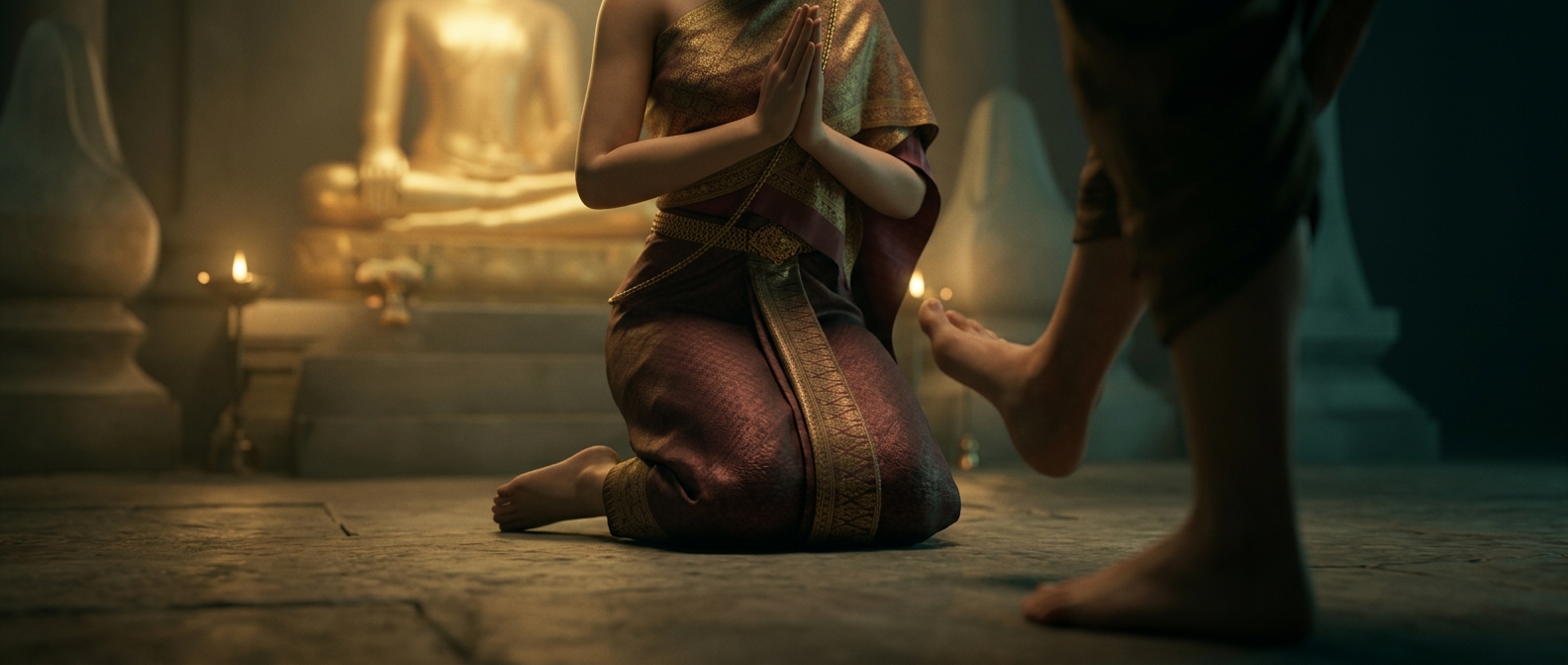
The meaning becomes especially clear around religious images. Pointing a sole toward a Buddha image can appear to direct this disrespect at a sacred figure, so visitors are expected to sit in a way that keeps their feet turned away. The same concern applies in ordinary company: a relaxed posture that seems harmless elsewhere may look insulting if it puts the soles toward another person.
Small adjustments prevent a serious misreading
When sitting on the floor, tuck your feet behind you or angle them away from people and religious images. Avoid stretching your legs across a room or using your feet to point at something. If you notice that your soles are facing someone, shift position without making a scene; the important thing is the direction of the gesture, not whether you meant offense.
This etiquette is easy to miss because it is built into posture rather than words. A visitor can show respect simply by paying attention to where their feet point—especially in a temple, where the same casual position can carry a much sharper meaning.